New York declares January Muslim American Heritage Month

1 / 3
Landmarks across the United states are lit green as New York celebrates Muslim American Heritage Month. (X/@GovKathyHochul)
2 / 3
Landmarks across the United states are lit green as New York celebrates Muslim American Heritage Month. (X/@GovKathyHochul)
3 / 3
Landmarks across the United states are lit green as New York celebrates Muslim American Heritage Month. (X/@GovKathyHochul)
Short Url
Updated 06 January 2026
Follow

New York declares January Muslim American Heritage Month

  • For the first time in state history, January has been proclaimed Muslim American Heritage Month

JEDDAH: The Muslim Council of Elders welcomed the announcement by the State of New York in the United States designating January as a month to celebrate Islamic heritage, noting that the step reflects a deep appreciation for the civilizational, cultural and humanitarian contributions of Muslims, and their role in enriching societies and promoting the values of diversity and coexistence.

In a statement, the council said the announcement embodies a growing awareness of the importance of recognizing cultural and religious diversity as a source of strength for societies, and contributes to fostering a culture of mutual respect and building bridges of understanding among followers of different religions and cultures.

Accordingly, Gov. Kathy Hochul on Jan. 2 issued the first-ever proclamation declaring January as Muslim American Heritage Month across New York State. She also directed 16 state landmarks to be illuminated in green in observance of the month and in celebration of the heritage and culture of Muslim Americans.

“Home to the largest Muslim American population in the nation, New York is proud to join in this month-long celebration, recognizing the values, faith and traditions of our Muslim American communities,” Hochul said. “New York remains committed to being a beacon of hope, tolerance, and inclusivity that celebrates the diversity of its Muslim American population and protects them from Islamophobia, hate, bias, and harm.”

For the first time in state history, January has been proclaimed Muslim American Heritage Month. The designation recognizes the significant contributions Muslim Americans have made throughout history in fields including the arts, sciences, mathematics, technology, literature, music, medicine and philosophy, and encourages New Yorkers to better appreciate and understand the rich cultures, histories and principles of the Muslim American community.

New York City Mayor Zohran Mamdani said: “While I was proud to be sworn in as our city’s first Muslim mayor yesterday, Muslims have been part of New York for centuries. We have built small businesses, raised our families, pursued every profession, enriched our culture and cuisine, and been a part of what makes our city what it is today. I am grateful for Governor Hochul’s leadership in recognizing these many contributions and ensuring that every January, Muslim New Yorkers can see ourselves reflected and recognized in a city and state that is also our home.”

16 landmarks will be illuminated in green in honor of Muslim American Heritage Month including One World Trade Center, the Gov. Mario M. Cuomo Bridge, Kosciuszko Bridge, the H. Carl McCall SUNY Building, the State Education Building, the Alfred E. Smith State Office Building, Empire State Plaza, the State Fairgrounds Main Gate and Expo Center, the Franklin D. Roosevelt Mid-Hudson Bridge, Grand Central Terminal’s Pershing Square Viaduct, Albany International Airport Gateway, the MTA LIRR East End Gateway at Penn Station, the Fairport Lift Bridge over the Erie Canal, Moynihan Train Hall, the Roosevelt Island Lighthouse and Niagara Falls.

New York City Councilmember Shahana Hanif said: “As the first Muslim woman elected in New York State, I applaud Governor Hochul’s designation of January as Muslim American Heritage Month. My Muslim identity is inseparable from being Brooklyn-born and raised. From Brooklyn to Buffalo, Muslim New Yorkers reflect the extraordinary diversity, resilience, and contributions that define our state. This recognition is more than symbolic—it affirms that New York’s history and future cannot be told without its Muslim communities, and I am proud to be a Muslim New Yorker.”

New York City Councilmember Yusef Salaam said: “For the first time, New York is proclaiming January as Muslim American Heritage Month and lighting state landmarks green to honor the state’s vibrant Muslim community — and I thank the Governor and the many Muslim advocates who fought to make this recognition a reality. This acknowledgment affirms our deep roots and lasting contributions to the fabric of New York.”

Imam Mansoor Rafiq Umar of the Muslim Community of Bethlehem said: “As a Muslim born in the great state of New York, I carry with me the confidence of ‘One nation under God’ to the same tune as passionate believers of all faiths across America. Honoring the heritage of our people is truly a significant statement by our Governor, Kathy Hochul, that we are a part of the fabric of our nation that undergirds the common threads of goodwill. We are blessed to live in a state with balance in recognizing its diverse demographics, and an administration that engages its people without indulging in otherism. To all those honoring Muslim-American Heritage Month, we stand together, green lights a-lit on every monument, saluting our past giants, honoring our present stewards, and lifting the future leaders yet to come.”

Emgage Metro NY Senior Advisor Dr. Debbie Almontaser said: “As a longtime educator and one who believes in diversity, equity and inclusion, I commend and thank Governor Hochul for inaugurating January as Muslim American Heritage Month in the State of New York. This has been a lifetime dream where every Muslim child will feel acknowledged, heard and valued by their government.”

Muslim Public Affairs Council of Western New York inaugural president Dr. Khalid J. Qazi said: “The declaration of Muslim American Heritage Month affirms New York’s enduring commitment to diversity, dignity, and inclusion. It honors the rich history, faith, and profound contributions of generations of Muslim New Yorkers whose leadership, service, and innovation strengthen our communities, enrich the fabric of our state and celebrates our shared humanity.”
Somali president to Asharq Al-Awsat: Working with Saudi-led partners to void Israel’s Somaliland recognition

Updated 5 sec ago
Follow

Somali president to Asharq Al-Awsat: Working with Saudi-led partners to void Israel’s Somaliland recognition

  • Hassan Sheikh Mohamud unveils three-pronged diplomatic and legal strategy to defend Somalia’s sovereignty and territorial unity
  • Says Mogadishu coordinates with Saudi Arabia and Arab, African partners to counter what he calls a dangerous precedent

RIYADH: Somali President Hassan Sheikh Mohamud unveiled a three-pronged political and legal strategy to nullify what he described as Israeli recognition of the breakaway region of Somaliland, warning that such a move threatens Somalia’s sovereignty and regional stability.

Speaking to Asharq Al-Awsat, Mohamud said his government is acting in close coordination with partners led by Saudi Arabia to safeguard stability and shield the Horn of Africa from what he called “reckless escalation.”

Without naming specific countries, the Somali leader said some regional states may see the Israeli recognition as an opportunity to pursue “narrow, short-term interests at the expense of Somalia’s unity and regional stability.”

“I do not wish to name any particular country or countries,” he said. “But it is clear that some may view this recognition as a chance to achieve limited gains.”

Somali President Hassan Sheikh Mohamud visiting the country's soldiers in the frontline. (X)

He stressed that Somalia’s unity is a “red line,” adding that Mogadishu has taken firm positions to protect national sovereignty. “We warn against being misled by reckless Israeli adventurism,” he said.

Mohamud was referring to recognition announced by Israeli Prime Minister Benjamin Netanyahu of the self-declared Republic of Somaliland as an independent state.

“I affirm with the utmost clarity and firmness that any recognition of Somaliland as an independent state constitutes a blatant violation of the sovereignty and unity of the Federal Republic of Somalia,” he said.

He described the move as a grave breach of international law, the UN Charter, and African Union resolutions that uphold respect for inherited African borders.

On that basis, Somalia has adopted and will continue to pursue three parallel measures, he revealed.

The first involves immediate diplomatic action through the UN, African Union, and Organization of Islamic Cooperation to reject and legally and politically invalidate the recognition.

Mohamud said Somalia called for and secured a formal session at the UN Security Council to address what he termed a “flagrant Israeli violation” of Somalia’s sovereignty and territorial integrity.

The session, he said, marked a significant diplomatic victory for Mogadishu, particularly given Somalia’s current membership on the council.

He expressed “deep appreciation” for statements of solidarity and condemnation issued by the African Union, Arab League, OIC, Gulf Cooperation Council, Intergovernmental Authority on Development (IGAD), and the EU, among others.

The second step centers on coordinating a unified Arab, Islamic, and African position. Mohamud praised Saudi Arabia for being among the first to issue a clear statement rejecting any infringement on Somalia’s unity.

He said the Saudi position reflects the Kingdom’s longstanding commitment to state sovereignty and territorial integrity, reinforced by the Saudi cabinet’s “firm and principled” support for Somalia during what he described as a delicate moment.

The third step focuses on strengthening internal national dialogue to address political issues within the framework of a single Somali state, free from external interference or dictates.

Mohamud warned that if left unchecked, the recognition could set a “dangerous precedent and undermine regional and international peace and security.”

He said it could embolden separatist movements not only in the Horn of Africa but across Africa and the Arab world, citing developments in countries such as Sudan and Yemen as evidence of the high cost of state fragmentation.

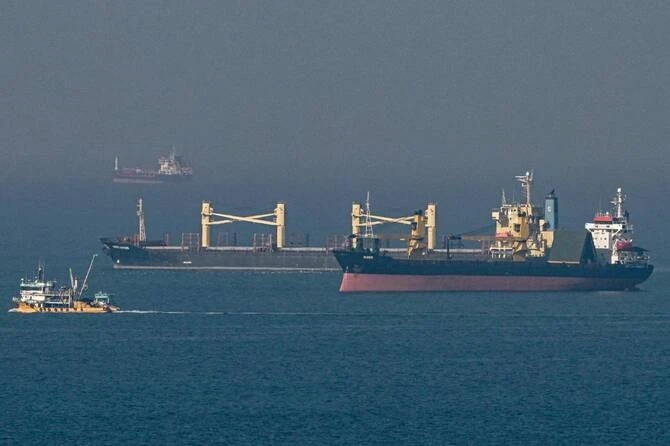
“This concerns a vital global shipping artery and core Arab national security,” he said, referring to the Red Sea.

“Any political or security tension along Somalia’s coast will directly affect international trade and energy security.”

He added that instability would impact Red Sea littoral states, particularly Saudi Arabia, Egypt, Sudan, Eritrea, Yemen, and Jordan. “Preserving Somalia’s unity is a cornerstone of collective Red Sea security,” he said.

Mohamud argued that Israel’s objective goes beyond political recognition. 

“We believe the goal extends beyond a political gesture,” he told Asharq Al-Awsat. “It includes seeking a strategic foothold in the Horn of Africa near the Red Sea, enabling influence over the Bab Al-Mandeb Strait and threatening the national security of Red Sea states.”

He described the move as a test of Somali, Arab, and African resolve on issues of sovereignty and territorial unity, emphasizing that Somalia’s opposition to secession is a principled and enduring national stance supported widely in the Arab and African worlds, “foremost by Saudi Arabia.”

He rejected any attempt to turn Somalia into a battleground for regional or international rivalries. “We will not allow Somalia to become an arena for settling conflicts that do not serve our people’s interests or our region’s security,” he declared.

Regarding Saudi-Somali relations, Mohamud described the partnership as “deep-rooted and strategic, rooted in shared history, religion, and a common destiny.” Saudi Arabia, he said, “remains a central partner in supporting Somalia’s stability, reconstruction, development, and Red Sea security.”

He voiced admiration for Saudi Arabia’s Vision 2030 and the economic and development gains achieved under the leadership of Custodian of the Two Holy Mosques King Salman bin Abdulaziz and Prince Mohammed bin Salman, Crown Prince and Prime Minister.

Asked about the recent Saudi Cabinet decision rejecting any attempt to divide Somalia, Mohamud said the federal government received it with “great appreciation and relief.”

He said the position extends the Kingdom’s historic support for Somalia’s territorial unity and sovereignty, reinforces regional stability, and sends an important message to the international community on the need to respect state sovereignty and refrain from interference in internal affairs.