

In Pakistan’s olive-rich tribal areas, lone oil plant begins operations

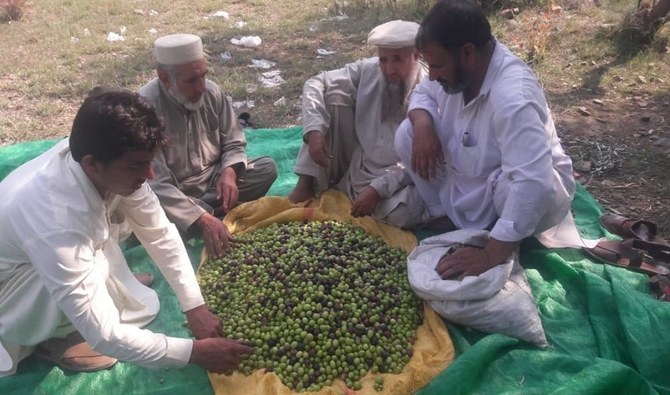
Locals in Bajaur district pack olives for onward delivery to the processing plant on Tuesday, Oct. 22, 2019 (Photo credit: Bajaur agriculture extension department)
Updated 28 October 2019
Follow

In Pakistan’s olive-rich tribal areas, lone oil plant begins operations

  • Olive oil derived from improved plant varieties is intended for export by next year, officials say
  • Local olive farmers in the region are looking to cash in on the increase in interest and demand

PESHAWAR: The first ever olive processing plant set up in a Pakistani tribal district, in a region that borders Afghanistan, has started producing olive oil, the top district administrator said on Thursday.
Wild olive plants grow in the millions in the erstwhile tribal regions, but until about a decade ago, these plants had little commercial value and were used mainly for timber and fire-wood.
But following the grafting of 150,000 wild olive plants into cultivars, an artificially bred and improved variety of the plant, the olive oil processing plant in Bajaur is now in business. The cultivars are created through grafting, where a single bud from a desirable tree is slipped into the bark on a small seedling to produce farmer-friendly varieties of the plant that are resistant to diseases, have a low juvenile period and a longer fruiting life.
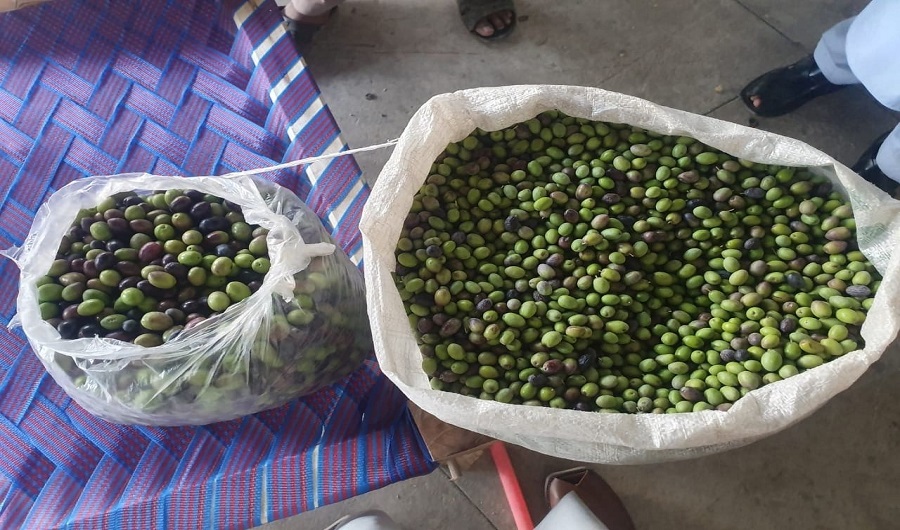


Olive fruits picked and ready for processing at Bajaur’s oil processing plant on Tuesday, Oct. 22, 2019 (Photo credit: Bajaur agriculture extension department) 

“Oil production has started but in low quantity. I hope from next year, oil production will increase for commercial purposes,” Muhammad Usman Mehsud, deputy commissioner of Bajaur, told Arab News, and added that efforts had been intensified to begin exporting the oil from next year.
“The agriculture extension department intends to graft 1.6 million wild olive groves through improved olive varieties. Right now, we have up to 6,000 grafted olive plants bearing fruit,” he said.
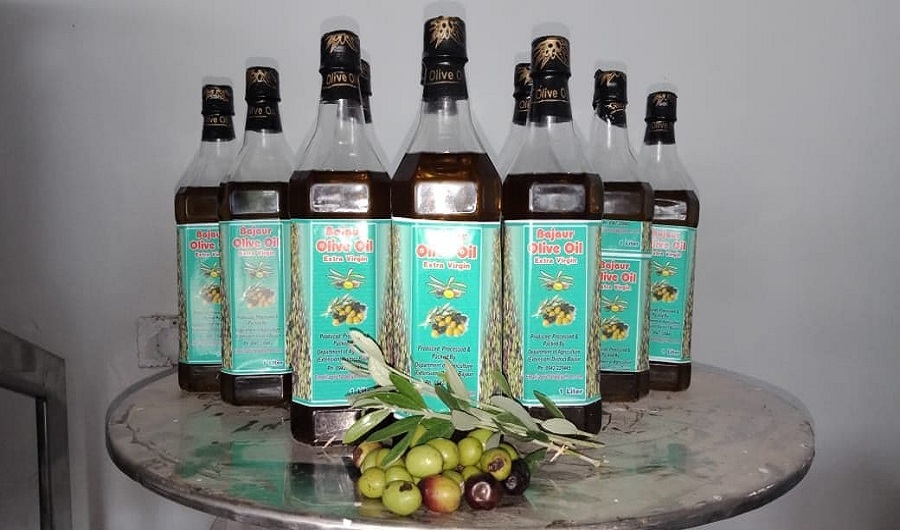


Bottles of refined olive oil labelled “Bajaur Olive Oil,” on display, from the district’s first oil processing plant. Oct. 22, 2019 (Photo credit: Bajaur agriculture extension department)  

Olives, known locally as Zaintoon or Khuna, have 30 different species and a life span of between 900 to 1,000 years. According to experts in Pakistan, they are one of the world’s most drought resistant trees and thrive well where annual average rainfall is between 900 to 1,000 mm without irrigation.
Of the grafted olive species, 30,000 olive plants are already bearing fruit, Zia-ul-Islam Dawar, the district agriculture officer, told Arab News.
“One olive plant produces 60 to 70 kg of oil, while the processing plant has the capacity to produce 200 kg of oil per hour,” he said and added that his department planned on grafting wild olive groves under a government scheme known as the ‘Promotion of Olive Cultivation for Oil Production in Bajaur.’
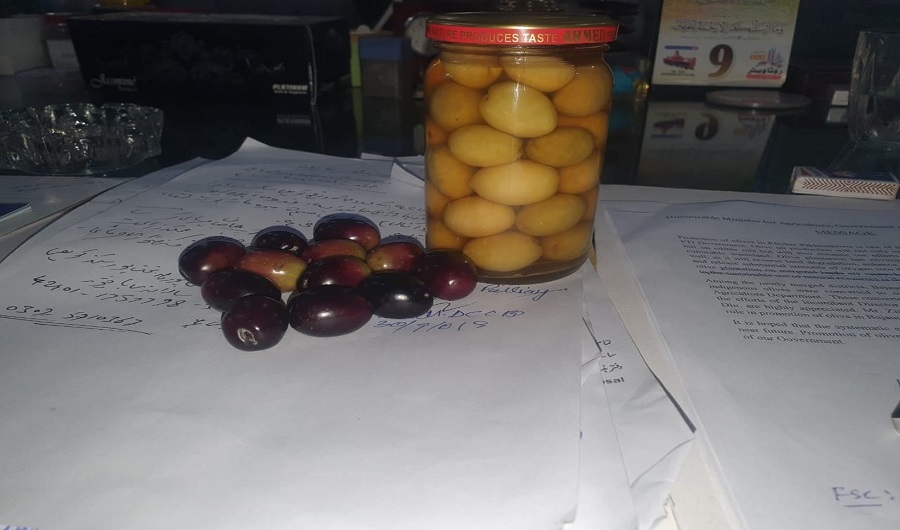


Pickled olives from Bajaur’s first ever olive processing plant. Oct. 22, 2019 (Photo credit: Bajaur agriculture extension department) 

“The agriculture department has established new orchards on 160 acres of land in the district under various developmental schemes in the year 2018-19,” Dawar said, and added that the farmers too, are looking to cash in on the increase in business in the region.
One liter of olive oil costs approximately Rs. 1,600 ($10) in the open market.
Shah Khalid, a tribal elder and farmer, said the district’s tribesmen were enthusiastically participating in the planting and development of olive cultivars due to the increase in demand in local as well as international markets.
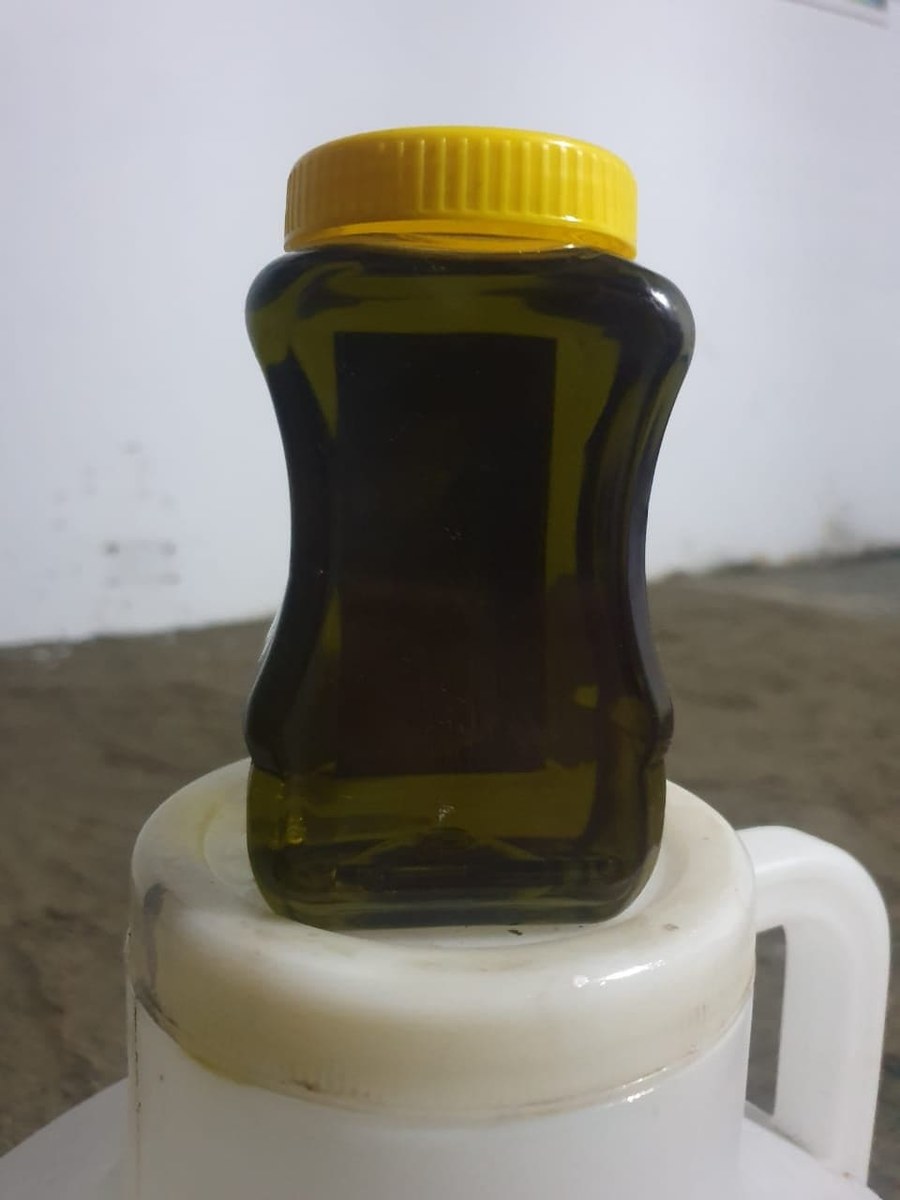


A bottle of olive oil, a product of Bajaur’s lone oil processing plant. Oct. 22, 2019. (Photo credit: Bajaur agriculture extension department) 

“More and more farmers are now inclined to establish olive orchards in Bajaur because they know about its skyrocketing price. I suggest the government should declare Bajaur Pakistan’s olive valley to spur a revolution in the economy and to woo more growers and investors,” Khalid said.
Parts of Khyber Pakhtunkhwa province and the newly-merged tribal districts have conducive agro-climatic conditions for olive plantation, with 36,000 million wild olive trees growing in Pakistan’s mountainous tribal areas, he said.
Olive oil is used in Pakistan and around the world for cooking, eating, confectionary, cosmetics and for its many health benefits.



US freezes visa processing for 75 countries, media reports Pakistan included

Updated 7 sec ago
Follow

US freezes visa processing for 75 countries, media reports Pakistan included

  • State Department announces indefinite pause on immigrant visas starting Jan 21
  • Move underscores Trump’s hard-line immigration push despite close Pakistan-US ties

ISLAMABAD: The United States will pause immigrant visa processing for applicants from 75 countries starting Jan. 21, the State Department said on Wednesday, with Fox News and other media outlets reporting that Pakistan is among the countries affected by the indefinite suspension.

The move comes as the Trump administration presses ahead with a broad immigration crackdown, with Pakistan included among the affected countries despite strong ongoing diplomatic engagement between Islamabad and Washington on economic cooperation, regional diplomacy and security matters.

Fox News, citing an internal State Department memo, said US embassies had been instructed to refuse immigrant visas under existing law while Washington reassesses screening and vetting procedures. The report said the pause would apply indefinitely and covers countries across Asia, Africa, the Middle East, Europe and Latin America.

“The State Department will pause immigrant visa processing from 75 countries whose migrants take welfare from the American people at unacceptable rates. The freeze will remain active until the US can ensure that new immigrants will not extract wealth from the American people,” the Department of State said in a post on X.

According to Fox News and Pakistan news outlets like Dawn, the list of affected countries includes Pakistan, Afghanistan, Bangladesh, Iran, Iraq, Egypt, Nigeria, Russia, Somalia, Brazil and Thailand, among others. 

“The suspension could delay travel, study, and work plans for thousands of Pakistanis who annually seek US visas. Pakistani consulates in the US are expected to provide guidance to affected applicants in the coming days,” Dawn reported.

A State Department spokesman declined comment when Arab News reached out via email to confirm if Pakistan was on the list. 

The Department has not publicly released the full list of countries or clarified which visa categories would be affected, nor has it provided a timeline for when processing could resume.

Trump has made immigration enforcement a central pillar of his agenda since returning to office last year, reviving and expanding the use of the “public charge” provision of US immigration law to restrict entry by migrants deemed likely to rely on public benefits.

During his previous term as president, Trump imposed sweeping travel restrictions on several Muslim-majority countries, a policy widely referred to as a “Muslim ban,” which was challenged in US courts before a revised version was upheld by the Supreme Court. That policy was later rescinded under the President Joe Biden administration.

The latest visa freeze marks a renewed hardening of US immigration policy, raising uncertainty for migrants from affected countries as Washington reassesses its screening and vetting procedures. 

The freeze on visas comes amid an intensifying crackdown on immigration enforcement by the Trump administration. In Minneapolis last week, a US Immigration and Customs Enforcement (ICE) agent shot and killed 37-year-old Renee Good, a US citizen, during a federal operation, an incident that has drawn nationwide protests and scrutiny of ICE tactics. Family members and local officials have challenged the federal account of the shooting, even as Department of Homeland Security officials defended the agent’s actions. The case has prompted resignations by federal prosecutors and heightened debate over the conduct of immigration enforcement under the current administration.