CAIRO: Egypt has accepted a US invitation for a meeting with Sudan and Ethiopia over a protracted Nile dam dispute, the foreign ministry said.
The meeting, to be held in Washington, would bring together foreign ministers from the three Nile basin countries to try to break the stalemate in talks on Ethiopia's giant hydropower dam.
Egypt's foreign ministry said late Tuesday that Cairo had "immediately accepted" the invitation from Washington, without specifying when the meeting would take place.
Egypt has urged international mediation after saying the latest round of Nile talks that ended earlier this month had hit another "deadlock", following nine years of thwarted efforts.
Ethiopia, which says its project is needed to provide much-needed electricity, has insisted the dam would not harm downstream countries' water shares.
But Egypt is concerned the huge dam would severely reduce the flow of Nile waters and invokes its "historic rights" under decades-old treaties.
On Tuesday, Ethiopia's Prime Minister Abiy Ahmed said in parliament that "no force can stop Ethiopia from building the dam", adding that millions could be mobilised if necessary.
However, he emphasised that negotiations would be the best means to resolve the issue.
Last week, Egypt's President Abdel Fattah al-Sisi announced he would hold talks with the Ethiopian premier in Russia.
Both leaders are attending a Russia-Africa summit in Sochi this week.
Ethiopia has said the $4-billion dam will begin generating power by the end of 2020 and be fully operational by 2022.
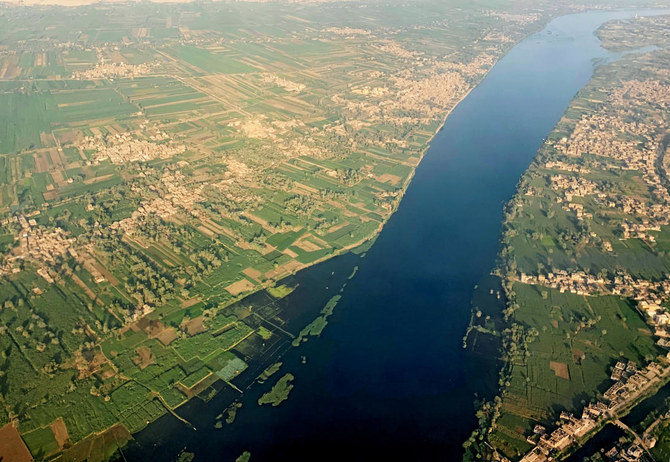
The Nile serves as a crucial artery for water supplies and electricity for the 10 countries it runs through.
Its main tributaries -- the White Nile and the Blue Nile -- converge in Khartoum before flowing north through Egypt to drain into the Mediterranean Sea.
Analysts fear the three Nile basin countries could be drawn into a conflict if the dispute is not resolved before the dam begins operating.


![]()

Egypt says accepts US invite to meet on Nile dam dispute
Egypt says accepts US invite to meet on Nile dam dispute
- Egypt's foreign ministry said late Tuesday that Cairo had "immediately accepted" the invitation from Washington
- The Nile serves as a crucial artery for water supplies and electricity for the 10 countries it runs through


Latest updates


Recommended


© 2026 SAUDI RESEARCH & PUBLISHING COMPANY, All Rights Reserved And subject to Terms of Use Agreement.