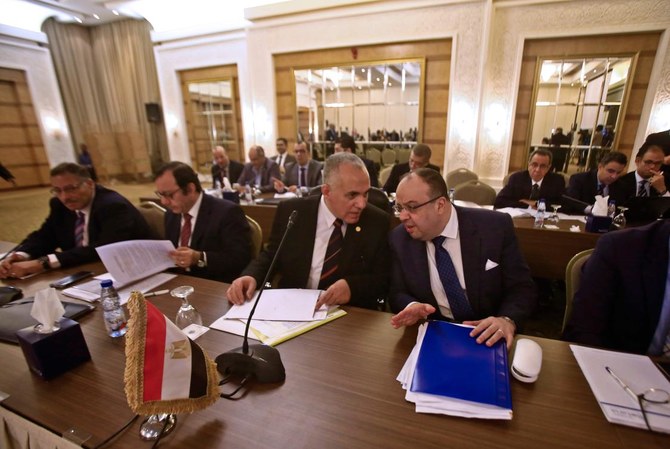
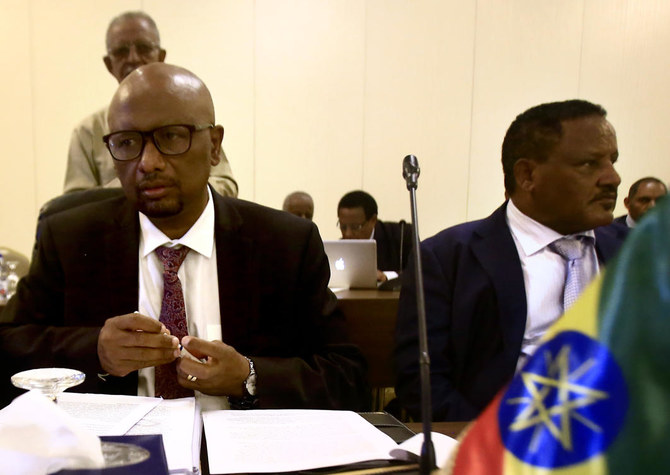
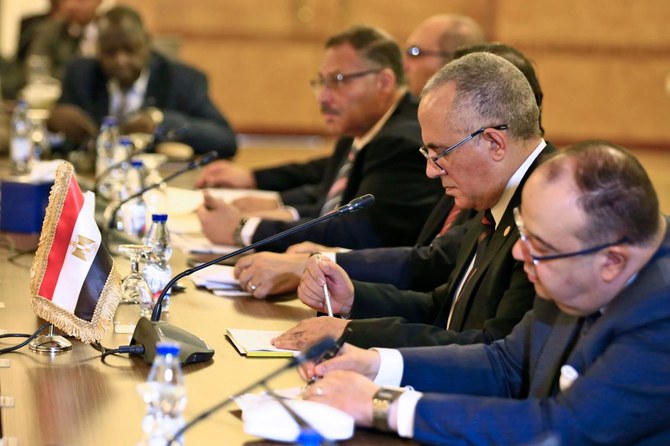
CAIRO: Irrigation ministers from three key Nile Basin countries wrapped up a two-day meeting Saturday in Sudan’s capital without resolving differences over Ethiopia’s soon-to-be-finished Blue Nile dam, with Egypt calling for international mediation to help reach a “fair and balanced” agreement.
Sudan Irrigation Minister Yasser Abbas told reporters in Khartoum that progress was made but differences on filling the giant reservoir and operating rules of the Grand Ethiopian Renaissance Dam remain unsettled.
He said Ethiopia proposed a plan to fill the reservoir over four to seven years, without elaborating. He added that the three countries would continue consultations without giving a time frame.
Egypt’s Irrigation Ministry, meanwhile, said in a statement after the meeting that talks have stalemated, claiming Ethiopia rejected “all proposals that ... avoid causing substantial damage to Egypt.”
“Ethiopia ... offered a new proposal that contradicts previously agreed principles governing the filling and operating process,” said Muhammed el-Sebai, spokesman of the ministry.
He said Egypt has called for international mediation “to help reach a fair and balanced agreement that protect the three countries’ rights.”
Ethiopia did not immediately respond.
Egyptian presidency spokesman Bassam Radi said Egypt was looking forward to an “instrumental role” by the US in the talks. He said because there was no breakthrough in negotiations, there was a need for an “international instrumental role to overcome the current deadlock.”
White House press secretary Stephanie Grisham said Thursday the US supports Egypt, Ethiopia and Sudan’s negotiations to reach a sustainable and mutually beneficial agreement.
“All Nile Valley countries have a right to economic development and prosperity,” Grisham said. “The administration calls on all sides to put forth good faith efforts to reach an agreement that preserves those rights, while simultaneously respecting each other’s Nile water equities.”
Egypt fears the dam could reduce its share of the Nile River, which serves as a lifeline for the country’s 100 million people. Ethiopia has roughly the same population and says the dam will help its economic development.


![]()
![]()
![]()

Egypt, Sudan, Ethiopia fail to reach agreement on Nile dam
Egypt, Sudan, Ethiopia fail to reach agreement on Nile dam
- Sudan Irrigation Minister Yasser Abbas told reporters in Khartoum that progress was made but differences on filling the giant reservoir and operating rules of the Grand Ethiopian Renaissance Dam remain unsettled
- Egypt’s Irrigation Ministry, meanwhile, said that talks have stalemated


Latest updates




© 2026 SAUDI RESEARCH & PUBLISHING COMPANY, All Rights Reserved And subject to Terms of Use Agreement.