

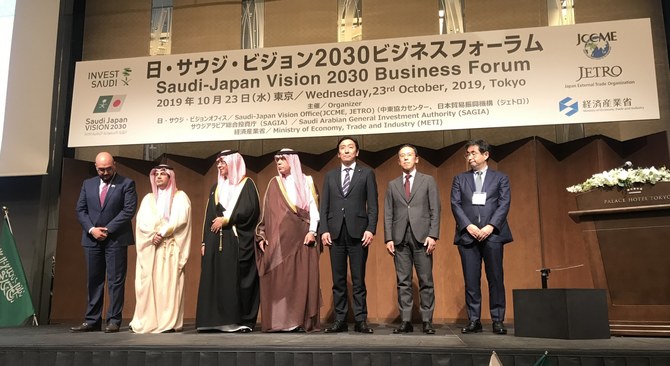

DUBAI: Saudi Arabia opened its doors for Japanese investment during a Saudi-Japan business forum held in Tokyo on Wednesday amid growing economic ties between the two nations.
The Saudi Arabian General Investment Authority (SAGIA) discussed tourism and entertainment investment opportunities in Saudi Arabia with Japan’s business leaders and government officials during the Saudi-Japan Vision 2030 Business Forum, hosted in partnership with the Japan External Trade Organization (JETRO).
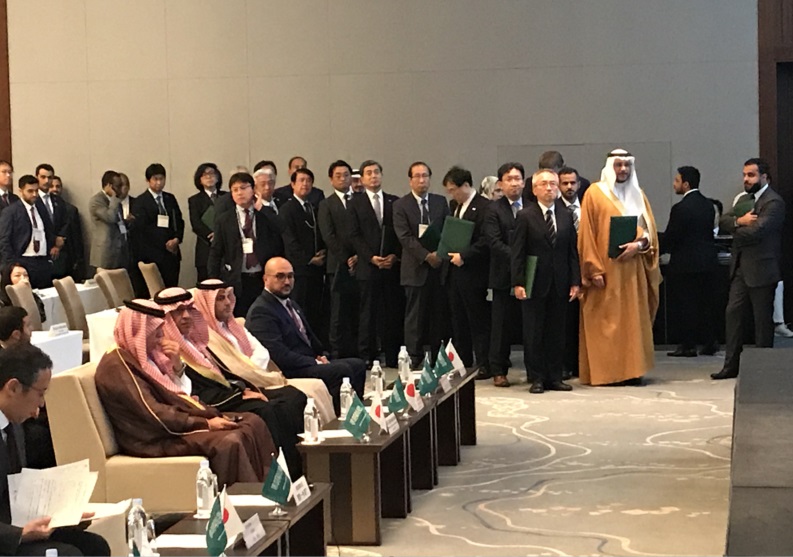
During the forum, 12 Memoranda of Understanding (MoU) were exchanged in fields of education, science, technology, and banking and finance.
The MoUs include Toyobo and Saline Water Conversion Corporation and Arabian Japanese Membrane Company which will aim to manage disposed brine water generated from seawater desalination plants for environmental sustainability.
Two Saudi and Japanese universities signed MoUs for academic exchange on research. While SAGIA signed MoU with Sumitomo Mitsui Banking Corporation to enhance investment opportunities.
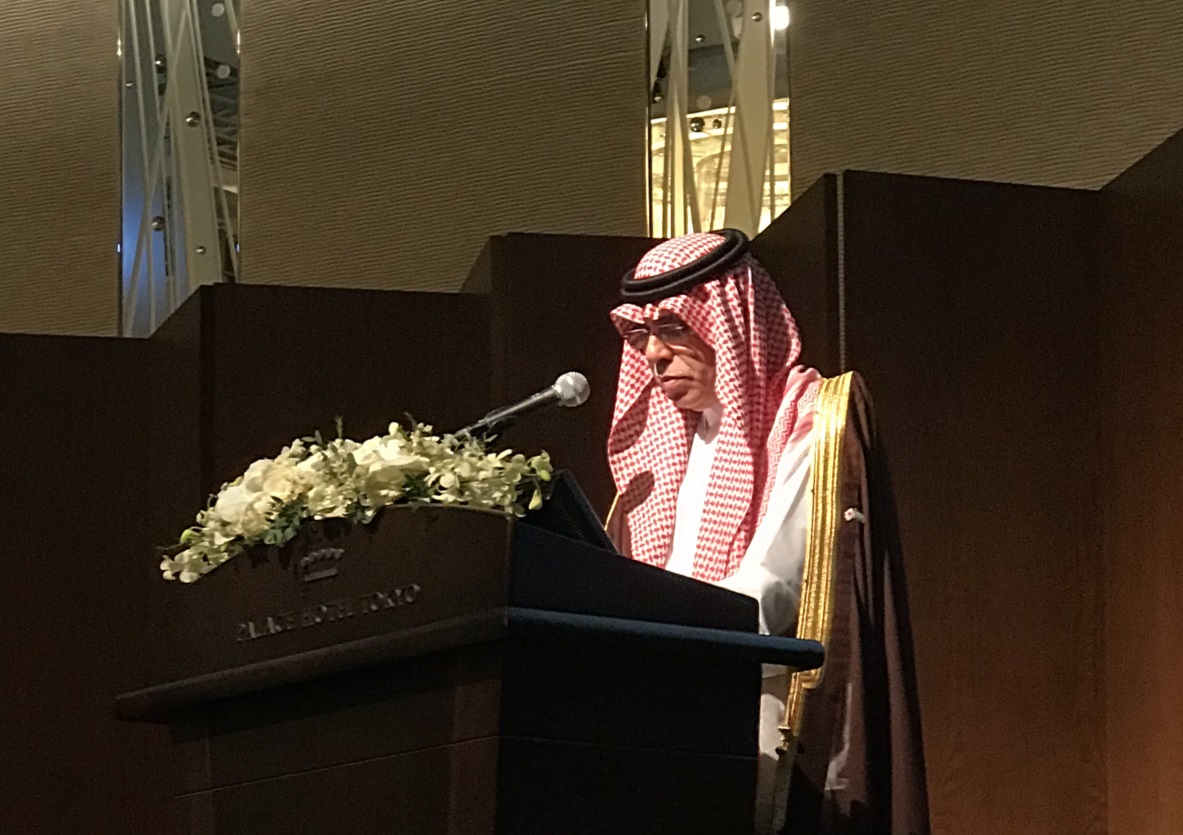
“Japan is one of Saudi Arabia’s most important economic partners, and businesses from across our countries have a strong track record of working together,” Saudi Arabia’s Minister of Commerce and Investment, Majid Al-Qasabi said at the Forum.
“Today’s Forum reflects the success and strength of this enduring partnership. We established the Saudi-Japanese Vision 2030 two years ago, which seeks to drive and facilitate continued private sector involvement by establishing joint-ventures between entities across our respective countries,” he added.
These investments come alongside a broad series of economic reforms, which are enabling rapid growth in foreign investment in Saudi Arabia. This is part of the Kingdom’s efforts to diversify its economy as outlined in Vision 2030.
Saudi Arabia has moved up three positions to the 36th place, globally, through its efforts to diversify the Kingdom’s economy, according to the 2019 Global Competitiveness Report published by the World Economic Forum.
The total number of foreign investor licenses issued in the first half of 2019 was more than double the number issued the same period a year before.
“We believe that the future prosperity of the Kingdom depends on fostering even closer ties with our strategic partners across the globe, and we look forward to welcoming these companies as they take part in the historic transformation of our economy,” Al-Qasabi said.
Memoranda of Understanding exchanged at the Forum include:
- University of Tokyo and King Fahd University of Petroleum and Minerals (KFUPM) – the academic exchange for research in renewable energy and petrochemicals
- Kyoto University Institute for Advance Study (KUIAS) and King Abdullah University for Science and Technology (KAUST)– to promote the exchange of scientific materials, publications, and information and exchange of faculty members and researchers, students and joint research
- University of Tokyo and King Abdullah University for Science and Technology (KAUST) – to collaborate on the research and the next generation of organic and soft electronics and efficient generation of hydrogen
- Japan Patent Office (JPO) and Saudi Authority for Intellectual Property (SAIP) – to promote the exchange of data and best practices in the field of intellectual property protection including trademarks and patents
- Sumitomo Mitsui Banking Corporation and Saudi Arabian General Investment Authority (SAGIA) – to enhance investment opportunities between Japan and Saudi Arabia
- Mitsubishi UFJ Financial Group and Saudi Arabian General Investment Authority (SAGIA) – a framework for cooperation to enhance investment from Japan to the Kingdom of Saudi Arabia
- Toyobo and Saline Water Conversion Corporation and Arabian Japanese Membrane Company – to develop innovative membrane technologies and manage disposed brine water generated from seawater desalination plants for environmental sustainability
- Sojitz Corporation and AIZAWA Concrete Corporation and Al Saedan for Development – to explore opportunities and utilize 3D printing technology and local materials for housing construction
- Cyberdyne Group and Abdul Latif Jameel Investments – to collaborate and enhance Cybernic treatment and contribute to the social development of the Kingdom.
- Saudi-Japan Vision Office Riyadh (VRO) and National Industrial Development and Logistics Program (NIDLP) – to expand collaboration and enable investments in the field of industry, mining, energy and logistics
- TBM and SABIC – to build a circular economy using LIMEX
- Ministry of Economy, Trade and Industry (METI) and the National Industrial Clusters Development Program (NICDP) and the Technical and Vocational Training Corporation and Saudi-Japanese Automobile High Institute – to provide support and training for human capacity development for Saudi youth in the automotive sector


