



ISLAMABAD: On the eve of the arrival of Prince William and Duchess Kate Middleton of Britain to Pakistan for a five-day visit on Monday, some of the public’s most pressing questions involve Middleton’s wardrobe choices.
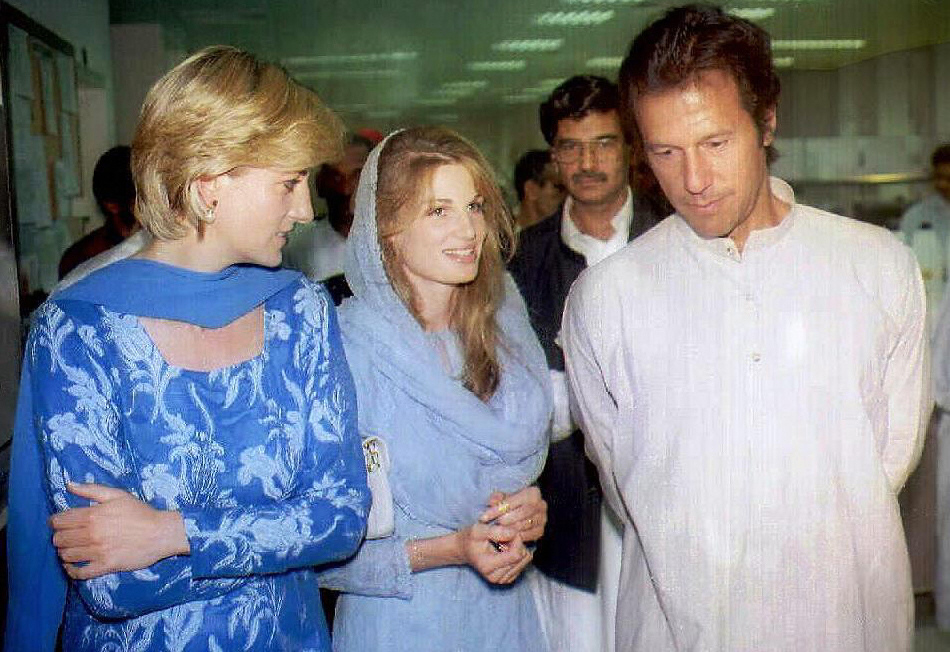
What royals wear at home and abroad has always been of great interest around the world, with fashion enthusiasts following their sartorial approaches with keen curiosity. When the late Princess Diana visited Pakistan three times in the ’90s, her outfits were anticipated and applauded, with a mix of the national dress, shalwar kameez from the likes of Nilofer Shahid and Rizwan Beyg, and more familiar choices from western design houses.
“When royals come to visit, they want to do something Pakistani, a touch of fusion, rather than wearing something fully western. We have such a beautiful heritage that even the slightest inclusion of our aesthetic looks beautiful,” veteran Pakistani fashion designer and pioneer, Nilofer Shahid, told Arab News.
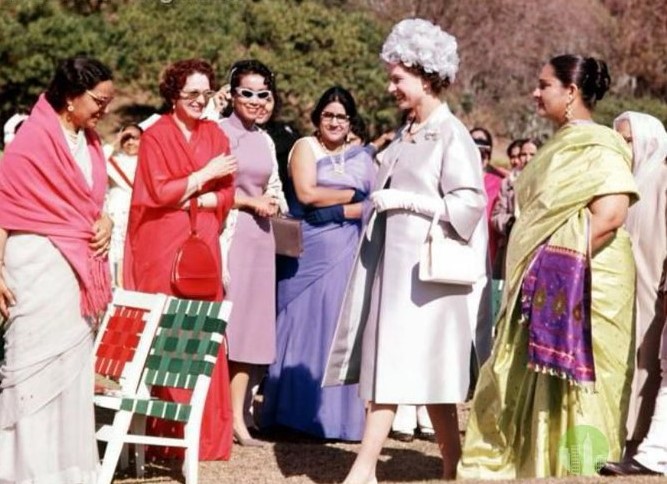
Queen Elizabeth II during her Pakistan visit in 1961. (Photo Courtesy: Lahore City History)
In the ’90s, Shahid was requested by Diana’s friend, Jemima Goldsmith, the former wife of Prime Minister Imran Khan, to dress the princess on her visits to Pakistan, and the designer came up with classic ensembles, with the images circulated widely as some of her most iconic style moments in the region.
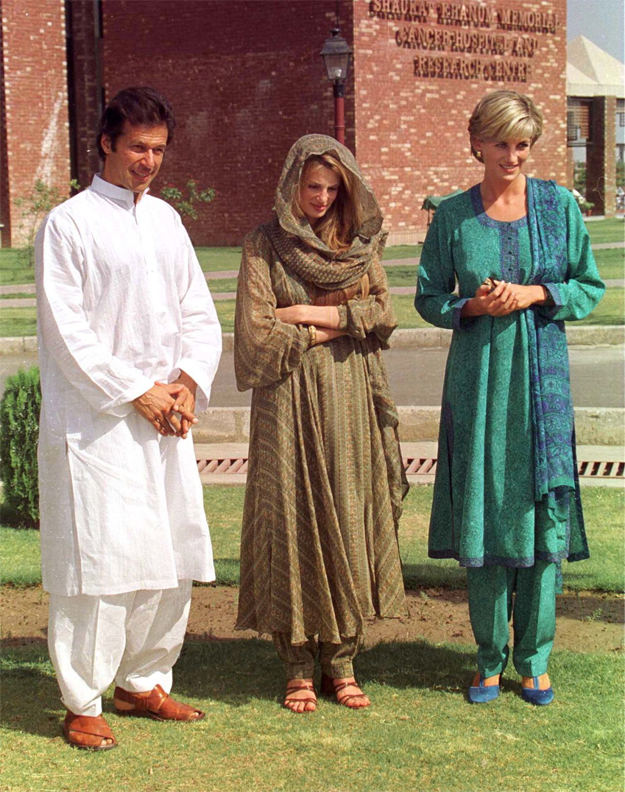
Princess Diana in Pakistani national dress, the shalwar kameez, during her 1997 visit to Pakistan for the opening of Shaukat Khanum Hospital. May 22, 1997. (Reuters)
For Middleton, Shahid predicts a simpler and less embellished wardrobe and said if the duchess wears Pakistani designers, she is likely to choose pieces that reflect her personal style.
“Her style is structured and simpler, in the sense [it is] not overly embellished. She is chic, and dresses up in a mature manner...carries herself with a lot of panache and confidence. She makes her own statement and does not follow trends,” Shahid said.
Meanwhile, local design houses and fans are abuzz with rumors about who will get the opportunity to dress the duchess but all are mum about whether or not they have been asked to do the honors, or have pitched outfits to the royal’s stylist.
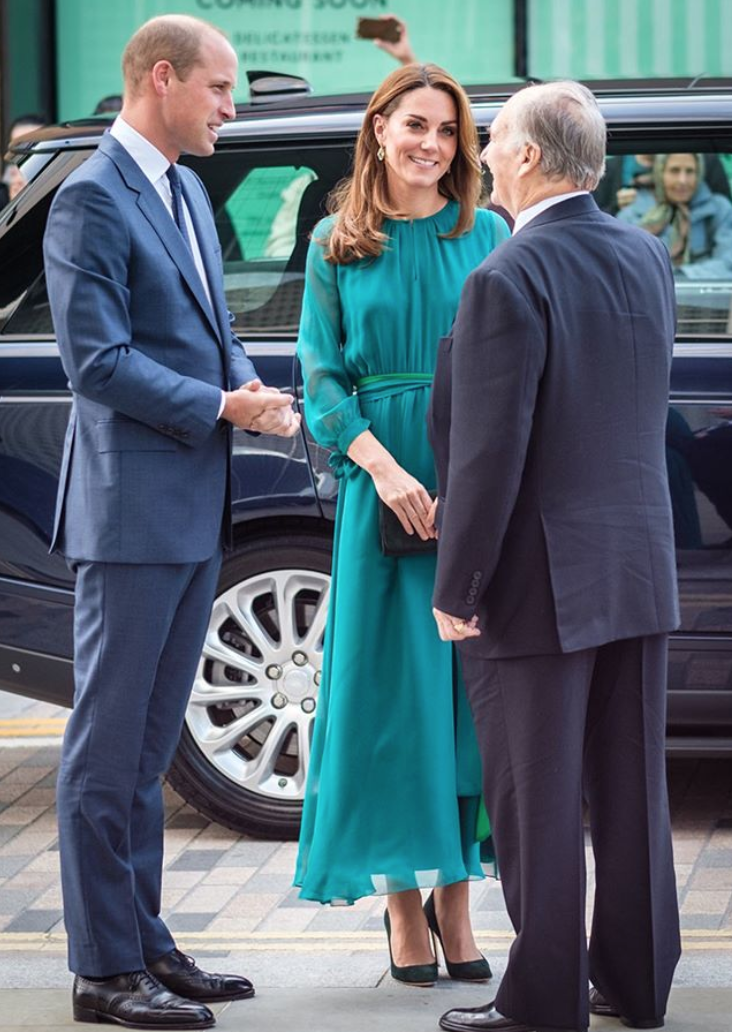
Britain's Prince William, Duke of Cambridge and his wife Britain's Catherine, Duchess of Cambridge during a visit to the Aga Khan Centre in London on October 2, 2019. (AFP)
Susan Kelley, editor, and founder of the popular fashion blog “What Kate Wore,” which documents the stylish inclinations of the duchess, said in a People Magazine article that she predicts Middleton will draw inspiration from the late Princess Diana’s visits to Pakistan, and go for a mix of her familiar favorites.
On her first trip to Pakistan, it is possible, Kelley said, that Middleton will wear her personal aesthetic while respecting Pakistan’s conservative approach to dress.
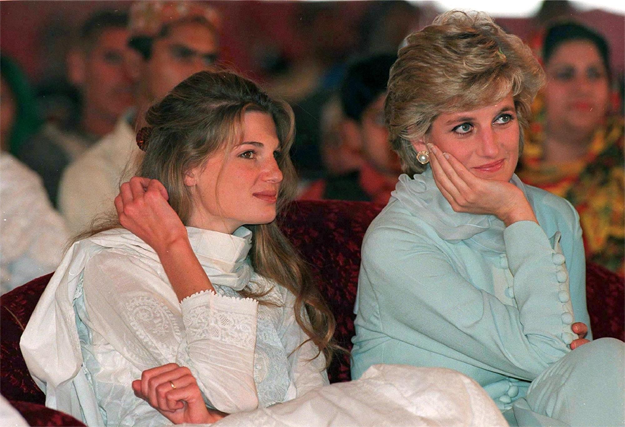
Princess Diana and Jemima Goldsmith at Shaukat Khanum Cancer Hospital. April 16, 1996. (Reuters)
“Diana wore [shalwar kameez] multiple times in Pakistan and I think she [Middleton] has on occasion looked to Diana for inspiration, while being careful not to copy her,” Kelley said, and added that since Pakistan’s textiles were an important part of the country’s identity, it could be something the royals would take into account when dressing for their tour.
Queen Elizabeth touring the Badshahi Mosque in Lahore's Walled City in 1961. (Photo Courtesy: Lahore City History)
In 2006, during the last royal visit, Duchess of Cornwall Camilla Parker wore Pakistan’s national dress while touring Pakistan.
But HRH Queen Elizabeth II forewent traditional Pakistani ensembles during her visits in 1961 and 1997 and stuck instead to her favorite silhouettes and cuts, including glamorous ball gowns and dresses, and later the iconic skirt suits she became known for.
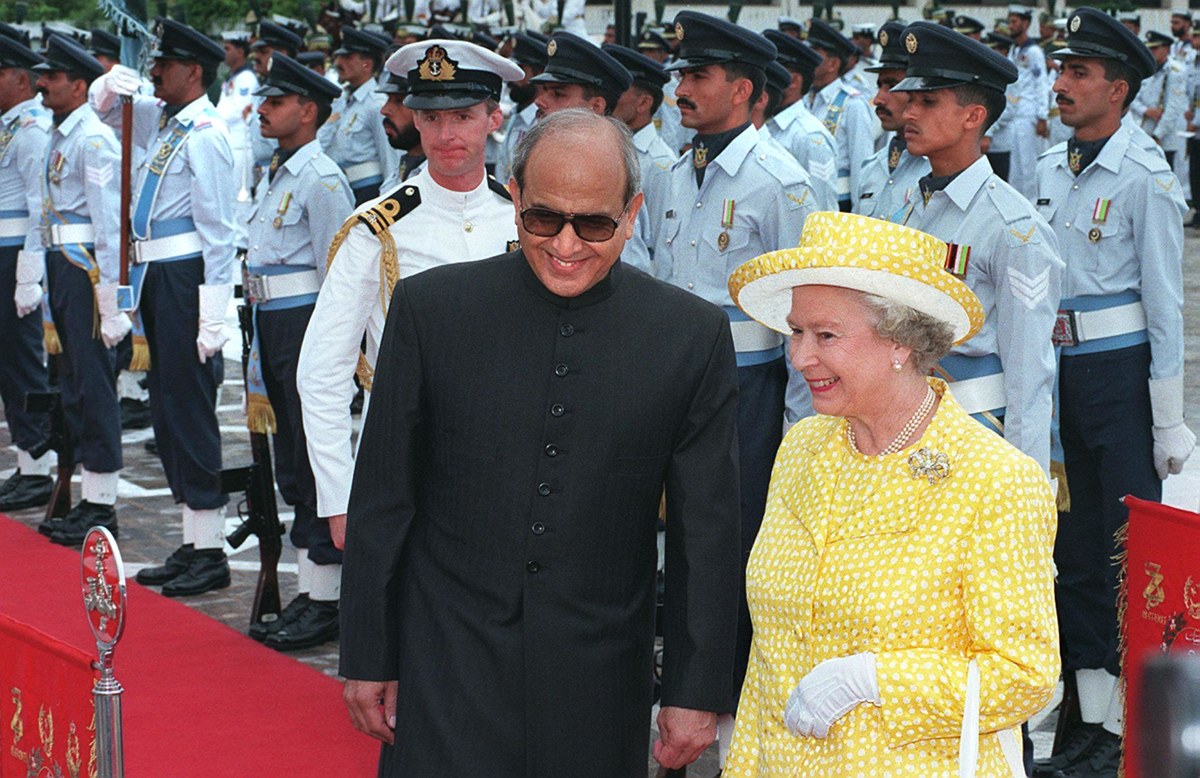
In signature suited brights, Queen Elizabeth II with then-President of Pakistan, Farooq Leghari, in Islamabad. October 7, 1997. (AFP)
The Queen also spoke at a banquet while in the country, and wore green and white, the colors of Pakistan’s national flag.
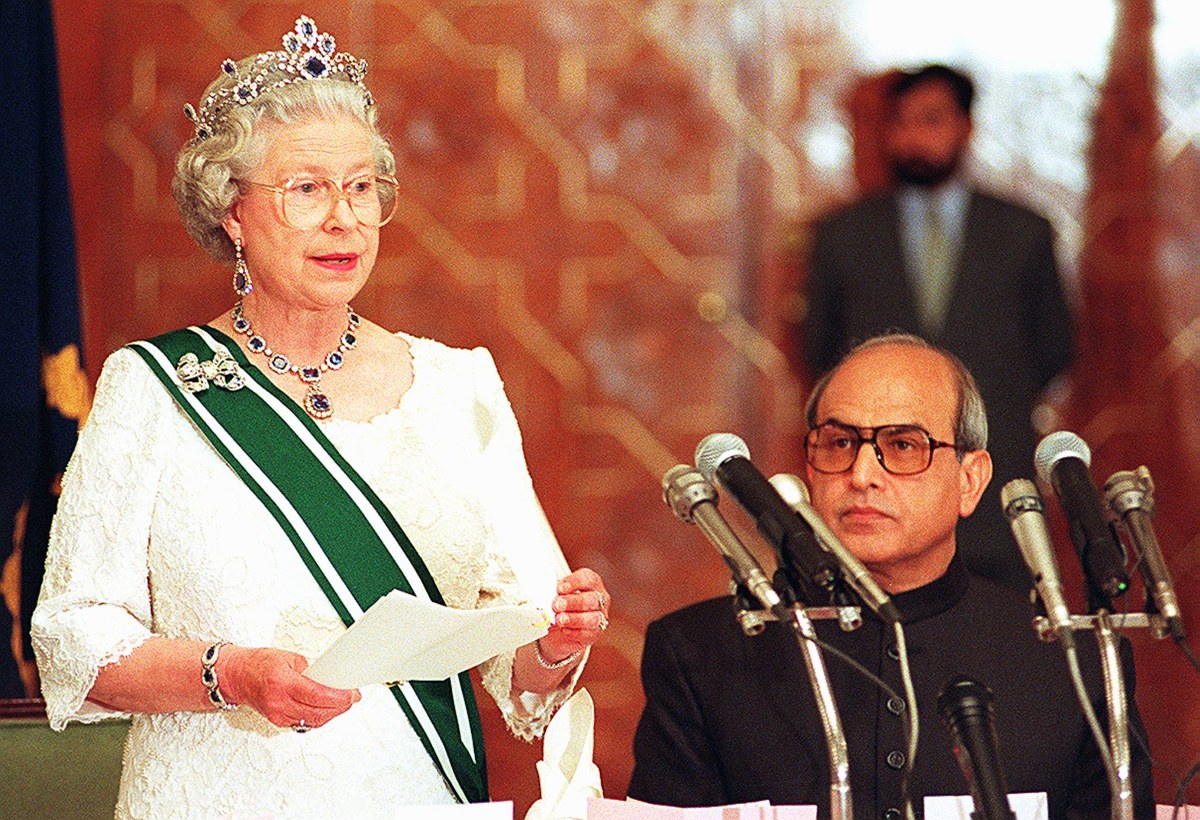
In signature suited colors of Pakistan’s national flag, Queen Elizabeth II with then-President of Pakistan, Farooq Leghari, in Islamabad. October 7, 1997. (AFP)
Earlier this month, for her first official kick-off of the tour, Middleton wore an elegant and minimalistic teal dress with a green waist belt and $6 earrings by high street Pakistani designer Zeen at an event at the Aga Khan Center in London.


