

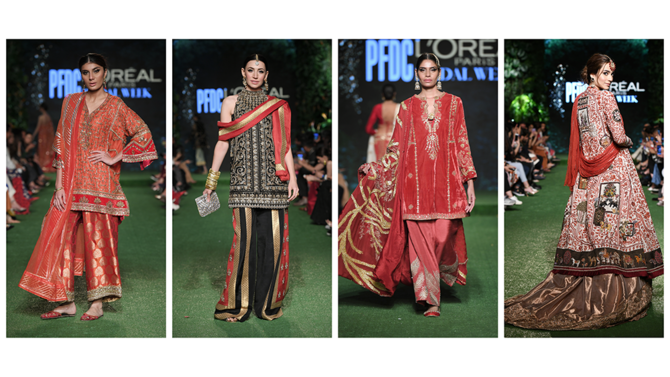
Full of bride: Pakistani designers share top trends this wedding season

Updated 05 October 2019
Follow

Full of bride: Pakistani designers share top trends this wedding season

  • Artistic pieces and unique combinations were the highlights of this year's fashion week

ISLAMABAD: It was a sneak peek into what to expect as Pakistan gears up for its wedding season this year.
And designers at Pakistan Fashion Design Council’s L’Oreal Paris Bridal Week 2019 (PLBW) left no stone unturned to ensure Pakistani brides are spoilt for choice.
Walking the ramps in Lahore from September 26th to 28th, they presented their wedding collections which had several hits and a few misses.
Here's our pick of the best from the week that was:

BURNT ORANGE
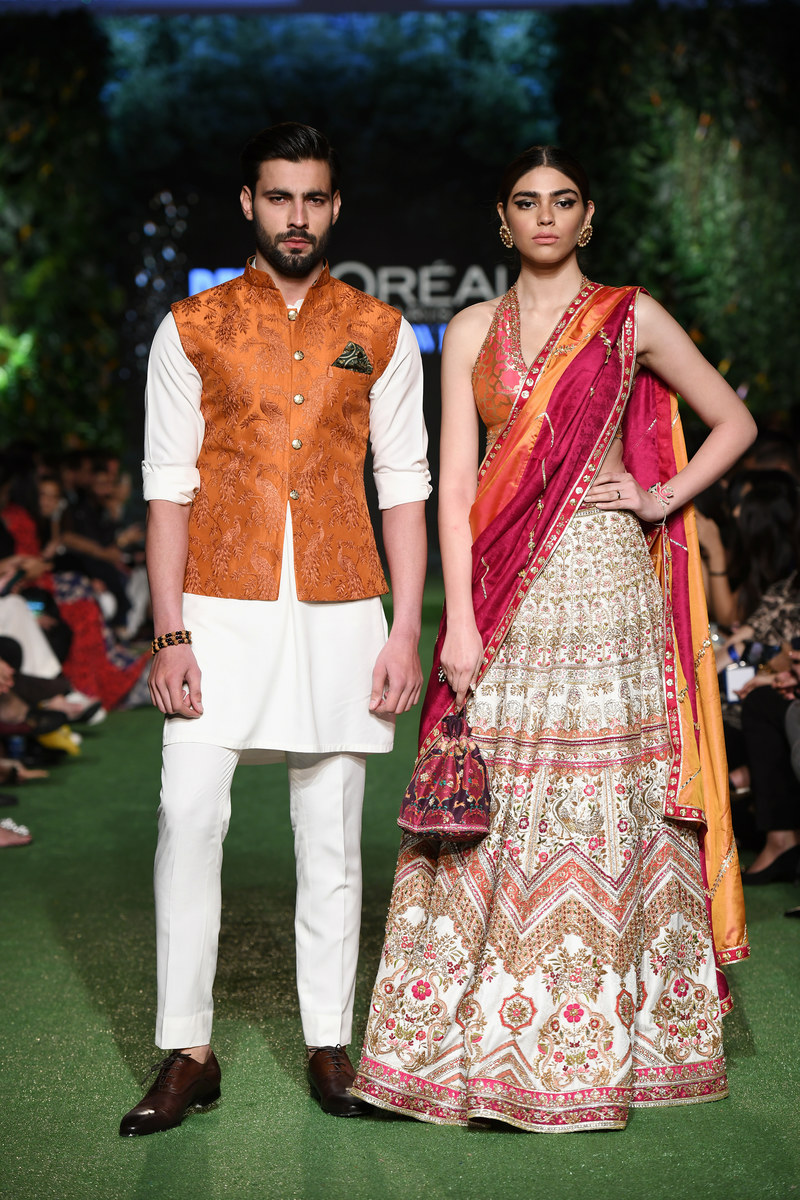


Sania Maskatiya's collection at PLBW has a number of orange outfits including for grooms wear in the form of accent pieces like vests and shawls. (Photo courtesy: Faisal Farooqui, Dragonfly)

Orange is making a comeback to the bridal world after being relegated to the cupboards in favour of metallics and traditional red for several years. A majority of designers were seen weaving it into their collections in variants of the colour.
Saturated but skewing away from neon (2016-2018), burnt orange dominated several ramps including those being represented by Misha Lakhani, HSY and Sania Maskatiya.

DUPATTA REMIX


On the first night of PLBW19 Nida Azwer's bridal collection includes a dupatta drape not commonly seen in women's collections. (Photo courtesy: Faisal Farooqui, Dragonfly)

Dupattas are not only here to stay but were seen making their presence felt like never before. From being incorporated in a unique look as was seen on Mahgul’s runway or cleverly reworked as was done by Kamiar Rokni, the dupatta's renaissance was done with a contemporary touch.

JACKETS


Nida Azwer's collections embraces jackets over ensembles with a number of garments from sarees and lehngas getting the jacket treatment. (Photo courtesy: Faisal Farooqui, Dragonfly)

If there is one item that dominated the runway it would be the jacket. Winter wedding season means colder venues and mostly useless heaters, and designers have created looks we all know and love such as lehenga-cholis, sarees, and gowns – all topped with jackets that elevate the final ensemble. HSY, Misha Lakhani and Nida Azwer built up the trend brilliantly by creating statement jackets that did not overpower the final look in any way.

PAINTED TOUCHES
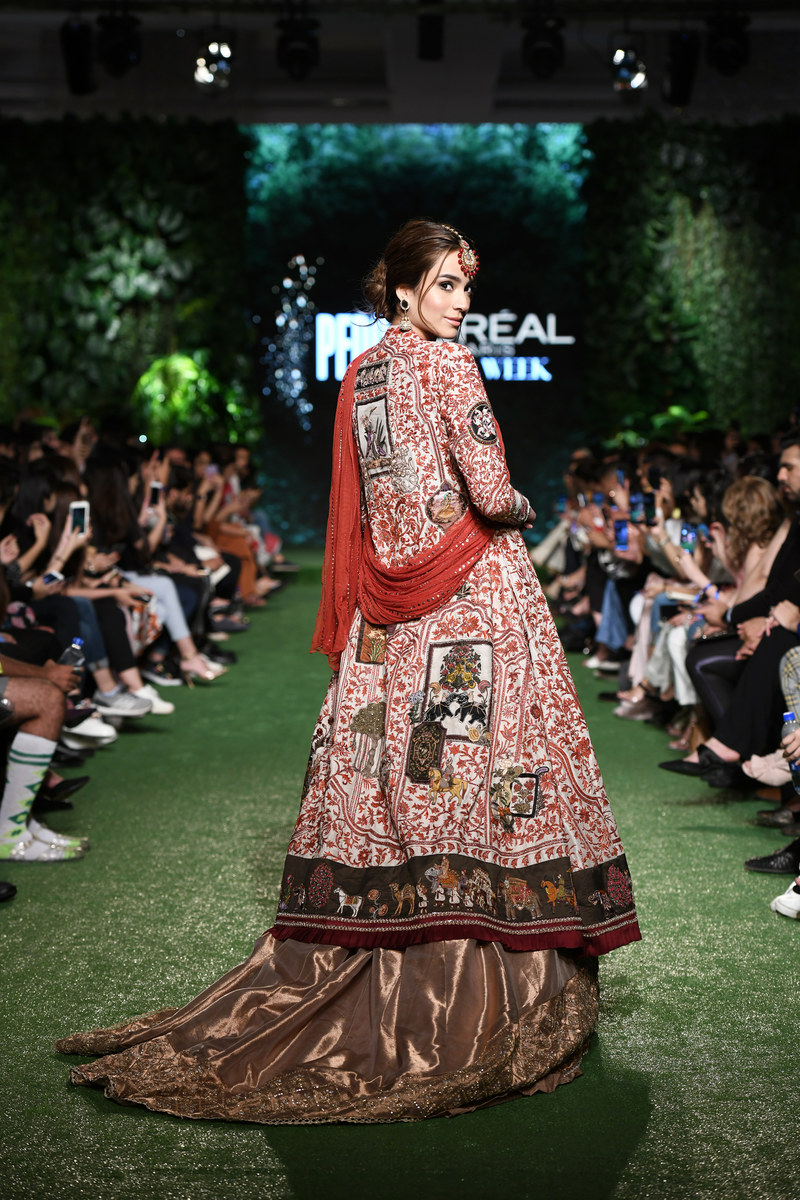


Nida Azwer's collection featuring embroidered images inspired by mughal paintings. (Photo courtesy: Faisal Farooqui, Dragonfly)

A micro-trend but one none the less was the incorporation of images on dupattas, shawls, lehngas and jackets as were seen in both Nida Azwer and Sania Maskatiya’s collections. Taking inspiration from the Mughal era is nothing new for designers, but bringing those mood-boards onto  fabrics by using intricate embroidery and thread work is, with both the designers knocking it out of the park.

MIXED MATERIALS
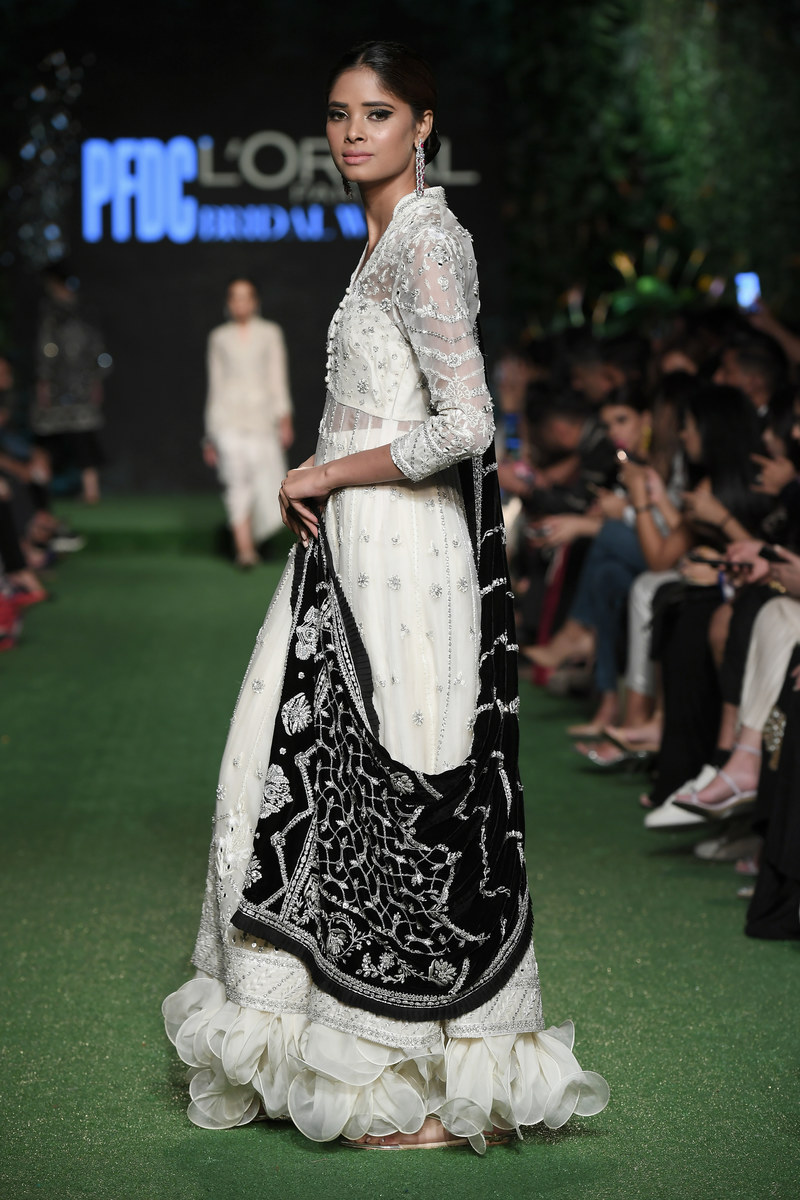


Misha Lakhani's collection employs velvet against lighter weight fabrics. (Photo courtesy: Faisal Farooqui, Dragonfly)

When designing collections that have to withstand Pakistan's shaadi season, one has to keep the weather in mind too. A number of designers paired contrasting fabrics, such as velvet and brocade, with silks and chiffons to create pieces that were fluid, versatile and eye-catching.



IMF warns against policy slippage amid weak recovery as it clears $1.2 billion for Pakistan

Updated 11 December 2025
Follow

IMF warns against policy slippage amid weak recovery as it clears $1.2 billion for Pakistan

  • Pakistan rebuilt reserves, cut its deficit and slowed inflation sharply over the past one year
  • Fund says climate shocks, energy debt, stalled reforms threaten stability despite recent gains

ISLAMABAD: Pakistan’s economic recovery remains fragile despite a year of painful stabilization measures that helped pull the country back from the brink of default, the International Monetary Fund (IMF) warned on Thursday, after it approved a fresh $1.2 billion disbursement under its ongoing loan program.

The approval covers the second review of Pakistan’s Extended Fund Facility (EFF) and the first review of its climate-focused Resilience and Sustainability Facility (RSF), bringing total disbursements since last year to about $3.3 billion.

Pakistan entered the IMF program in September 2024 after years of weak revenues, soaring fiscal deficits, import controls, currency depletion and repeated climate shocks left the economy close to external default. A smaller stopgap arrangement earlier that year helped avert immediate default, but the current 37-month program was designed to restore macroeconomic stability through strict monetary tightening, currency adjustments, subsidy rationalization and aggressive revenue measures.

The IMF’s new review shows that Pakistan has delivered significant gains since then. Growth recovered to 3 percent last year after shrinking the year before. Inflation fell from over 23 percent to low single digits before rising again after this year’s floods. The current account posted its first surplus in 14 years, helped by stronger remittances and a sharp reduction in imports. And the government delivered a primary budget surplus of 1.3 percent of GDP, a key program requirement. Foreign exchange reserves, which had dropped dangerously low in 2023, rose from US$9.4 billion to US$14.5 billion by June.

“Pakistan’s reform implementation under the EFF arrangement has helped preserve macroeconomic stability in the face of several recent shocks,” IMF Deputy Managing Director Nigel Clarke said in a statement after the Board meeting.

But he warned that Islamabad must “maintain prudent policies” and accelerate reforms needed for private-sector-led and sustainable growth.

The Fund noted that the 2025 monsoon floods, affecting nearly seven million people, damaging housing, livestock and key crops, and displacing more than four million, have set back the recovery. The IMF now expects GDP growth in FY26 to be slightly lower and forecasts inflation to rise to 8–10 percent in the coming months as food prices adjust.

The review warns Pakistan against relaxing monetary or fiscal discipline prematurely. It urges the State Bank to keep policy “appropriately tight,” allow exchange-rate flexibility and improve communication. Islamabad must also continue raising revenues, broadening the tax base and protecting social spending, the Fund said.

Despite the progress, Pakistan’s structural weaknesses remain severe.

Power-sector circular debt stands at about $5.7 billion, and gas-sector arrears have climbed to $11.3 billion despite tariff adjustments. Reform of state-owned enterprises has slowed, including delays in privatizing loss-making electricity distributors and Pakistan International Airlines. Key governance and anti-corruption reforms have also been pushed back.

The IMF welcomed Pakistan’s expansion of its flagship Benazir Income Support Program, which raises cash transfers for low-income families and expands coverage, saying social protection is essential as climate shocks intensify. But it warned that high public debt, about 72 percent of GDP, thin external buffers and climate exposure leave the country vulnerable if reform momentum weakens.

The Fund said Pakistan’s challenge now is to convert short-term stabilization into sustained recovery after years of economic volatility, with its ability to maintain discipline, rather than the size of external financing alone, determining the durability of its gains.