

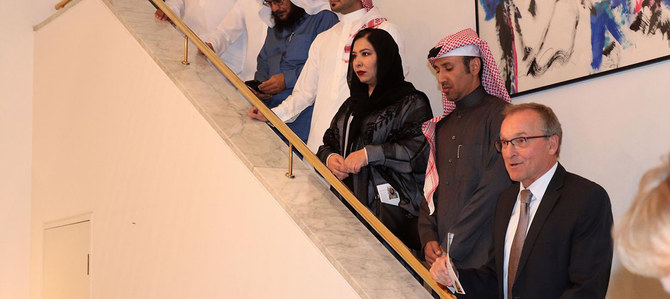

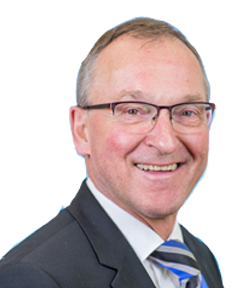
Jörg Ranau
RIYADH: Saudi Arabia and Germany share longstanding political ties underpinned by a deep friendship between Saudis and Germans. Our relations are diverse and strong. The manifold forms of cooperation and the common outlook on many of today’s challenges are a testimony to our strong ties.
Ninety years ago, Germany and the Kingdom of Hejaz and Nadj concluded a treaty of friendship. A consulate was established in Jeddah to promote bilateral ties and 65 years ago, in 1954, Germany and Saudi Arabia established diplomatic relations. Today, shared interests regarding security, stability and a common perception of the challenges of the 21st century — be it in the fields of health, education, or sustainable economic growth — are pillars of an intense political partnership.
People-to-people ties have also reached an unprecedented level. A large number of Saudis spend their summer vacations in Germany. Businessmen and ever more businesswomen travel back and forth. In fact, Saudi Arabia came fifth in the global ranking for visas to Germany in recent years.
As the Kingdom has opened its doors to tourists from all over the world, I am confident that Germans will soon be coming to Saudi Arabia in large numbers. Being a nation of keen travelers, we are eager to explore destinations away from the well-trodden paths and to be among the first to see the unique landscapes and authentic cultural heritage Saudi Arabia has to offer.
In the face of the rising tensions in the Middle East, Saudi Arabia and Germany share a common interest in preserving stability. Germany has condemned in the strongest terms the Sept. 14 attacks on oil facilities in Abqaiq and Khurais. It is clear to us that Iran bears responsibility for this. There is no other plausible explanation.
HIGHLIGHTS
- Ninety years ago, Germany and the Kingdom of Hejaz and Nadj concluded a treaty of friendship.
- A consulate was established in Jeddah to promote bilateral ties and 65 years ago.
- Today, shared interests regarding security, stability and a common perception of the challenges of the 21st century.
In view of these attacks, a collective effort toward regional stability and security becomes all the more important. Germany remains committed to the Joint Comprehensive Plan of Action and we urge Iran to return to full compliance with this. At the same time, Iran needs to agree to negotiations on a long-term framework for its nuclear program, as well as on issues related to regional security, including its missiles program and other means of delivery. We are also committed to finding a political solution to the ongoing conflict in Yemen.
Germany remains a committed partner in the fight against Daesh. Here, our focus is to ensure sustainable development by stabilizing liberated areas, facilitating the return of internally displaced persons and tackling the root causes of Daesh. German contributions to stabilization support, development cooperation and humanitarian aid since 2014 add up to a total of €1.3 billion ($1.4 billion) in Iraq and €1.23 billion in Syria. This year alone, Germany will provide €130 million for humanitarian aid in Yemen.
In the economic domain, the implementation of the Saudi Vision 2030 offers the opportunity to develop our trade-based relationship into a much broader partnership fostering investment, localization and qualification of the Saudi workforce.
About 200 German companies have a local presence in Saudi Arabia. Many of them are small- and medium-sized enterprises — often world-beaters in their respective fields. Germany and her companies have particular strengths in research and training. Both of these are essential for achieving a successful transformation to a knowledge-based society.
Be it in the field of digitalization, renewable energy, healthcare or manufacturing and artificial intelligence, Germany has a lot to offer and we stand ready to contribute in these and other fields for the realization of Vision 2030.
In the fields of education and research, cooperation between Saudi Arabia and Germany has a long history. Outstanding examples include the partnership between the Saudi Commission for Tourism and National Heritage and the German Archaeological Institute for excavations in Tayma, and the joint Attosecond Science Lab at King Saud University with the Max Planck Society and the University of Munich. The new film by Haifa Al-Mansour, “The Perfect Candidate,” which is a Saudi-German coproduction, is just one example of our increasingly dynamic cultural cooperation.
We look back on a long and stable friendship. Looking ahead, we have a lot to gain by strengthening our cooperation in all fields — politically, economically and culturally — to forge a renewed and stronger partnership. Together with our Saudi Arabian partners, we will seize this opportunity.
• Jörg Ranau is the German ambassador to Saudi Arabia


