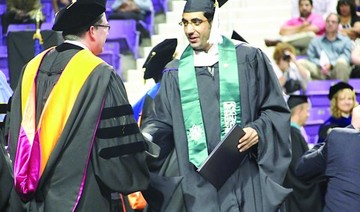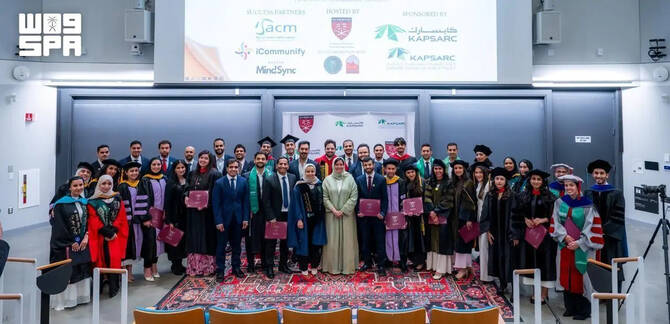
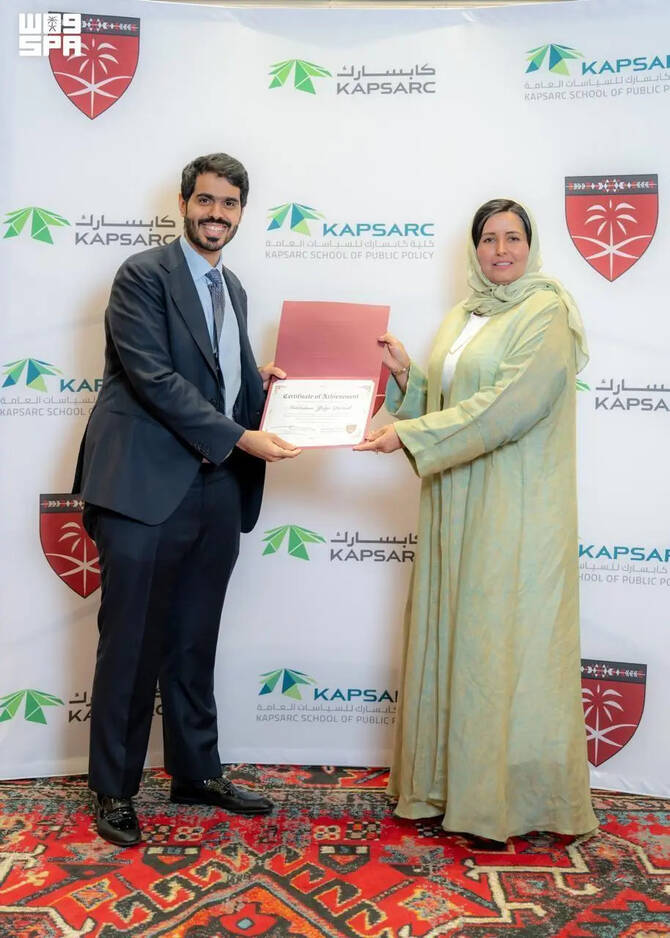
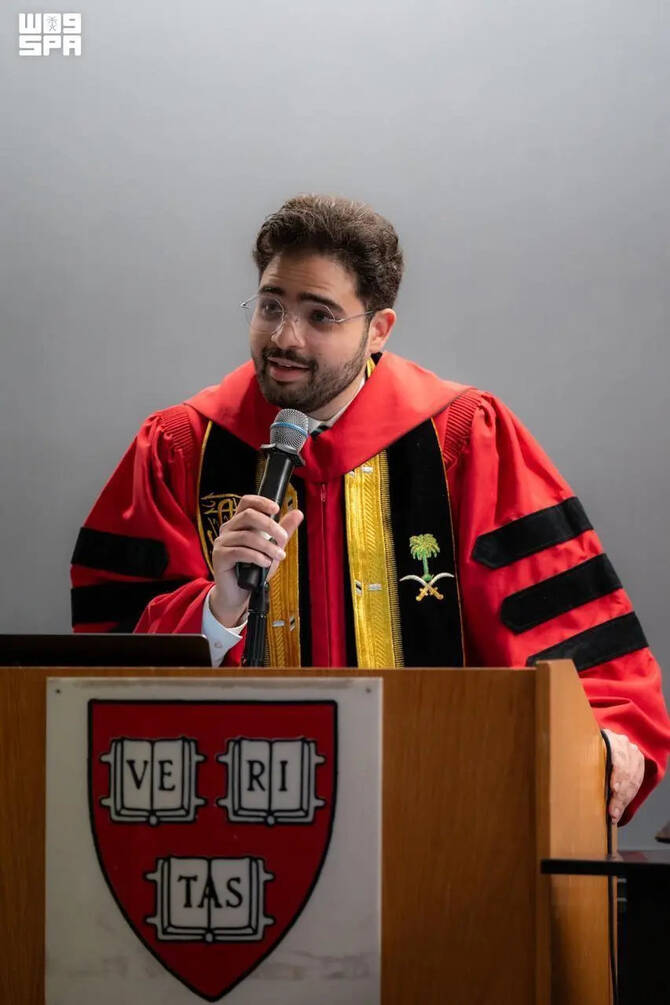
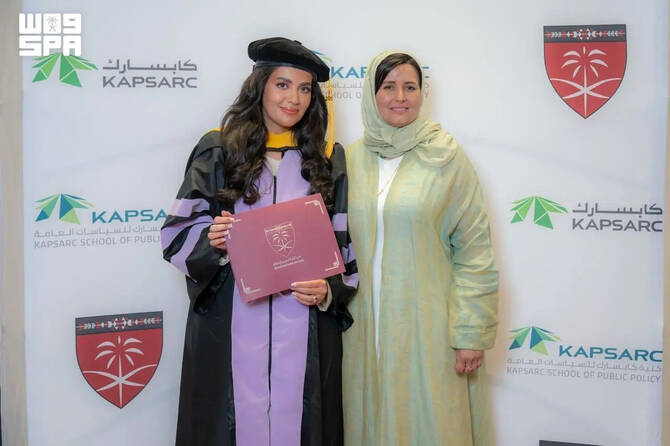
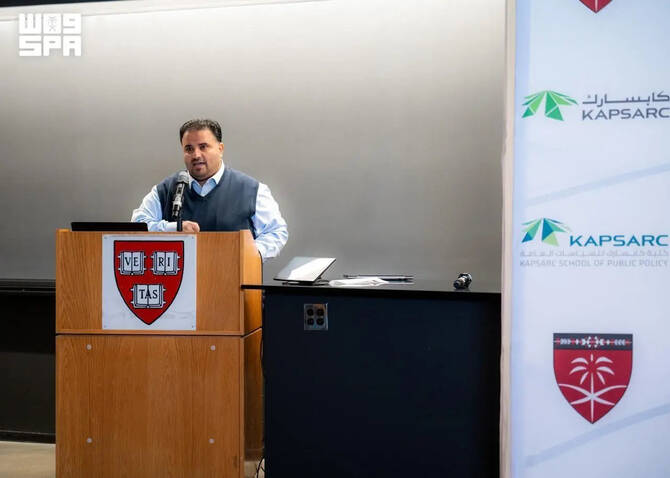


BOSTON: Seventy Saudi Arabia students graduating from some of America’s most prestigious universities were honored at a ceremony hosted at Harvard University on Saturday, underscoring the Kingdom’s long-running investment in human capital under the Custodian of the Two Holy Mosques Scholarship Program.
The event was attended by Saudi Cultural Attache Tahany Aleisa, the graduates and their families, and members of the academic community, the Saudi Press Agency reported.
Aleisa said the ceremony recognized 70 male and female graduates from universities across the Boston area.

Saudi Cultural Attaché Tahany Aleisa addressing the gathering at Harvard University on May 30, 2026. (SPA photo)
Harvard University accounted for 29 graduates, followed by the Massachusetts Institute of Technology with nine, Boston University with 19, and Tufts University with 10. There were also graduates from the University of Massachusetts Boston and Johnson & Wales University.
The graduates completed studies linked to Saudi Arabia’s development priorities and Vision 2030 goals, including medicine, public health, dentistry, engineering, computer science, artificial intelligence, business administration, public policy, law, finance and supply-chain management.
Aleisa said the achievements of the Saudi students reflects the Kingdom’s continued commitment to developing national talent and preparing leaders capable of contributing to economic diversification and innovation.
She described the Custodian of the Two Holy Mosques Scholarship Program as a key pillar in building globally competitive human capital.
The program was launched in 2005 by the late King Abdullah to expand opportunities for Saudi students at leading international universities, particularly in the US. The initiative was later restructured and expanded under Vision 2030 and renamed the Custodian of the Two Holy Mosques Scholarship Program.
A new strategy launched by Crown Prince Mohammed bin Salman in 2022 shifted the program’s focus toward highly selective placements at top global institutions and aims to send 70,000 Saudi students to leading international universities by 2030.
The US has historically accounted for more than half of all scholarship recipients. There are currently about 18,000 Saudi students and sponsored dependents at US institutions. Many are enrolled in advanced programs in science, technology, engineering, medicine and business.
Aleisa said the program’s updated strategy aligns academic specializations with emerging labor market demands and the priority sectors identified under Saudi Vision 2030, strengthening the Kingdom’s efforts to develop a knowledge-based economy and globally competitive workforce.