Ancient city of Bhanbhore: A South Asia gateway for Arab conquerors 

1 / 4
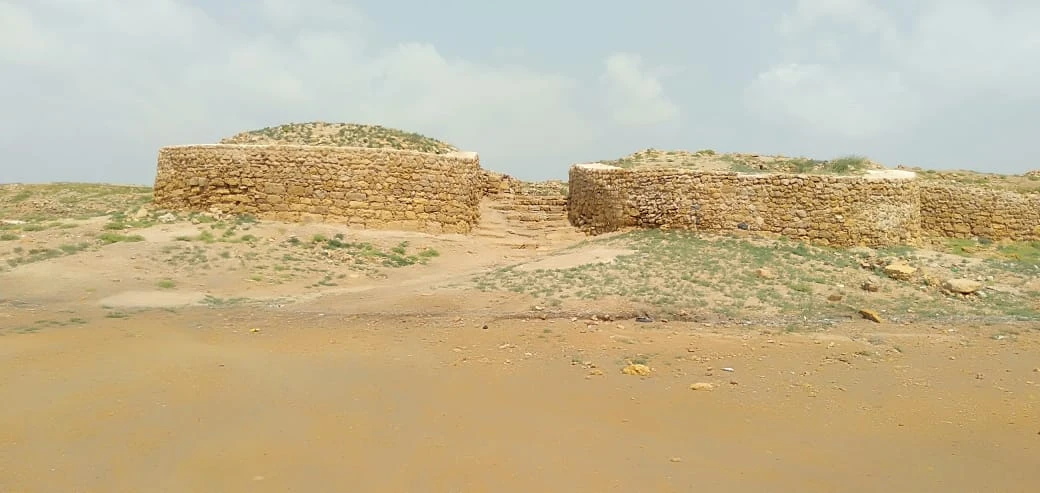
This image shows the southern gate of Bhanbhore Fort which was used by Muhammad bin Qasim to enter the citadel in 711 CE. Photograph taken on Sept 25, 2019 (AN Photo by SA Babar)
2 / 4
This image shows the southern gate of Bhanbhore Fort which was used by Muhammad bin Qasim to enter the citadel in 711 CE. Photograph taken on Sept 25, 2019 (AN Photo by SA Babar)
3 / 4
A model of the trebuchet used by Muhammad Bin Qasim’s army while attacking the fort in the ancient Bhanbhore port city. Photograph taken on Sept 25, 2019 (AN Photo by SA Babar)
4 / 4
A model of the fort displayed in Bhanbhore museum shows the gate from which Muhammad bin Qasim entered into the citadel in 711 CE. The model also depicts a boat carrying soldiers and a catapult that was used to attack the fort. Photograph taken on Sept 25, 2019 (AN Photo by SA Babar)
Updated 03 October 2019
Follow

Ancient city of Bhanbhore: A South Asia gateway for Arab conquerors 

  • The town was immortalized by an Umayyad general whose invasion of the settlement changed the course of history
  • Archaeologists say there are strong imprints of Arab Muslims in the area

BHANBORE, Sindh: Bhanbhore, an ancient city located about 65 kilometers east of Karachi, is said to have witnessed several political upheavals since its emergence in the first century BCE. Yet, the place was immortalized by an Arab general who changed the course of history by invading this town.
Long before the mighty Indus river meandered away from the settlement, forcing the residents of Bhanbhore to abandon their dwellings, Muhammad bin Qasim, an Umayyad warrior, defeated Sindh’s Brahmin ruler, Raja Dahar, in 711 CE and conquered large swathes of land. Today, Pakistan’s second busiest harbor, Port Qasim, is named after the Arab general.
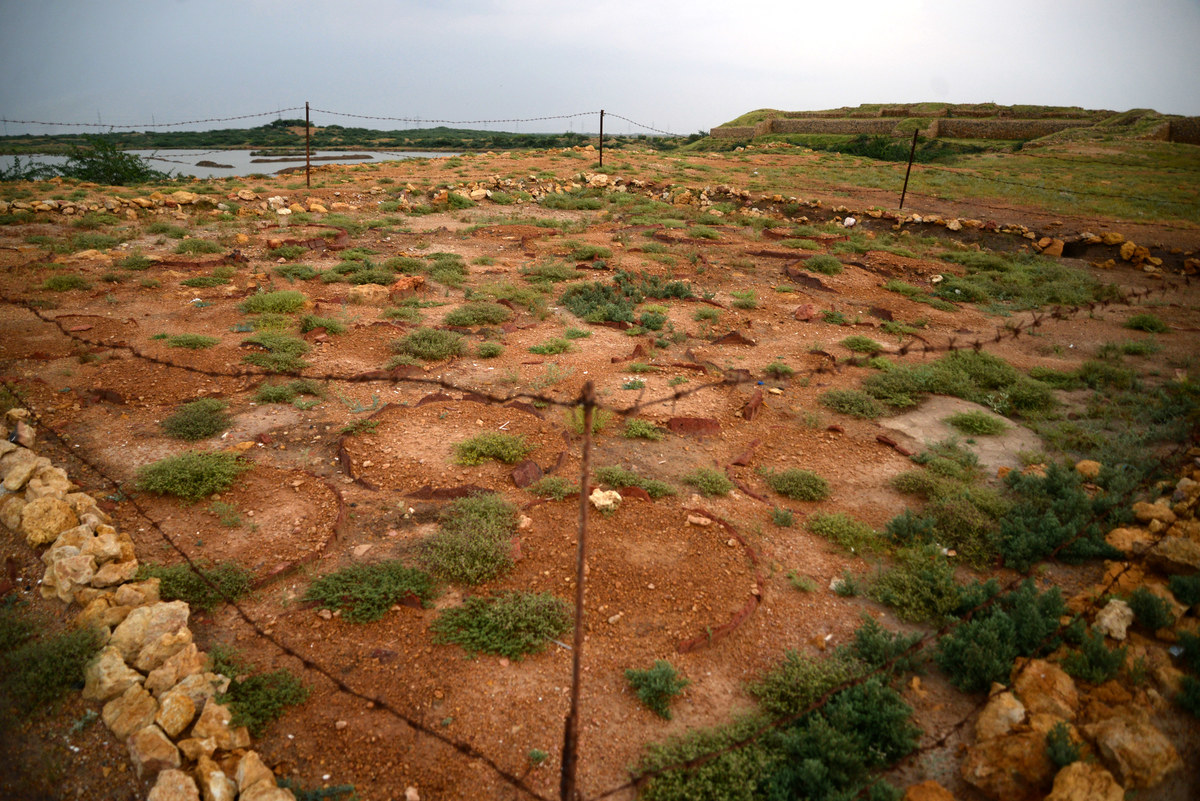


This image shows the industrial unit where clothes were dyed. “This existence of industrial area, which still needs to be fully excavated, proves that Bhanbhore was an important industrial city in south Asia,” Saleem Palejo, a caretaker of the ancient fort, told Arab News on Sept 25, 2019. (AN Photo by SA Babar)

“The south gate of Bhanbhore Fort from which Muhammad bin Qasim entered the citadel was later called the ‘gateway of Islam’ in South Asia,” Qazi Asif, a researcher, told Arab News.
The first excavation survey of Bhanbhore was carried out by Sindh’s Department of Archaeology and Museums in 1965. More recently, the government launched another round of exploration in 2012 in collaboration with Italian and French missions in Pakistan.
The report detailing the latest findings is yet to be made public. However, a description of the site at the United Nations Educational, Scientific and Cultural Organization’s website says: “The site has a sequence from the first century BC to the thirteenth century AD. Whilst its earlier phases are waterlogged, the site’s surface remains to represent the best-preserved early Islamic urban form in South Asia and the region’s best-preserved medieval port.”
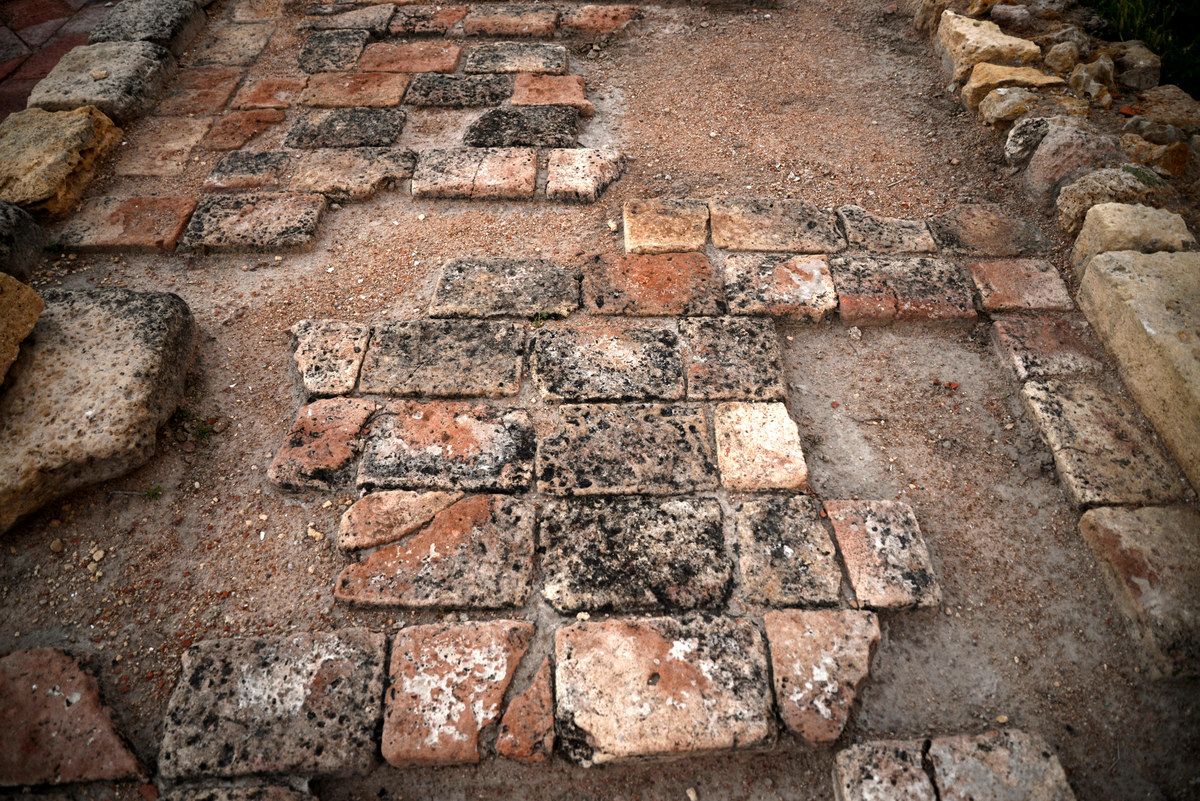


Original brick tiles used in Bhanbhore’s Jamia Masjid. Photograph taken on Sept 25, 2019 (AN Photo by SA Babar)

There was no trace of a mehrab – a semicircular niche in a mosque wall indicating the direction of Kabah – but an inscription on a structure, dating to 727 CE, claims that it is the best-preserved example of an early mosque in the region, others having been rebuilt.
“The presence of the industrial sector and the port’s wealth of imported ceramic and metal goods, in combination with its strategic siting at the mouth of the Indus, reinforces the pivotal role of Bhanbhore linking the international Indian Ocean traders with the resources of the interior,” it adds.
Although a French archaeologist, Monique Kervran, says her findings of Bhanbhore confirm that Debal – ruled by Raja Dahar – and Bhanbhore are names of the same place, Dr. Asma Ibrahim, a Pakistani archaeologist, says her research unearthed an underwater city nearby that was most likely Debal.
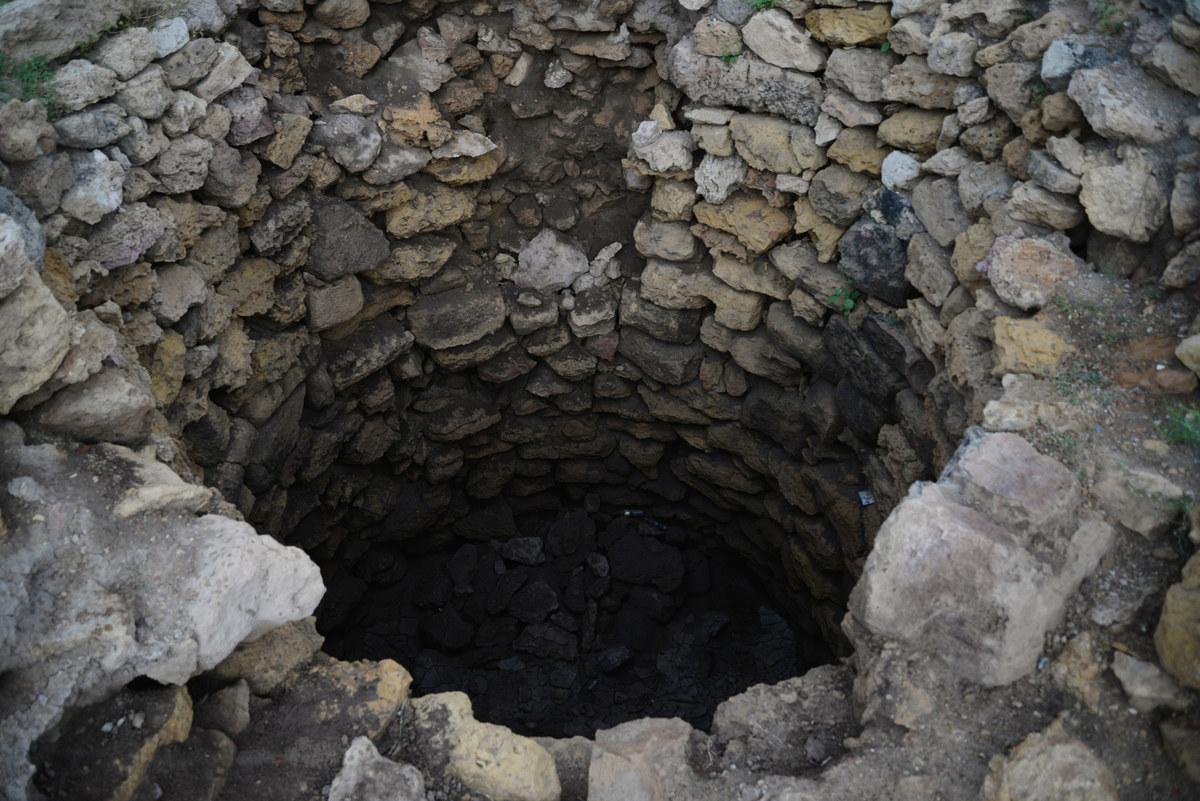


An old well in Bhanbhore Fort. Photograph taken on Sept 25, 2019 (AN Photo by SA Babar)

“The excavation work is still to be carried at the [underwater] city some 12 kilometers from Bhanbhore in the sea where a panel of Kufic inscription – along with one big and one small mosque – has been found,” she told Arab News.
The outline of the underwater city, she added, could be observed between 6 am and 8 pm on the 20th and 21st of a lunar month.
Ibrahim, whose research is yet to be published, informed that the excavated material of glass from Bhanbhore confirmed that it was imported from the Middle Eastern since there was no kiln in this region in olden days.
“It was one of the major industrial and trade centers of the world,” she said, adding: “While the archaeological sites in Bhanbhore await more excavation, there are strong imprints of Arab Muslims.”

Pakistan’s first non-life Shariah-compliant takaful operator says ‘historic’ IPO oversubscribed 21 times

Updated 22 January 2026
Follow

Pakistan’s first non-life Shariah-compliant takaful operator says ‘historic’ IPO oversubscribed 21 times

  • Pak-Qatar General Takaful Limited offered 30 million shares to investors with ceiling price of Rs14 per share
  • Company says IPO proceeds will be used for investments in software, infrastructure, setting up new branches

ISLAMABAD: Pakistan’s first non-life Shariah-compliant takaful operator announced on Thursday that its initial public offering (IPO) was oversubscribed 21 times at the country’s stock exchange, saying the development reflected strong investor confidence in the Islamic insurance system. 

The Pak-Qatar General Takaful Limited said earlier this month it would issue 30 million shares with a floor price of Rs 10 and a ceiling price of Rs 14 per share. Institutional investors will receive 75 percent of the shares on offer, while the remaining 25 percent will be allocated to retail investors, it added. 

“Pak-Qatar General Takaful Limited’s (PQGTL) IPO book-building has concluded with a historic oversubscription of [21x] times, marking the first-ever IPO of a dedicated General Takaful company at PSX,” the company said in a statement. 

It said investors responded “strongly” as the strike price closed at Rs 14 per share, compared to the floor price of Rs 10. Total demand reached Rs 4.74 billion [$17 million].

The company said successful bidders will be provisionally allotted 22.5 million shares while the remaining 7.5 million shares will be offered to retail investors on Jan. 28-29. 

Shahid Ali Habib, CEO of Arif Habib Ltd., which was the lead manager for the IPO, said that country’s first-ever IPO of any dedicated general takaful company, has made a historic debut at PSX.

Habib said this reflects investor confidence in Pakistan’s fast-growing takaful sector and PQGTL’s strong market position.

The statement further said proceeds from the IPO will be utilized to fund strategic initiatives, such as investments in software and other intangible assets, hardware and infrastructure, marketing and brand development and human resource enhancement. 

Proceeds will also be used to establish new branches and transform existing ones to improve operational efficiency and customer experience, it added. 

Pak-Qatar General Takaful Limited is part of Pakistan’s pioneer Islamic financial services group and is backed by Qatar-based financial institutions.