A futuristic vertical farm now blooms in Karachi’s old yarn factory

1 / 9
Different types of vegetables, mostly non-seasonal, are grown at this vertical farm at the Site Industrial Area of Karachi, where light, humidity and temperature is optimally controlled. September 26, 2019. (AN Photo)
2 / 9
Different types of vegetables, mostly non-seasonal, are grown at this vertical farm at the Site Industrial Area of Karachi, where light, humidity and temperature is optimally controlled. September 26, 2019. (AN Photo)
3 / 9
Different types of vegetables, mostly non-seasonal, are grown at this vertical farm at the Site Industrial Area of Karachi, where light, humidity and temperature is optimally controlled. September 26, 2019. (AN Photo)
4 / 9
Different types of vegetables, mostly non-seasonal, are grown at this vertical farm at the Site Industrial Area of Karachi, where light, humidity and temperature is optimally controlled. September 26, 2019. (AN Photo)
5 / 9
Different types of vegetables, mostly non-seasonal, are grown at this vertical farm at the Site Industrial Area of Karachi, where light, humidity and temperature is optimally controlled. September 26, 2019. (AN Photo)
6 / 9
Different types of vegetables, mostly non-seasonal, are grown at this vertical farm at the Site Industrial Area of Karachi, where light, humidity and temperature is optimally controlled. September 26, 2019. (AN Photo)
7 / 9
Different types of vegetables, mostly non-seasonal, are grown at this vertical farm at the Site Industrial Area of Karachi, where light, humidity and temperature is optimally controlled. September 26, 2019. (AN Photo)
8 / 9
Different types of vegetables, mostly non-seasonal, are grown at this vertical farm at the Site Industrial Area of Karachi, where light, humidity and temperature is optimally controlled. September 26, 2019. (AN Photo)
9 / 9
Different types of vegetables, mostly non-seasonal, are grown at this vertical farm at the Site Industrial Area of Karachi, where light, humidity and temperature is optimally controlled. September 26, 2019. (AN Photo)
Short Url
Updated 19 February 2021
Follow

A futuristic vertical farm now blooms in Karachi’s old yarn factory

  • Pakistan’s first vertical farm grows eco-friendly, fresh greens for sale to city’s finest restaurants and markets
  • Urban agriculture is immune to the constraints of climate, allowing non-seasonal vegetables to grow year-round

KARACHI: In 2006, Sohail Ahmed’s once-booming polyester filament yarn plant closed down due to a worldwide recession, alongside lawlessness and a power crisis at home, in Pakistan’s seaside metropolis of Karachi. Twelve years later, Ahmed has converted the top floor of the old yarn factory into a futuristic farm, with kale, rosemary and dozens of other vegetables growing vertically under the purple glow of LED lights.
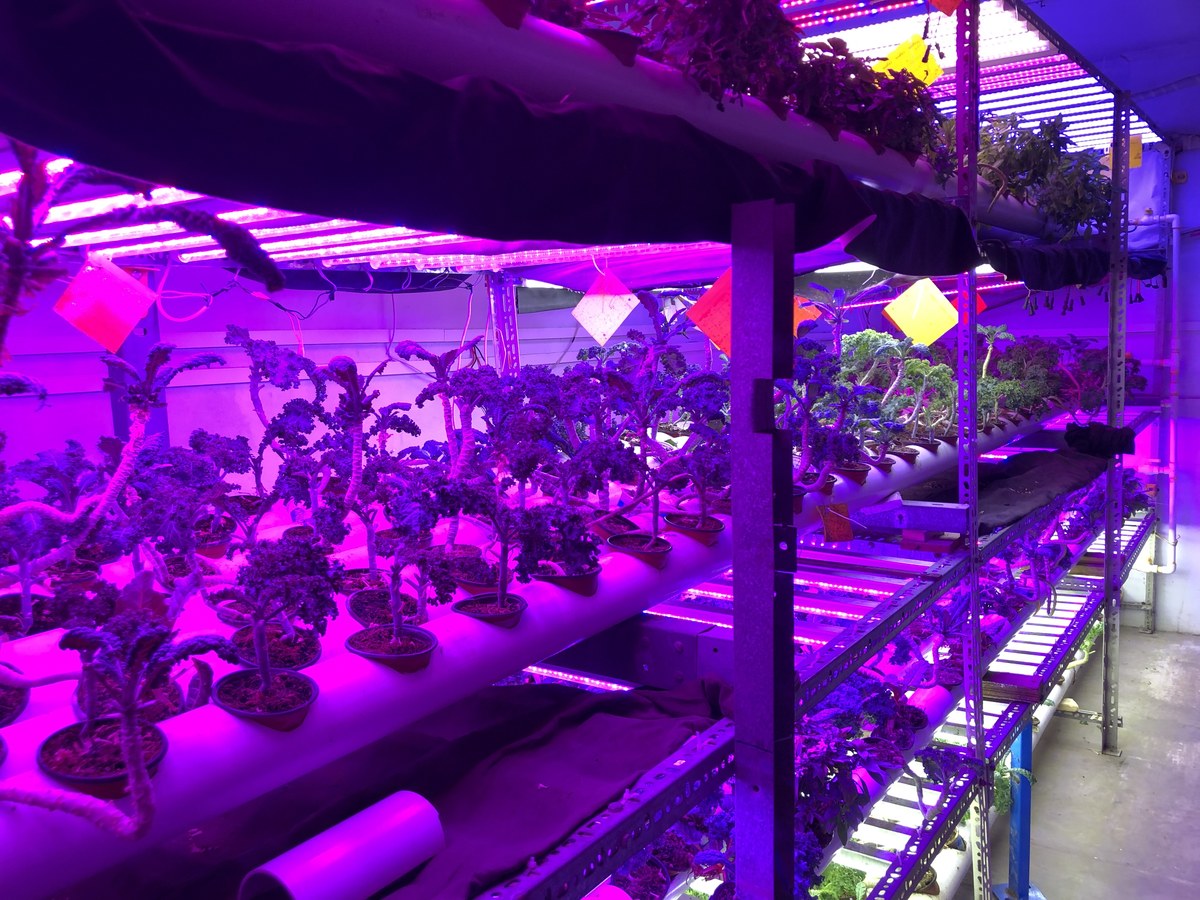


Different types of vegetables, mostly non-seasonal, are grown at this vertical farm at the Site Industrial Area of Karachi, where light, humidity and temperature is optimally controlled. September 26, 2019. (AN Photo)

Pakistan’s first urban vertical farm is a commercial venture, with the produce being supplied to some of the city’s finest restaurants and supermarkets. But the use of hydroponics, where plants grow in nutrient solution instead of traditional soil, and where water is continuously recycled, contributes toward eco-friendly practices by using 90 percent less water than field farming, using no pesticides and omitting gas emissions involved in the long transportation routes from rural to urban centers- all leading to the freshest greens in the city.
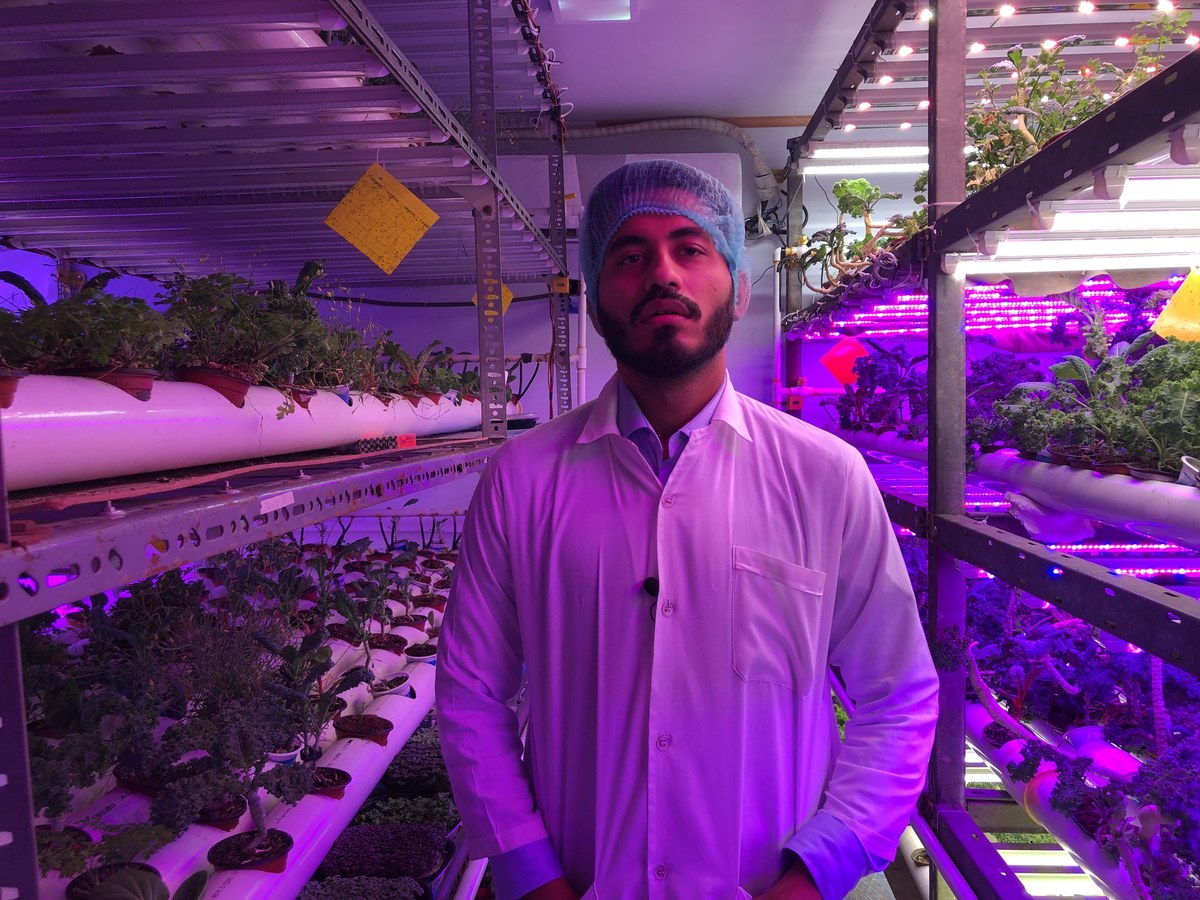


Farhan Sohail, a process and product development engineer in Pakistan’s first vertical farm, speaks to Arab News in Karachi on September 26, 2019 (AN Photo)

“When our family business shut down in 2006, I started to think about different business models with the help of technology. In 2009, I did a course on environmentally friendly and futuristic plant growing technologies. In the next two years, we set up our flower greenhouses in Karachi and Murree,” Ahmed told Arab News, and added that the success of his greenhouses led him to think of urban agriculture as a serious business model. 
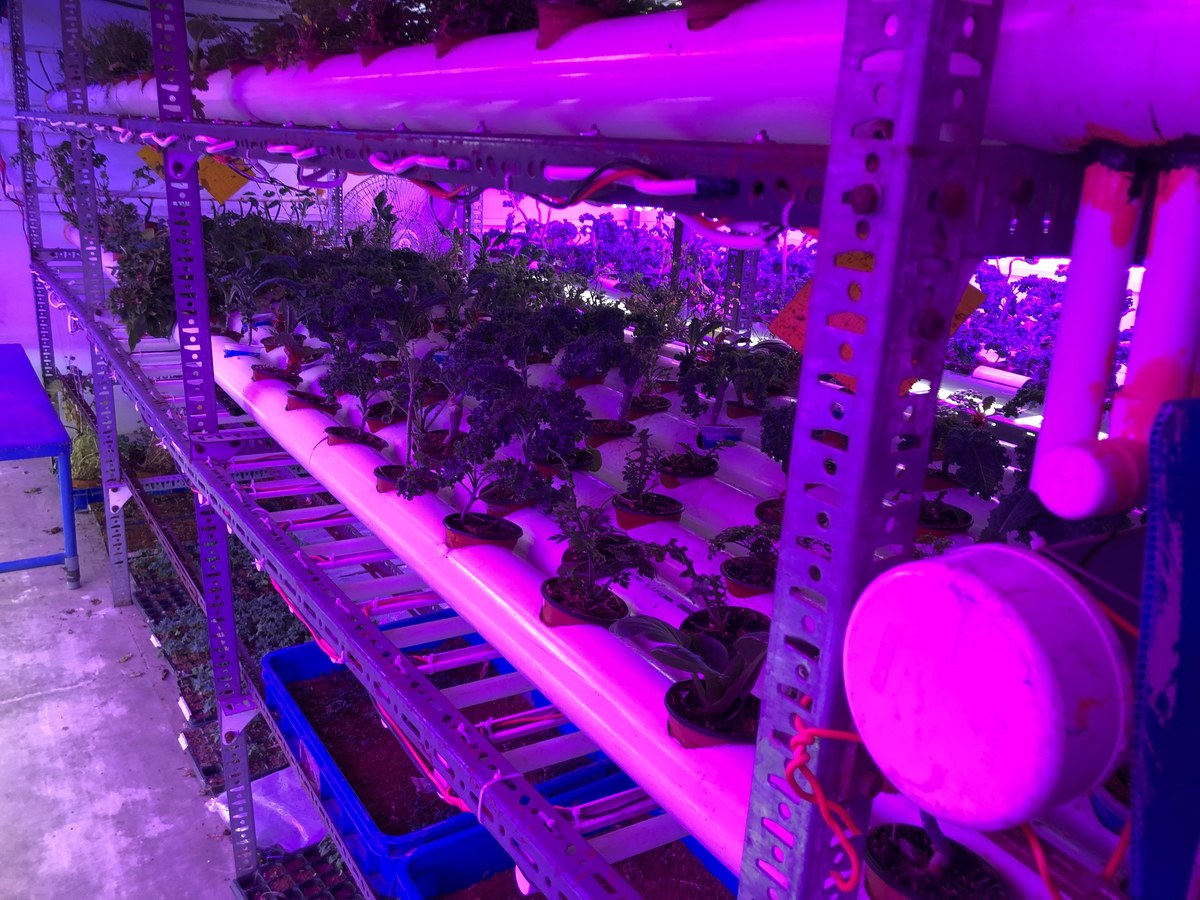


Different types of vegetables, mostly non-seasonal, are grown at this vertical farm at the Site Industrial Area of Karachi, where light, humidity and temperature is optimally controlled. September 26, 2019. (AN Photo)
ReplyReply to allForward

Ahmed and his son, Farhan Sohail, an engineering graduate from the American University, started working on the urban agriculture project in 2016 and by April 2018, their vertical farm had been set up in the 60 ft. room, and already blooming.
Farhan, who largely oversees the project, said around 2,500 plants of kale, cherry tomatoes, pak choi, iceberg lettuce, red swiss chard, rocket, basil, capsicum, jalapenos, microgreens, parsley, celery, oregano, rosemary, thyme, and sage are grown within a cycle of 45 to 60 days from the time of seeding to harvesting. 
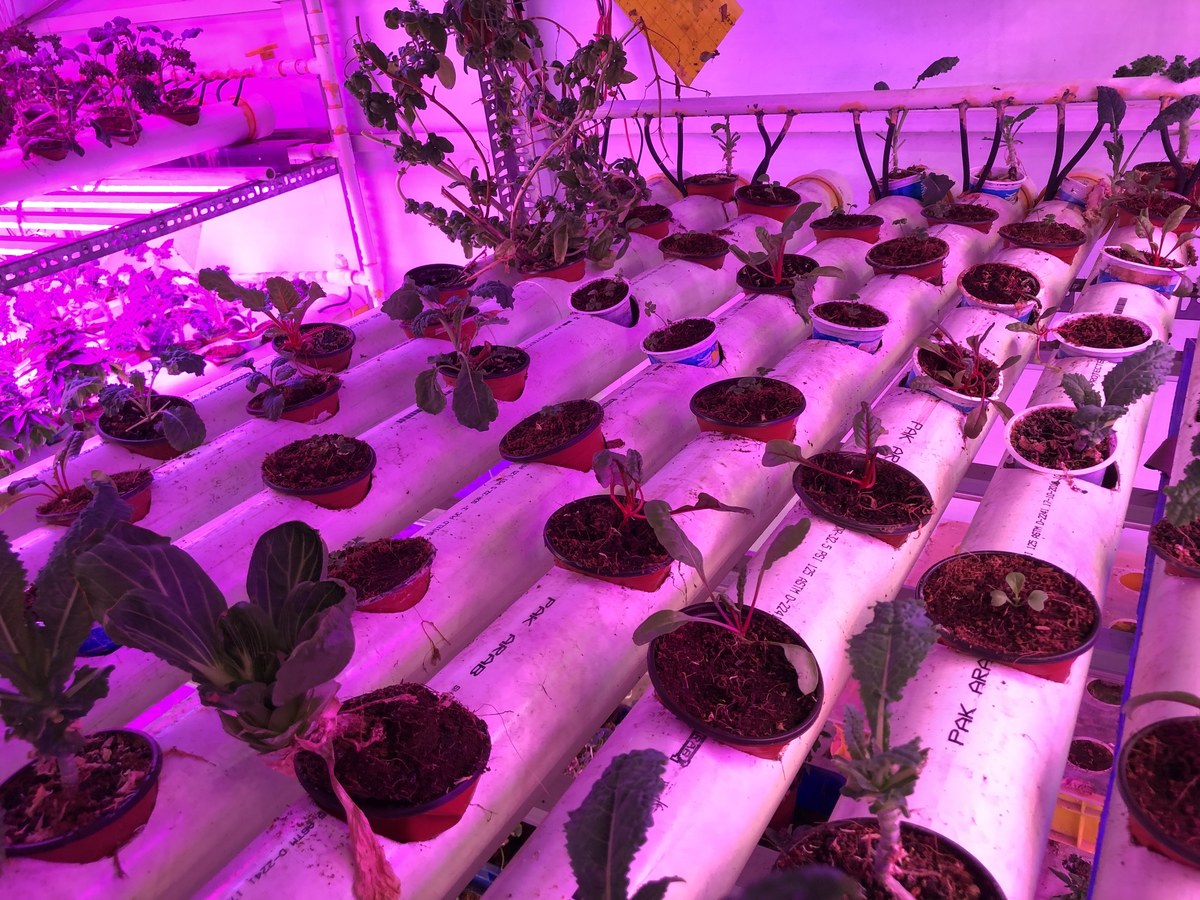


Different types of vegetables, mostly non-seasonal, are grown at this vertical farm at the Site Industrial Area of Karachi, where light, humidity and temperature is optimally controlled. September 26, 2019. (AN Photo)
ReplyReply to allForward

Farhan explained the nutrient solution traveled from a tank into PVC pipes which became inundated, and because the plants rested inside these pipes, when they were flooded, the roots took water up and the plant watered itself.
Dim LED lights are optimized for every plant, adjusted according to its own declared spectrum. 
“In addition to that, we also artificially provide exactly what the plant needs in terms of carbon dioxide, humidity as well as temperature levels,” Farhan said.
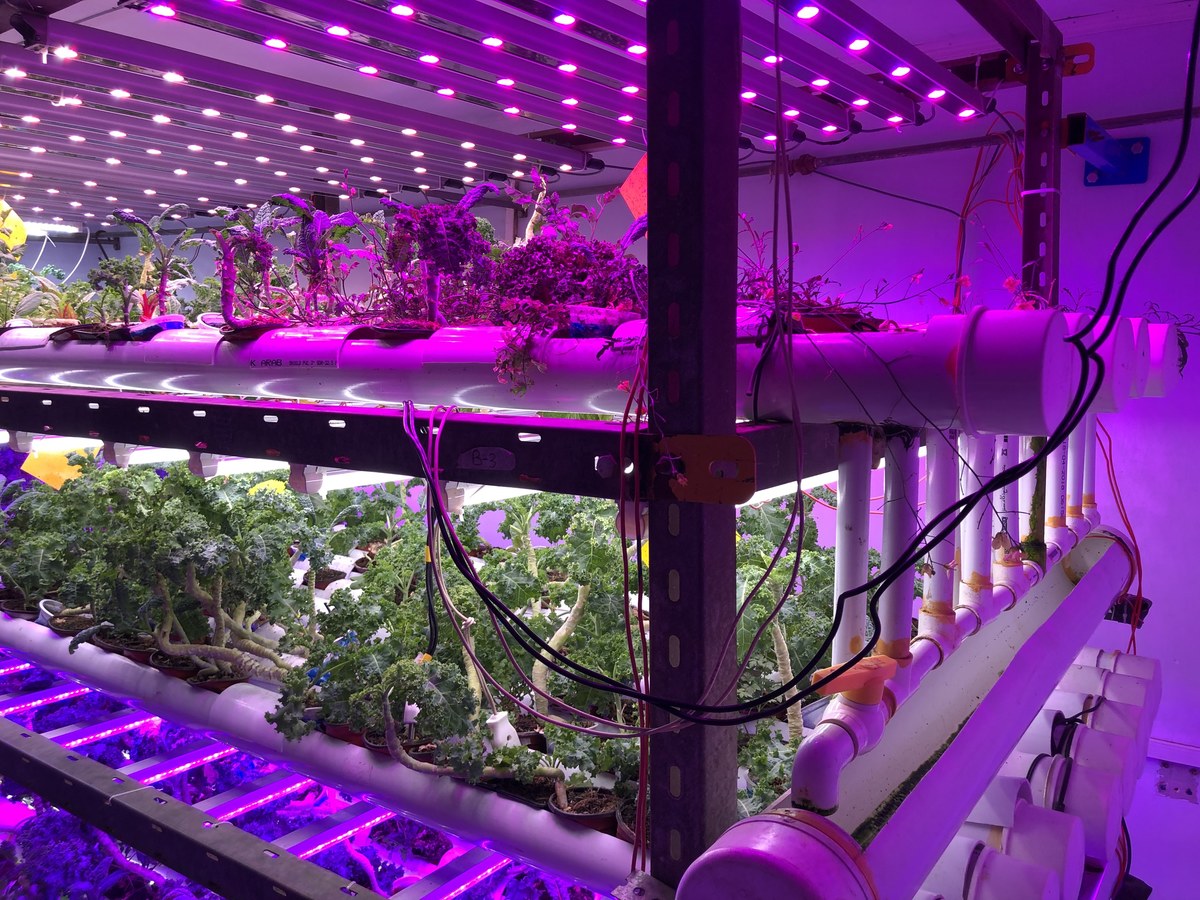


Different types of vegetables, mostly non-seasonal, are grown at this vertical farm at the Site Industrial Area of Karachi, where light, humidity and temperature is optimally controlled. September 26, 2019. (AN Photo)
ReplyReply to allForward

“We have 70 times more production per square meter as compared to field farming,” he said, and added that the elimination of pesticides and preservatives, meant the produce that came out of his vertical farm was “extremely healthy.”
Urban agriculture is largely immune to the restraints of climate conditions, which force most farmers in Pakistan to stay away from growing certain crops throughout the year and adding to the country’s import bill, Farhan said.
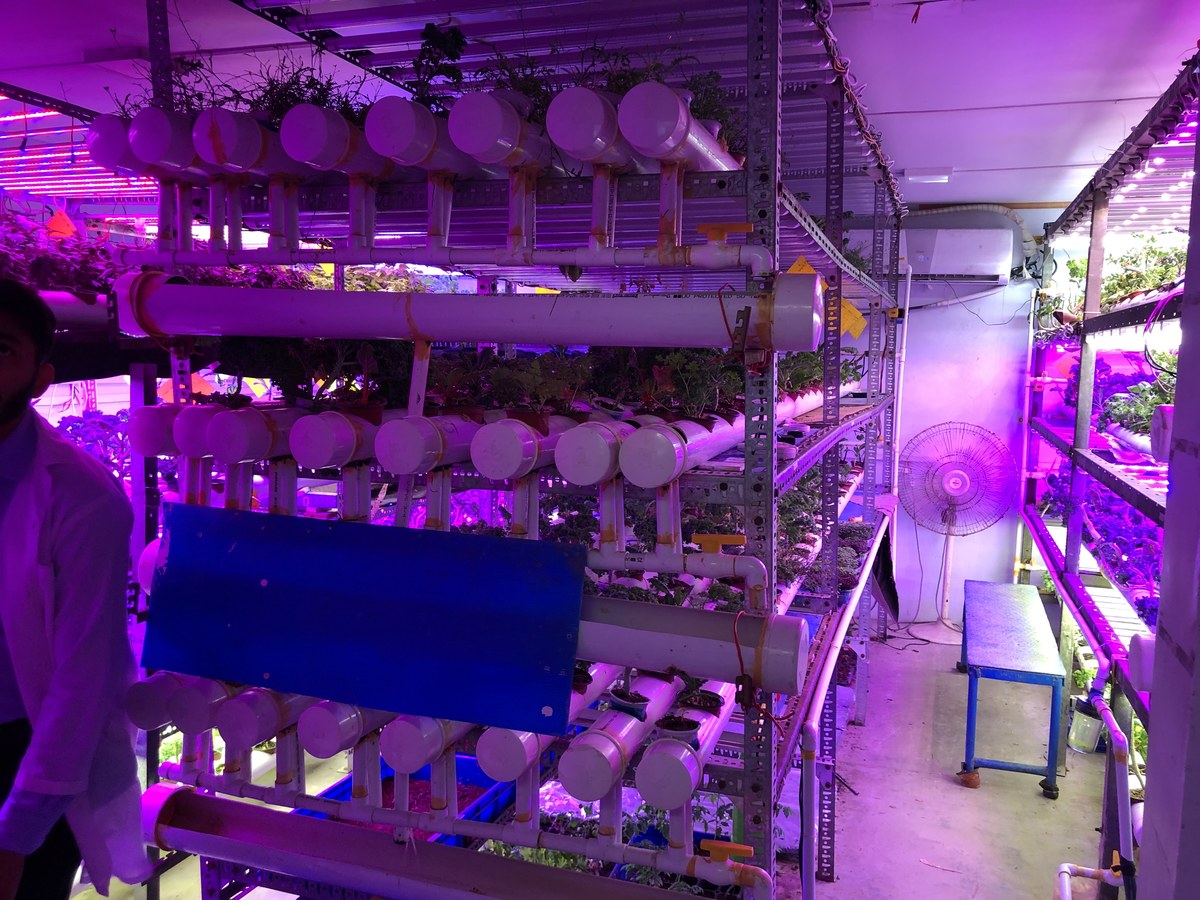


Different types of vegetables, mostly non-seasonal, are grown at this vertical farm at the Site Industrial Area of Karachi, where light, humidity and temperature is optimally controlled. September 26, 2019. (AN Photo)
ReplyReply to allForward

“Having setups like the vertical farm allow us to grow these vegetables within our own country throughout the year and then send it to the market,” he said, and added that if the model was successful on a large scale, Pakistan could start producing vegetables for export to international markets as well, especially to the Middle East.

Saudi defense minister meets Pakistan army chief, discusses security issues

Updated 8 sec ago
Follow

Saudi defense minister meets Pakistan army chief, discusses security issues

  • Khalid bin Salman says both countries reaffirmed strategic defense partnership
  • The meeting follows last year’s joint defense pact deepening military relations

ISLAMABAD: Saudi Defense Minister Khalid bin Salman said on Thursday he had met Pakistan’s Chief of Army Staff Field Marshal Asim Munir to reaffirm the strategic defense partnership and discuss cooperation to promote global peace and security.

The meeting comes against the backdrop of deepening defense and security ties between the two countries. Last September, Pakistan and Saudi Arabia signed a bilateral defense accord that elevated long-standing military cooperation into a formal security commitment, with both sides pledging to treat aggression against one as a threat to the other.

“Met with Pakistan’s Chief of Army Staff and Chief of Defense Forces, Field Marshal Asim Munir, to reaffirm our strong relations and strategic defense partnership,” the Saudi minister said in a social media post. “We discussed our joint efforts to promote global peace and security in a manner that serves our shared interests.”
https://x.com/kbsalsaud/status/2021970225579847828?s=20 

The talks take place at a time of heightened tensions in the Middle East, with the conflict in Gaza far from resolution amid ongoing ceasefire violations by Israel.

Pakistan and Saudi Arabia have long maintained close economic, diplomatic and security ties, and coordination between the two sides has intensified since the signing of the defense pact.

The two countries are also part of President Donald Trump’s Board of Peace and have pressed for progress toward an independent Palestinian state and unimpeded humanitarian access to Gaza along with other Muslim nations.

The Middle East has also been on edge as the United States pursues nuclear negotiations with Iran, prompting many regional states to call for diplomacy rather than new military flare-ups.

So far, Pakistan’s military has not issued a detailed statement about Thursday’s meeting.

Earlier this month, Pakistani officials attended the World Defense Show 2026 in Riyadh, a major international exhibition bringing together governments, armed forces and global defense manufacturers.

Pakistan and Saudi Arabia have also discussed expanding economic cooperation, including efforts to combine Pakistan’s production capacity with Saudi capital and access to regional markets, according to Pakistan’s commerce ministry.