

Saudi Stock Exchange has a healthy IPO pipeline, says chief

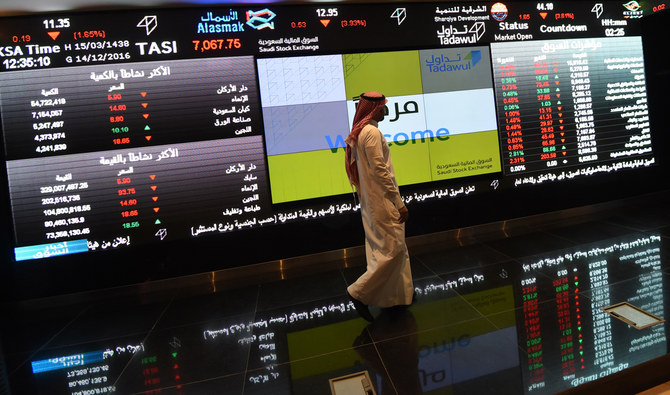
On Tuesday, the TASI index closed at 7,924 points. (File/AFP)
Updated 04 September 2019
Follow

Saudi Stock Exchange has a healthy IPO pipeline, says chief

  • Khalid Al-Hussan says it is ready to launch Aramco whenever government gives go-ahead

DUBAI: The CEO of the Saudi Stock Exchange (Tadawul) said it has “a good pipeline” of initial public offerings (IPOs) in the coming months, and is ready to stage the biggest of them all, that of Saudi Aramco, whenever the government decides to launch it.

Speaking exclusively to Arab News as Tadawul marked its full inclusion in the MSCI index of emerging market (EM) bourses, Khalid Al-Hussan said: “Taking into account all the pressures that EM markets around the world are facing, we feel we’re in good shape, and we see a good pipeline of IPOs coming through.”

On the Aramco IPO, preparations for which have accelerated in recent weeks, he said: “We confirm our readiness for Aramco, but we’re still waiting for the final decision by the issuer. They’ll share with us the plan, but we’re still waiting for more clarity.”

Saudi Arabia's transport minister, Nabeel Al-Amudi, was appointed to the Aramco board, Saudi Press Agency reported on Tuesday. It followed the appointment of Yasir Al-Rumayyan, head of the Public Investment Fund, as chairman of the oil company.

News that the Kingdom was to be included this year in the MSCI index meant that many global institutions rushed to buy Saudi stocks, leading to an inflow of $18 billion to the Kingdom and a big jump in Tadawul, up as much as 19 percent earlier this year.

But the pace of foreign investment has fallen since investing institutions satisfied their requirements in Saudi markets, and the percentage increase for the year is now in low single digits. On Tuesday, the TASI index closed at 7,924 points, compared to 7,798 at the start of the year.

FASTFACT

$18bn

The Tadawul has attracted an inflow of $18 billion in foreign funds this year.

Tarek Fadlallah, CEO of Nomura Asset Management in the Middle East, said: “While Saudi Arabia’s inclusion in the global indices is positive, it provides no guarantees about the market’s performance in the future, and leaves it vulnerable to shifts in foreign investor sentiment.” Al-Hussan is determined to maintain the attraction of Tadawul for new foreign investors. “We started, with the beginning of our communication with international investors two years ago, to be visible and educate international investors about the market and what’s coming, and how do we handle their investments from a practice perspective.”

He added: “We gained the confidence of international investors through this, and through the MSCI inclusion. We continue that dialogue, both ourselves and Saudi corporates, in front of international investors through different channels, to educate them about changes and practices.”

Al-Hussan said: “We need to continue to enhance our offering activity, whether these are products or services we need to introduce and compete with other markets, as well as more companies. Certain investors invest in different sectors, so we continue to understand these types of investors and bring more diversified offerings to the market.”

Among these offerings will be new IPOs. “If you look at the IPOs that have come to the market this past year, I believe that their success was mainly focused on introducing new sectors. Our role is to continue that dialogue by opening more sectors to the market,” he said, hinting at new offerings by educational and service companies.

Both Tadawul and its regulator, the Capital Markets Authority, are studying applications from new issuers. “The readiness of an application differs from one issuer to another. Some are in advanced stages, some will need more time. But that gives us a good comfort level about the health of the pipeline,” Al-Hussan said, adding that he is happy with the level of retail investor involvement in the market. Some analysts have pointed to a decline in trading activity by non-institutional investors. “If you look at regional markets or EM liquidity over the last two years, we’ve seen strong pressure on liquidity in these markets. If you compare this liquidity in the Saudi market — we announce this liquidity every Sunday — I believe that we’re still at a good level,” he said, citing a daily average of $1 billion worth of shares traded.

“But of course we’ll continue to offer more products, more regulatory frameworks to continue to gauge that interest by retail investors, which is an important and positive element of our market liquidity.”

RLC Global Forum highlights role of Saudi youth in retail digital shift 

Updated 04 February 2026
Follow

RLC Global Forum highlights role of Saudi youth in retail digital shift 

RIYADH: Saudi Arabia’s young and highly digital population is reshaping how the Kingdom’s retail sector adopts new technologies and artificial intelligence, advancing faster than many global competitors, industry leaders told Arab News. 

Speaking on the sidelines of the RLC Global Forum in Riyadh, executives told Arab News that the intersection of a youthful population and strong investment in AI is driving a shift in the industry’s priorities. 

From understanding consumer behavior to leveraging the Kingdom’s growing status as a global AI leader, Saudi Arabia is becoming as a unique destination for the retail sector to thrive, learn, and evolve in the digital sphere. 

Abdullah Al-Tamimi, CEO of commercial real estate company Hamat Holding, told Arab News that the firm is keen to analyze and understand consumer behavior, with a particular focus on the younger generation as a key part of that insight. 

“Actually, it’s a big part of our day-to-day operation,” he said, adding that the company invests heavily in understanding customer needs and behavior and works to correct any missteps. 

Al-Tamimi emphasized paying close attention to small details, noting that younger consumers are especially sensitive to the overall experience and “deserve that we work around the clock in order to improve it.” 

He added that this focus “can be a competitive advantage for Saudi Arabia as well.” 

Al-Tamimi said that as the younger generation grows accustomed to new technology shaping retail customer experiences, Hamat Holding is leveraging AI to enhance them further. 

“We started a couple of initiatives improving digitalization,” he said, adding that the company sees digital tools as a way to enhance its work by automating day-to-day operations and allowing teams to focus on bigger-picture and more complex tasks. 

While the firm has expanded its use of technology, he stressed it has not replaced human workers, emphasizing the continued importance of human capital for creativity and interaction. “AI is a big part of our strategy,” Al-Tamimi added. 

Amit Keswani Manghnani, chief omnichannel and AI officer at luxury goods retailer and distributor Chalhoub Group, told Arab News that bridging a younger customer base with continuous digital development is key to advancing the Kingdom’s retail strategies. 

On Saudi Arabia’s demographics, he said: “We look at 2030 as really building products which serve especially the younger population, which is growing and very digitally savvy.” 

Manghnani underscored the unique characteristics of the Kingdom’s retail market as a tool for developing effective products and customer experiences. 

“So it’s very digitally savvy, much more than in other markets,” he said, noting that e-commerce penetration is rising not only through online purchases but also via digital catalogs that drive in-store visits. 

Manghnani said investment is focused on making products more digitally accessible and easier to use, while strengthening customer service to meet the expectations of what he described as a demanding but welcome consumer base. “Service excellence, digital — all these things together are how we are tapping into the younger population, which again is extremely savvy.” 

Manghnani reinforced Al-Tamimi’s point that the Kingdom holds a competitive advantage, citing the speed at which its retail and technology industries are aligning. 

“As a market, we’re tending to see the adoption of digital,” he said, referring to AI, data and other forms of digital interaction, adding that these tools are increasingly being combined. 

He noted that this market is moving “much quicker than the other markets.” 

The two-day RLC Global Forum brought together more than 2,000 global leaders, policymakers, and innovators from over 40 countries over the two-day event to define the next chapter of growth across retail, consumer, and lifestyle industries.