



KARACHI: Retired school teacher Muhammad Saleh lives in Naushahro Feroze, a small city of 1.6 million in Pakistan’s southern Sindh province, some 342 kilometers away from the port city of Karachi. On Wednesday, Saleh and dozens of his relatives and friends made the grueling journey from their hometown to Karachi, traveling through the night to reach Jinnah International Airport in time on Thursday morning to receive his nephew who was returning home from the Hajj.
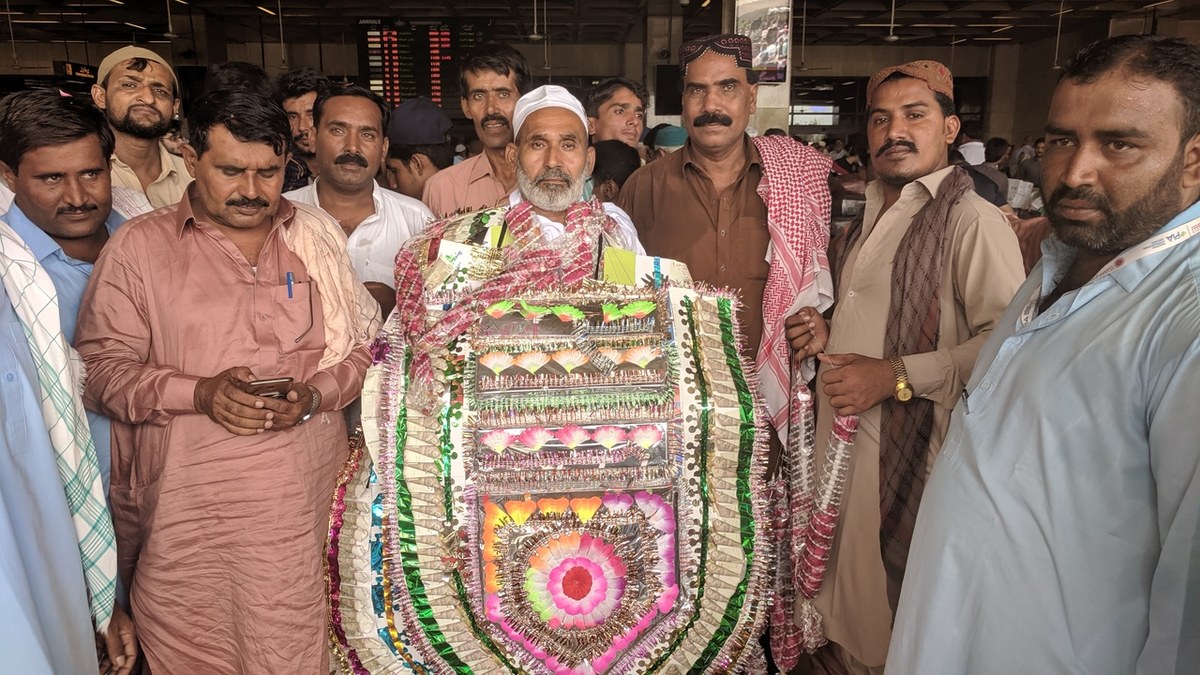
Gul Faqir, a resident of Naushahro Feroze, poses for a photo with relatives and friends at Karachi's Jinnah International Airport upon his arrival from Jeddah, Saudi Arabia after performing the Hajj on Thursday, August 22, 2019. (AN Photo)
As Abdul Hakeem appeared through the international arrivals gate, Saleh and others accompanying him rushed to hug and kiss the pilgrim and put garlands made of flowers and currency notes around his neck.
Hakeem is one of hundreds of thousands of Muslims from across the globe who have begun returning to their home countries since last week to a hero’s welcome after performing the annual pilgrimage to the Great Mosque of Makkah in Saudi Arabia for the Hajj, one of Islam’s most holy rites.
Pakistan began its post-Hajj flight operations last Saturday as a Saudi airliner brought more than 200 passengers to Karachi. Over 200,000 pilgrims are expected to return home from Saudi Arabia through 500 flights between August 17 and September 15, according to airport authorities.
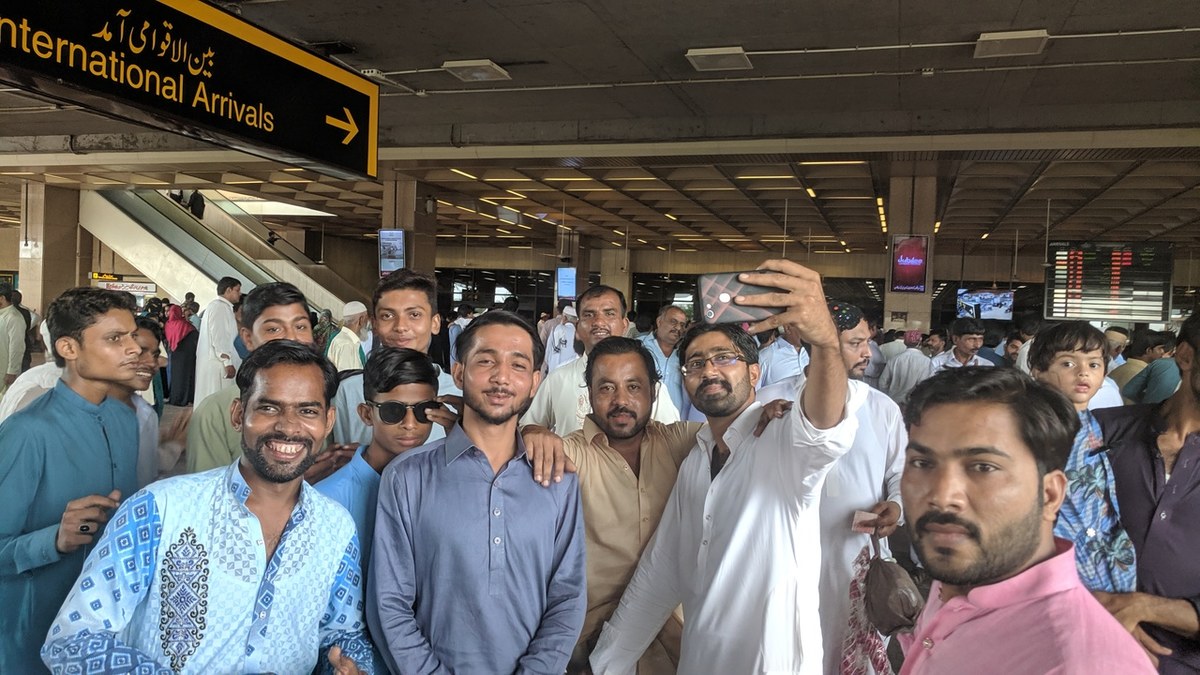
People pose for a selfie as they wait for a relative to arrive at Karachi's Jinnah International Airport on Thursday on August 22, 2019. (AN Photo)
“We have come in four cars and on our return journey, as we get closer to our hometown, more cars will join us and it will be a full-scale motorcade by the time we reach our home,” Saleh told Arab News before the arrival of the Saudi Airlines flight carrying over 200 pilgrims from Jeddah, including his nephew.
He said when a pilgrim returned to his hometown, it was as if a VIP person, or a top government minister, was visiting.
“He or she is more special than a bride or bridegroom,” he said, adding that people traveled from far and wide to reach the airport to greet returning pilgrims because they wanted to be the first to see the eyes of someone who had “been looking at the Kaʿbah and Roza-e-Rasool (PBUH) for forty long days.”
Mujtaba Baig, a Civil Aviation Authority spokesperson in Karachi, said if a regular international flight attracted around 100 people to the airport, including cab drivers of hotels, thousands thronged to welcome returning pilgrims. Zafar Aitemad Siddiqui, the chief operating officer of the Karachi airport, said rules had been relaxed to allow a maximum number of people to enter airports to receive Hajj flights.
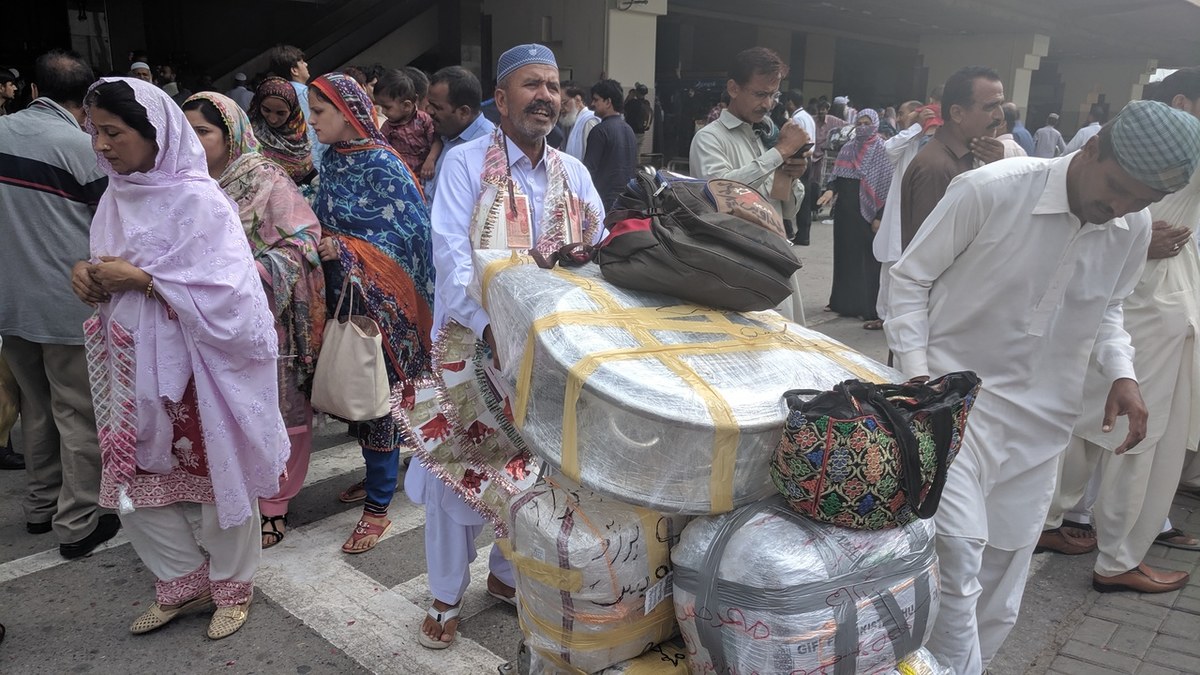
Pilgrims arrive at Karachi's Jinnah International Airport on August 22, 2019. (AN Photo)
In homes around the city, too, families and friends prepared for pilgrims to return, cleaning their neighborhoods, arranging lavish banquets and buying gifts.
“My uncle will especially come from Lahore to receive his brother,” said Noman Bashir, the son of Bashir Ahmed who will return from the Hajj on August 30. “We have cleaned our street which will be decorated a day before my father’s arrival. We have made all arrangements for a grand dinner and chosen the best rice, curry and sweet dishes for over two hundred guests.”
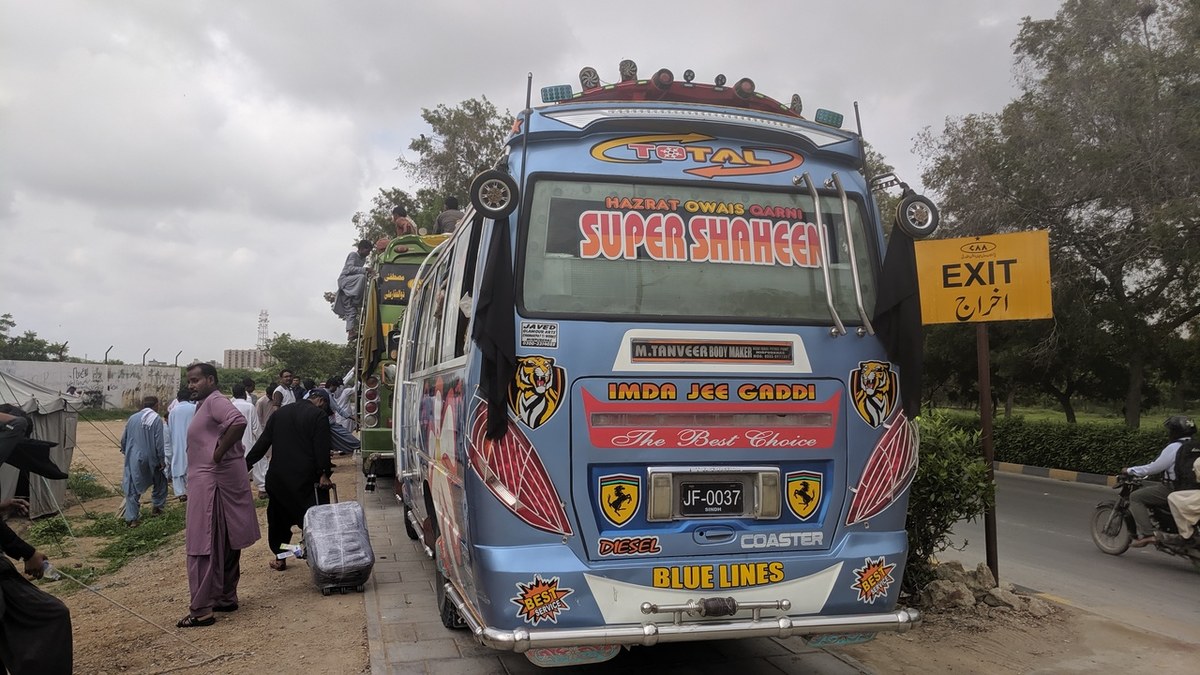
People from remote areas of Pakistan’s southern Sindh province travel on buses and wagons to reach Karachi's Jinnah International Airport to receive pilgrims returning from the Hajj. Photo taken on August 22, 2019 (AN Photo)
After the dinner on the day of his father’s arrival, Noman said his father would begin visiting people’s homes for feasts held in his honor.
“We have confirmed ten invitations from relatives and friends,” Bashir said. “Hajj is a special occasion; in our family, we make it memorable for those performing it.”


