

Rites and routes: Hajj exhibition a true journey through the ages

1 / 2
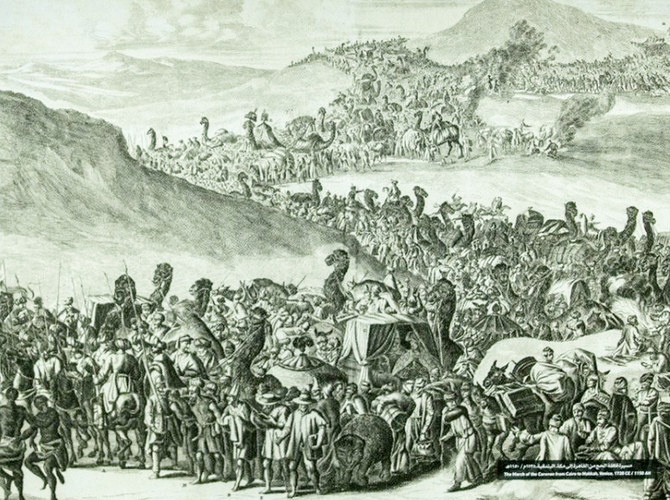
Photographs covering different time periods, and sketches dating back more than three centuries are featured in the second hall of the Hajj exhibition. (SPA)
2 / 2
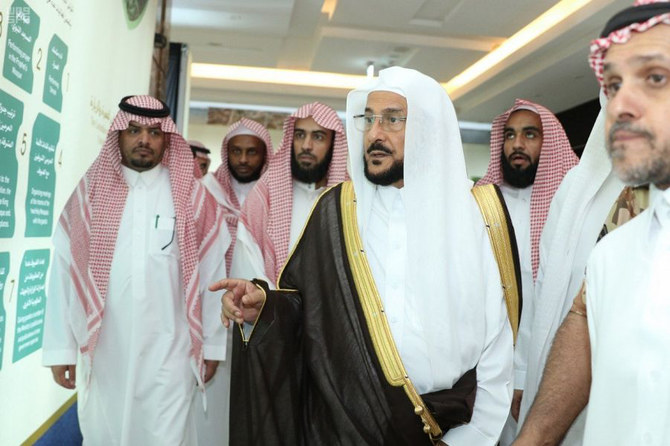
Sheikh Abdullatif Al-Asheikh inaugurates the Hajj exhibition. (SPA)
Updated 19 August 2019
Follow

Rites and routes: Hajj exhibition a true journey through the ages

  • Three halls cover every aspect of pilgrimage
  • Exhibition material dates back hundreds of years

JEDDAH: An exhibition about the Hajj takes visitors on a journey through the ages with three halls exploring different aspects of the holy pilgrimage, the Saudi Press Agency reported.

Labbaik: The Hajj Journey Through the Ages was inaugurated earlier this month by the Saudi minister of Islamic affairs, dawah and guidance, Sheikh Abdullatif Al-Asheikh. 

The first hall introduces visitors to the magic of Makkah, which is the focus of Muslim attention around the world and plays a central role in the Hajj. 

Visitors learn about Prophet Abraham, his son Ishmael, wife Hajar and the Zamzam well miracle, when she went looking for water. She ran seven times between the two hills of Safa and Marwa — an act that is a compulsory part of the Hajj — and Allah’s response was to create a water spring at Ishamel’s feet.

The hall also features the history of the Kaaba from the Prophet Abraham’s time until its present form, which was ordered by Caliph Abd Al-Malik ibn Marwan.

Visitors learn about the Grand Mosque, the Kaaba’s interior, and Makkah’s rights and duties toward every Muslim.   
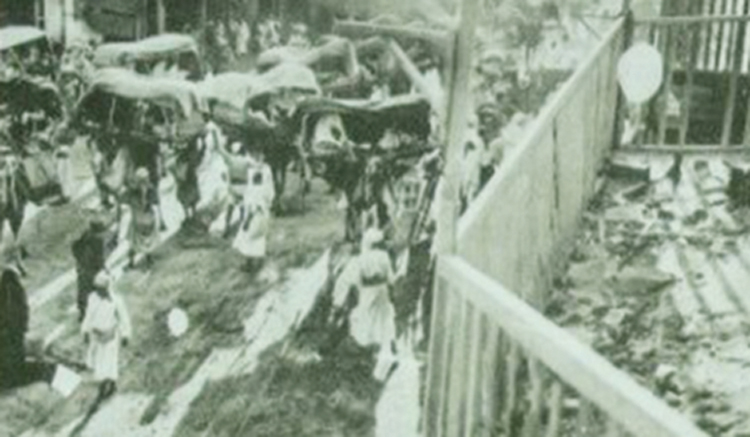


Photographs covering different time periods, and sketches dating back more than three centuries are featured in the second hall of the Hajj exhibition. (SPA)

Observations

They can watch a film about the Grand Mosque’s history, which is based on the observations of travelers, historians and artists from the last four centuries, and according to descriptions from pilgrims who have completed the Hajj.

The hall also includes the first photos taken of the Grand Mosque, along with recent color images.

The second hall takes a different sort of trip down memory lane as visitors can learn about the Hajj journey since the beginning of Islam. It features the hard paths and roads that pilgrims used to take to Makkah from all over the world, on camelback or on foot, facing danger in the form of thieves, bandits and harsh weather conditions.

Visitors can see photographs covering different time periods, and sketches dating back more than three centuries.   
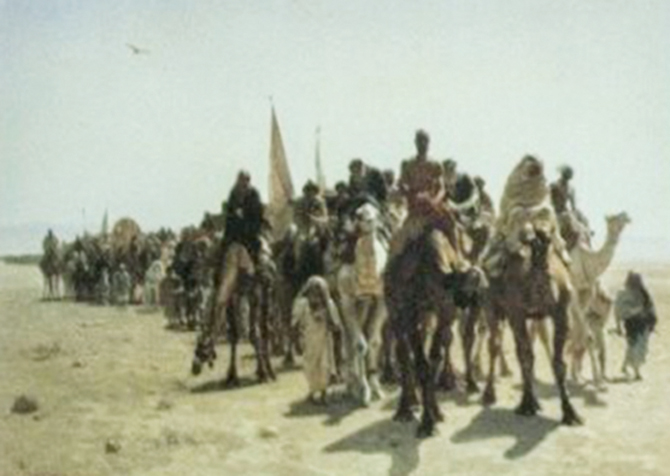


Photographs covering different time periods, and sketches dating back more than three centuries are featured in the second hall of the Hajj exhibition. (SPA)

Holiest of missions

There are Hajj certificates on display, documents pilgrims used to obtain on behalf of others as proof the pilgrimage had been completed by the person assigned with this holiest of missions. 

The last part of this hall introduces visitors to the transformation journey in Saudi Arabia. As soon as the Saudi state was established and King Abdul Aziz Al-Saud arrived in Makkah, his priority was to establish greater security for pilgrims. He removed risks and implemented measures so that Muslims could visit Makkah and Madinah in ease and with peace of mind, such as modern transportation and better infrastructure. Visitors also have a chance to read the messages from Saudi kings to pilgrims.

The third and final hall focuses on the Kingdom’s efforts to serve pilgrims and there is a section about health awareness. 

The exhibition has been organized by the Ministry of Islamic Affairs, Dawah and Guidance in partnership with Al-Rajhi Investment Group.

It runs until Aug. 21 and is open daily from 9 a.m to 10 p.m. It is located at the Tilal Al-Naseem Complex in Makkah, which is about 10 kilometers from the Grand Mosque.


Threat to Kingdom’s security is ‘red line’ that will be ‘addressed and neutralized,’ Saudi envoy says

Updated 14 January 2026
Follow

Threat to Kingdom’s security is ‘red line’ that will be ‘addressed and neutralized,’ Saudi envoy says

  • Abdulaziz Alwasil tells UN Security Council the situation in southern Yemen is ‘a just cause with social and historic dimensions’ that can only be resolved through dialogue
  • Recent military activity in the south was unilateral, resulting in an escalation that harms the interests of Yemeni people and undermines efforts to address issues in the south, he said

NEW YORK CITY: Any attempt to threaten Saudi Arabia’s national security is a “red line” and will be met with decisive action, the Kingdom’s ambassador to the UN told the Security Council on Wednesday.

Speaking during a meeting of the council to discuss Yemen, Abdulaziz Alwasil said the situation in the south of the country is “a just cause with social and historic dimensions” that can only be resolved through dialogue.

“We stress that any attempt to threaten our national security is a red line, and we will not hesitate to take the necessary actions and steps to address it and neutralize it,” he added.

Alwasil reaffirmed Saudi Arabia’s support for Yemeni President Rashad Al-Alimi, the Presidential Leadership Council, and the Yemeni government in their efforts to achieve security, stability, development and peace while preserving national unity.

He said military activity by Southern Transitional Council forces in Hadramout and Al-Mahra on Dec. 2, 2025, was unilateral, did not have the approval of the Presidential Leadership Council, and was not carried out in coordination with the Coalition to Restore Legitimacy in Yemen.

It had resulted in an unjustified escalation that harmed the interests of the Yemeni people, undermined efforts to address the issues in the south, and ran counter to the coalition’s objectives, Alwasil added.

The Kingdom, working with its coalition partners, the Presidential Leadership Council and the Yemeni government, had moved to contain the situation by dispatching a military force to coordinate arrangements with the Southern Transitional Council in Aden, he said.

The aim was to ensure the return of the southern council’s forces to their previous positions outside of Hadramout and Al-Mahra, and the handover of camps to legitimate government forces and local authorities in line with agreed procedures, Alwasil added.

He expressed regret over the military operations that took place in Hadramout and Al-Mahra, close to Saudi Arabia’s southern border, which he said posed a direct threat to the Kingdom’s national security, as well as the security of Yemen and regional stability. Such steps were extremely dangerous, he added, and contradicted the principles on which the Coalition to Restore Legitimacy in Yemen had been founded.

Alwasil welcomed a prisoner and detainee exchange agreement signed in Muscat on Dec. 23, which he described as an important humanitarian measure to alleviate suffering and build confidence.

He praised Oman for hosting and sponsoring the consultations and supporting negotiations, and commended the efforts of UN’s special envoy for Yemen, Hans Grundberg, the International Committee of the Red Cross and all others that has played a part.

Regarding the political efforts to resolve the crisis, Alwasil said Saudi Arabia welcomed President Al-Alimi’s call for an inclusive conference in Riyadh to bring together all stakeholders to discuss just solutions to the situation in southern Yemen.

Preparations for the conference have begun, he added, in cooperation with the Yemeni government and southern representatives, reflecting the close ties between the two countries and their shared interests in stabilizing Yemen.

He urged all southern stakeholders to participate actively and constructively in the talks, to help find comprehensive and just solutions that meet the legitimate aspirations of the people of southern Yemen.

Alwasil called on all Yemeni forces and stakeholders to cooperate and intensify their efforts to reach a lasting political settlement that would ensure security and stability.

He described the southern issue as “a just cause with social and historic dimensions,” adding that “the only way to address it is through dialogue that leads to a comprehensive political solution” based on nationally and internationally agreed terms of reference.