Myanmar city gets high-tech makeover

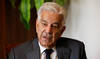
Many credit Mandalay Mayor Ye Lwin, a former eye surgeon turned politician, with overseeing a turnaround over the past two years. Shutterstock)
Updated 04 August 2019
Follow

Myanmar city gets high-tech makeover

  • Authorities in Mandalay are tapping social media and new technologies such as artificial intelligence software and drones to revamp a lethargic bureaucracy

YANGON: Once a seat of kings, the city of Mandalay in northern Myanmar has seen turbulent chapters in its 162-year history — the fall of Burma’s last royal dynasty and decades of colonial rule. Now, officials are attempting to transform the former royal capital into Myanmar’s first “smart city.”

In a country where officials still largely labor with pen and ink, surrounded by stacks of moldering papers, authorities in Mandalay are tapping social media and new technologies such as artificial intelligence software and drones to revamp a lethargic bureaucracy.

Under the secretive military junta that ruled Myanmar until 2011, people in the country’s second largest city rarely had any contact with those who governed them. Now, they talk to the mayor on Facebook and pay for services with QR codes, something not available in Myanmar’s commercial capital, Yangon. Authorities track garbage disposal with GPS and control traffic flows with remote sensors.

“It is very good that we can communicate with the mayor like this,” said 55-year-old taxi driver Kyi Thein. “Before, we could only see their motorcades.”

Formerly dominated by military-linked men and regarded as a hotbed of graft and mismanagement, the city’s first municipal government with an overwhelmingly civilian background has driven the plan, which is part of a regional initiative.

The pace of change has won plaudits in regional media and from overseas Myanmar nationals — the mayor was given the Citizen of Burma award by a US diaspora organization in May — underscoring opportunities for Myanmar as the country emerges from half a century of isolation into a world dominated by rapidly evolving technology.

But some of the attempts to push through change have met with resistance, not only from corners of the creaky bureaucracy, but from activists concerned that smart technology, deployed without regulating legislation, could allow authorities to more closely surveil them.

In April 2018, Singapore, then the chair of the Association of South East Asian Nations, proposed the creation of a network of 26 “smart cities” that would harness technology to tackle some of the challenges created as the region’s once mostly rural population converges in cities.

Three Myanmar cities were chosen, but it is in Mandalay, in the center of the country, where authorities have done most to embrace the proposal.

Locals there say issues are myriad. The tap water is not drinkable. Congestion is increasing as the number of vehicles has skyrocketed since the liberalization of imports in 2012. The roads are potholed and pavements littered with trash.

Many credit Mayor Ye Lwin, a former eye surgeon turned politician and the first appointed to the post by a civilian government after elections in 2015, with overseeing a turnaround over the past two years. He responds to gripes on his Facebook page daily, tagging subordinates and issuing directives.

He declined an interview request by Reuters, referring questions to officials in his office.

“Our goal is to create a city which doesn’t damage the environment, is liveable for people, with a good economy and friendly environment,” said Ye Myat Thu, an IT expert who created Myanmar’s most popular Burmese-language font and now works alongside the mayor in the Mandalay City Development Committee. “We get there using technology.”



‘The future is renewables,’ Indian energy minister tells World Economic Forum

Updated 22 January 2026
Follow

‘The future is renewables,’ Indian energy minister tells World Economic Forum

  • ‘In India, I can very confidently say, affordability (of renewables) is better than fossil fuel energy,’ says Pralhad Venkatesh Joshi during panel discussion
  • Renewables are an increasingly important part of the energy mix and the technology is evolving rapidly, another expert says at session titled ‘Unstoppable March of Renewables?’

BEIRUT: “The future is renewables,” India’s minister of new and renewable energy told the World Economic Forum in Davos on Wednesday.
“In India, I can very confidently say, affordability (of renewables) is better than fossil fuel energy,” Pralhad Venkatesh Joshi said during a panel discussion titled “Unstoppable March of Renewables?”
The cost of solar power has has fallen steeply in recent years compared with fossil fuels, Joshi said, adding: “The unstoppable march of renewables is perfectly right, and the future is renewables.”
Indian authorities have launched a major initiative to install rooftop solar panels on 10 million homes, he said. As a result, people are not only saving money on their electricity bills, “they are also selling (electricity) and earning money.”
He said that this represents a “success story” in India in terms of affordability and “that is what we planned.”
He acknowledged that more work needs to be done to improve reliability and consistency of supplies, and plans were being made to address this, including improved storage.
The other panelists in the discussion, which was moderated by Godfrey Mutizwa, the chief editor of CNBC Africa, included Marco Arcelli, CEO of ACWA Power; Catherine MacGregor, CEO of electricity company ENGIE Group; and Pan Jian, co-chair of lithium-ion battery manufacturer Contemporary Amperex Technology.
Asked by the moderator whether she believes “renewables are unstoppable,” MacGregor said: “Yes. I think some of the numbers that we are now facing are just proof points in terms of their magnitude.
“In 2024, I think it was 600 gigawatts that were installed across the globe … in Europe, close to 50 percent of the energy was produced from renewables in 2024. That has tripled since 2004.”
Renewables are an increasingly important and prominent part of the energy mix, she added, and the technology is evolving rapidly.
“It’s not small projects; it’s the magnitude of projects that strikes me the most, the scale-up that we are able to deliver,” MacGregor said.
“We are just starting construction in the UAE, for example. In terms of solar size it’s 1.5 gigawatts, just pure solar technology. So when I see in the Middle East a round-the-clock project with just solar and battery, it’s coming within reach.
“The technology advance, the cost, the competitiveness, the size, the R&D, the technology behind it and the pace is very impressive, which makes me, indeed, really say (renewables) is real. It plays a key role in, obviously, the energy demand that we see growing in most of the countries.
“You know, we talk a lot about energy transition, but for a lot of regions now it is more about energy additions. And renewables are indeed the fastest to come to market, and also in terms of scale are really impressive.”
Mutizwa asked Pan: “Are we there yet, in terms of beginning to declare mission accomplished? Are renewables here to stay?”
“I think we are on the road but (its is) very promising,” Pan replied. There is “great potential for future growth,” he added, and “the technology is ready, despite the fact that there are still a lot of challenges to overcome … it is all engineering questions. And from our perspective, we have been putting in a lot of resources and we are confident all these engineering challenges will be tackled along the way.”
Responding to the same question, Arcelli said: “Yes, I think we are beyond there on power, but on other sectors we are way behind … I would argue today that the technology you install by default is renewables.
“Is it a universal truth nowadays that renewables are the cheapest?” asked Mutizwa.
“It’s the cheapest everywhere,” Arcelli said.