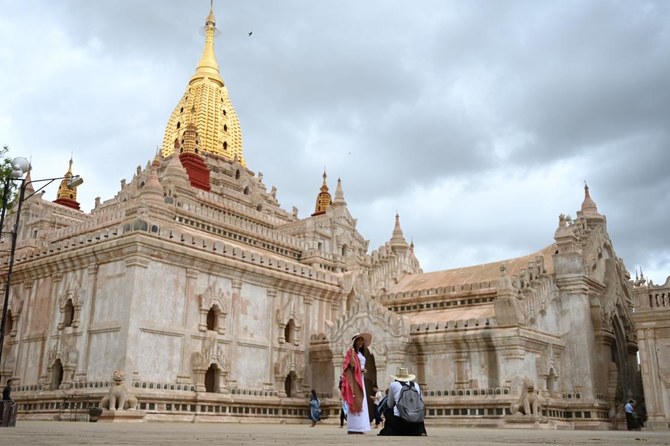
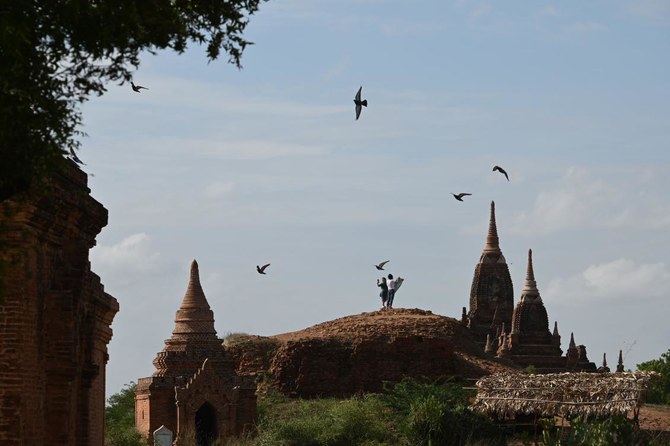
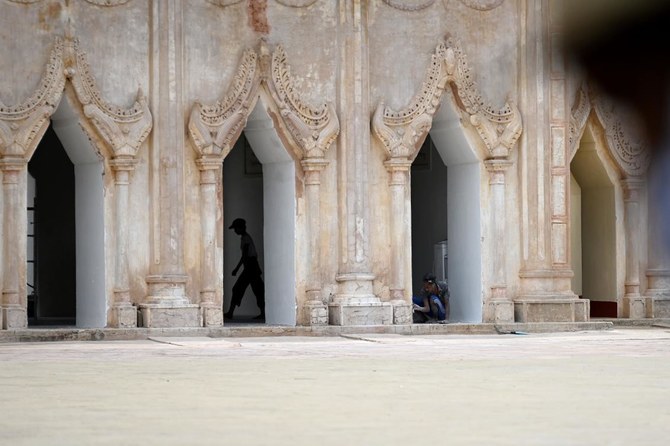
YANGON: UNESCO inscribed Myanmar’s ancient capital of Bagan as a World Heritage Site on Saturday, nearly a quarter of a century after the complex of Buddhist temples was first nominated for listing.
The decision recognizes the importance of the central Myanmar site – which includes more than 3,500 stupas, temples, monasteries and other structures built between the 11th and 13th centuries – and will likely be a boon to Myanmar’s tourist industry.
The Myanmar proposal to list the site was approved at a meeting of the UN’s cultural body in Baku, Azerbaijan.
The International Council on Monuments and Sites recommended the listing, noting that Myanmar had adopted a new heritage law and had formed plans to reduce the impact of hotels and tourism developments around the temple.
Myanmar had reversed some “inappropriate conservation interventions,” the body said, noting that Bagan was important for its historical significance and as a place of continuing Buddhist worship.
Bagan was first nominated as a World Heritage Site in 1995, but the military junta that ruled the country at the time was accused of ignoring experts’ advice on restoration efforts and the nomination was rejected.
Earthquakes have also damaged the ancient structures, most recently in 2016 when nearly 200 temples were damaged by a 6.8 magnitude quake.
Myanmar has renewed efforts to list the site since a transition from military rule began in 2011.
“Bagan is living heritage, having endured all forms of challenges for more than a thousand years,” said Myanmar diplomat Kyaw Zeya, speaking on behalf of the Myanmar delegation at the Baku meeting.
“Today we are celebrating the joyous moment of the successful inscription of Bagan in the World Heritage List. Afterwards we will continue our efforts on conservation and management of Bagan so that this treasured heritage will remain for another thousand years.”

Myanmar’s temple city Bagan awarded UNESCO World Heritage status
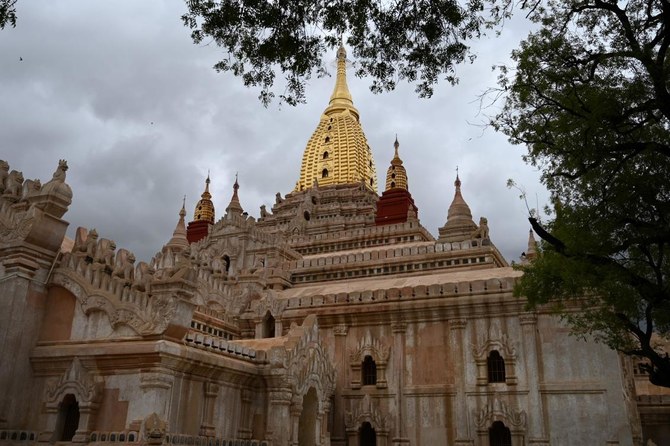
- The decision recognizes the importance of the central Myanmar site which includes more than 3,500 stupas, temples, monasteries and other structures built between the 11th and 13th centuries
- Bagan was first nominated as a World Heritage Site in 1995, but the military junta that ruled the country at the time was accused of ignoring experts’ advice on restoration efforts and the nomination was rejected
’Without any humanity’: Eritrea human trafficker gets 20 years
- The court said the man had treated migrants “without any humanity” as they were transported from Eritrea to Europe via Libya
- Gang members abused thousands of migrants before detaining them in overcrowded and dirty camps in Libya
THE HAGUE: A Dutch court on Tuesday sentenced an Eritrean man to 20 years in prison for operating a human trafficking ring in which migrants were tortured and their families extorted.
The court said the man, identified as Amanuel Walid, had treated migrants “without any humanity” as they were transported from Eritrea to Europe via Libya.
“Your only aim was to earn as much money as possible from people who were looking for a better future,” presiding judge Rene Melaard told Walid.
Gang members abused thousands of migrants before detaining them in overcrowded and dirty camps in Libya, extorting their families for large sums of money.
The court in the northern Dutch city of Zwolle heard how gang members tortured victims while on the phone to their families in the Netherlands, demanding payments to make the abuse stop.
Only once family members had transferred money were the victims put on rickety boats for the perilous trip across the Mediterranean Sea. Many drowned in the crossing.
Prosecutors had called for the maximum sentence of 20 years, accusing him of leading a criminal organization with the intent to commit human trafficking, extortion, hostage-taking, and sexual offenses.
“The court finds that the seriousness and the extent of those crimes justifies such a 20-year sentence,” said Melaard.
He noted Walid had never expressed remorse for his actions and that a psychiatric observation center had judged him mentally fit to take criminal responsibility.
Melaard said he was also imposing the maximum sentence “because of the particularly cruel, violent, and degrading treatment to which the defendant and his accomplices subjected the migrants.”
The court ruled however it had no jurisdiction over the charges of hostage-taking and sexual offenses as these alleged crimes did not take place on Dutch soil.
Walid has been in custody in the Netherlands since October 2022. There is confusion over both his name and his age. He says he has a different name and is 46, not 42.
He made no substantive comments in court, except to deny the charges. He said it is a case of mistaken identity.
But the judge dismissed this claim, saying: “The court finds that it is beyond reasonable doubt that you are the person who was active as a trafficker in Bani Walid in Libya.”
His lawyers also argued that he has already been tried in Ethiopia over largely the same allegations and therefore could not be put on trial again.
Melaard said that the sentence in the Ethiopian case had not yet been applied but that Walid could appeal if it is.
- ‘Freedom and dignity’ -
Prosecutors believe Walid was one of the “most prolific” smugglers on the route from conflict-torn regions in Africa via Libya to Europe.
Walid “deprived the victims of their freedom and dignity,” the public prosecutor argued in court.
“He held them in appalling conditions, starved them, tortured them, and denied them essential medical care,” said the prosecutor.
The Dutch investigation into the operation lasted several years and was carried out with other international bodies such as the International Criminal Court and Interpol.
Libya has struggled to recover from chaos that erupted after a NATO-backed uprising in 2011 overthrew longtime dictator Muammar Qaddafi.
Smugglers and human traffickers have taken advantage of the instability, with the country facing criticism over conditions for migrants and rights groups levelling accusations of extortion and slavery.