


Malaysian Hajj pilgrims make most of Makkah Route

1 / 11
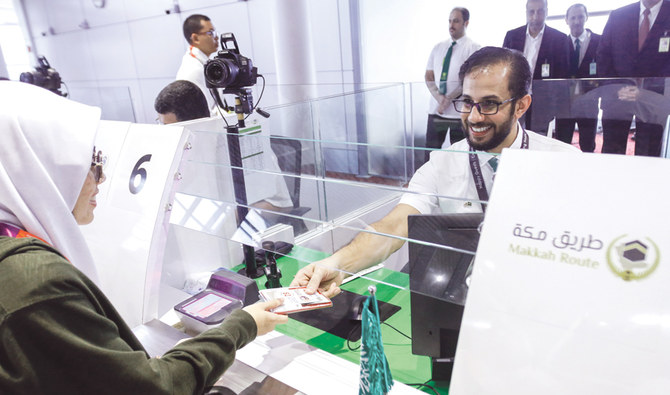
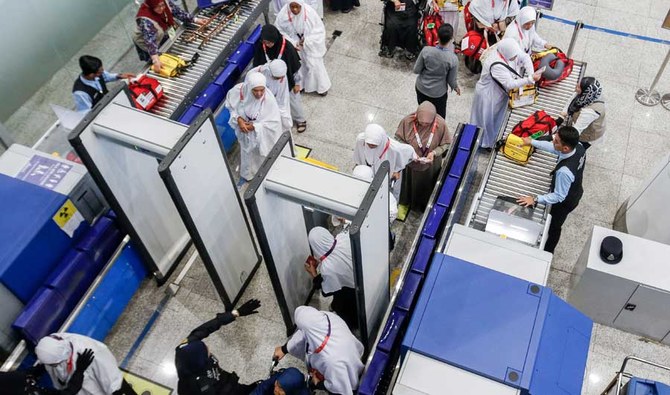
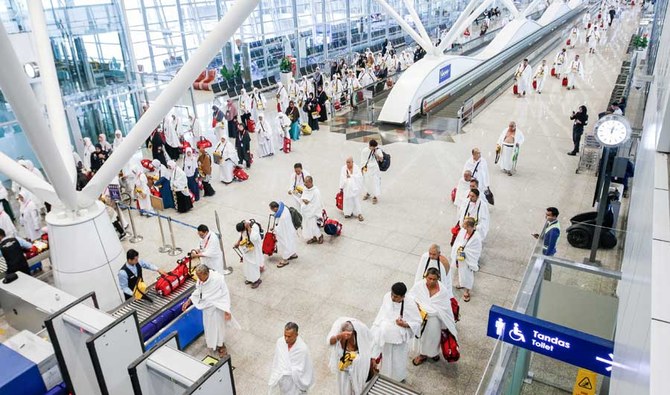
At Kuala Lumpur Airport, pilgrims first enter the Malaysian immigration hall to get their passports processed, then proceed to the Saudi hall for the visa check. The whole process takes about 10 minutes before they are ushered into the waiting hall for boarding. (AN photos by Muhd Fadza Ishak)
2 / 11
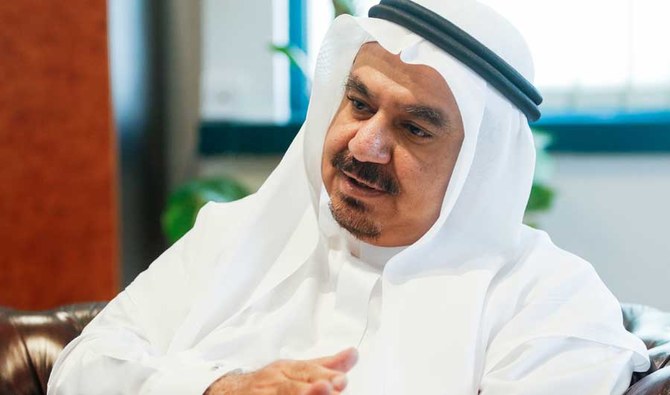
Saudi Ambassador to Malaysia, Ambassador Mahmoud Hussien Qattan said the Mecca Road Initiative is part of Saudi's Vision 2030 to develop better services to the people who visit Saudi Arabia. (AN photo by Muhd Fadza Ishak)
3 / 11
Malaysian pilgrim said the Mecca Road Initiative would give pilgrims a peace of mind when travelling for Hajj. (AN photo by Muhd Fadza Ishak)
4 / 11
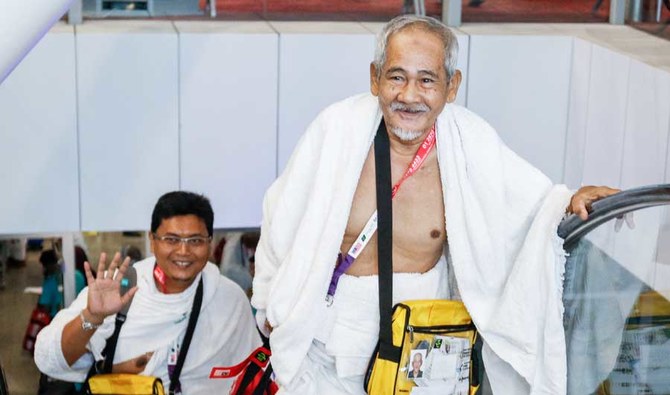
The whole visa process for the Mecca Road Initiative took only 10 minutes, said Malaysian pilgrim Maznah Bashar. (AN photo by Muhd Fadza Ishak)
5 / 11
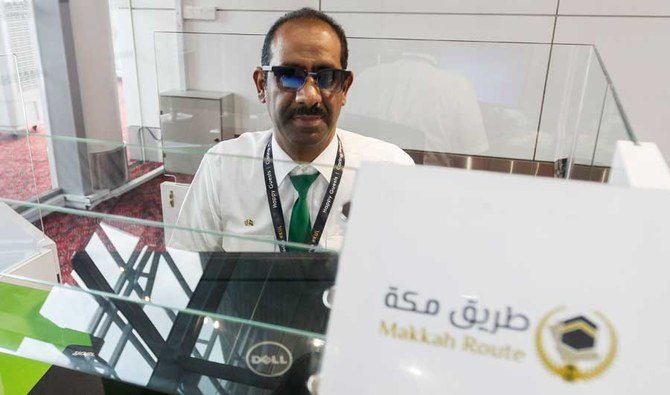
"we are the first and last person to greet the pilgrims at the airport and I always try to leave a good impression to them," said Saudi Immigration Officer, Saad Alqarni, to Arab News. (AN photo by Muhd Fadza Ishak)
6 / 11
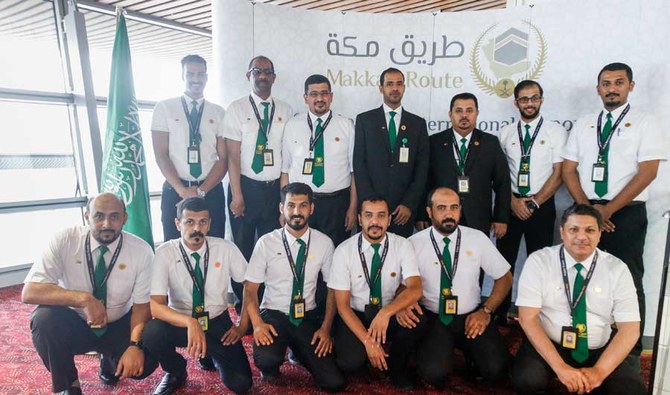
The Mecca Road Initiative at the Kuala Lumpur International Airport. (AN photo by Muhd Fadza Ishak)
7 / 11
The Mecca Road Initiative at the Kuala Lumpur International Airport. (AN photo by Muhd Fadza Ishak)
8 / 11
The Mecca Road Initiative at the Kuala Lumpur International Airport. (AN photo by Muhd Fadza Ishak)
9 / 11
The Mecca Road Initiative at the Kuala Lumpur International Airport. (AN photo by Muhd Fadza Ishak)
10 / 11
The Mecca Road Initiative at the Kuala Lumpur International Airport. (AN photo by Muhd Fadza Ishak)
11 / 11
The Mecca Road Initiative at the Kuala Lumpur International Airport. (AN photo by Muhd Fadza Ishak)
Updated 03 August 2019
Follow

Malaysian Hajj pilgrims make most of Makkah Route

  • The initiative has helped pilgrims clear immigration in just 10 minutes

KUALA LUMPUR: Malaysian Hajj pilgrims traveling to Saudi Arabia via Kuala Lumpur International Airport as part of the Makkah Route initiative are spending only 10 minutes at both Malaysian and Saudi immigration counters before boarding.

“The Malaysian and Saudi governments are very happy with the initiative,” Saudi Ambassador to Malaysia Mahmoud Hussien Qattan told Arab News. “We’ve been successful in reducing time spent on immigration procedures.”
The initiative will process 30,200 Malaysian pilgrims traveling to Saudi Arabia for this year’s Hajj.
Malaysia was the first country to implement the initiative in 2017. Indonesia followed suit in 2018.
This year, it has been expanded to Bangladesh, Pakistan and Tunisia, and 250,000 pilgrims are expected to be processed.
“We chose Malaysia as the first pilot program for the initiative because they’re very cooperative and organized. We’re in constant discussion with the Malaysian side and the relation is very good,” said Qattan.
The initiative is part of Saudi Arabia’s Vision 2030 reform plan, and the government wants to make the visa process easier for Muslims who want to go to Makkah and Madinah, he added.
“One of our goals is to develop our services for the people who visit Saudi Arabia, especially for those who come for Hajj and Umrah. However, our aim is to serve Muslims who visit Saudi Arabia all year around,” he said.
At Kuala Lumpur International Airport, there are two halls for Malaysian and Saudi immigration, which are situated side by side.
Malaysian pilgrims first enter the Malaysian immigration hall to get their passports processed, then proceed to the Saudi hall for the visa check.
The whole process takes about 10 minutes before they are ushered into the waiting hall for boarding.
“The initiative helps to finalize the immigration process for pilgrims on Malaysian soil, as if they’re in Saudi Arabia,” Saudi immigration officer Maj. Ahmad Ahshehri told Arab News.
“Malaysians are very friendly people. It’s very easy to communicate and cooperate with them.”

FASTFACT

• The Makkah Route initiative will process 30,200 Malaysian pilgrims traveling to Saudi Arabia for this year’s Hajj.

• Malaysia was the first country to implement the initiative in 2017. Indonesia followed suit in 2018.

• This year, it has been expanded to Bangladesh, Pakistan and Tunisia, and 250,000 pilgrims are expected to be processed.

• The Makkah Route initiative is part of Saudi Arabia’s Vision 2030 reform plan, says Saudi envoy to Malaysia.

Saudi immigration officer Saad Al-Qarni said he has not encountered any problems processing visas for Malaysian pilgrims as part of the initiative.
“Everything here is facilitated by the Malaysian government. It’s a good initiative because it’s easy and convenient for pilgrims,” he told Arab News.
“After processing their visa and passport, they can enter Saudi Arabia without going through immigration in Jeddah,” he said.
“I enjoy my work at immigration because we’re the first and last person to greet pilgrims at the airport, and I always try to leave a good impression on them.”
Malaysian pilgrim Maznah Bashar, 60, said she was both excited and anxious about going to Makkah for Hajj for the first time.
“I went to Makkah for Umrah before, but it’s not the same experience as we didn’t go to Arafat, Muzdalifah, Mina and many more (places),” she told Arab News.
“Before this, I didn’t enjoy the long wait at Saudi immigration in Jeddah, but under the Makkah Route initiative, the whole process took a mere 10 minutes and they treated us very well,” she said.
“After we arrive in Jeddah, a bus will await us at the airport and will send us straight to our hotel. Even our luggage will be sent directly to the hotel. The system is very fast.”
But Bashar said the immigration hall “felt a bit crowded as there were more than 400 pilgrims processed” there.
Zaifizar bin Zainal Abidin, 42, a Malaysian pilgrim traveling with his wife and daughter, told Arab News that the initiative “helps give us peace of mind, especially for us who have to travel for a long period of time.”
He said: “I’m excited to go to Makkah. It’ll be the first and probably the only time I’ll experience Hajj together with my wife and daughter.”

Tug of war: how US presidents battle Congress for military powers

Updated 5 sec ago
Follow

Tug of war: how US presidents battle Congress for military powers

  • The last official declaration of war by Congress was as far back as World War II

WASHINGTON, United States: Donald Trump’s unleashing of operation “Epic Fury” against Iran has once more underscored the long and bitter struggle between US presidents and Congress over who has the power to decide on foreign military action.
In his video address announcing “major combat” with the Islamic republic, Trump didn’t once mention any authorization or consultation with the US House of Representatives or Senate.
In doing so he sidelined not only Democrats, who called for an urgent war powers vote, but also his own Republican party as he asserts his dominance over a largely cowed legislature.
A US official said Secretary of State Marco Rubio had called top congressional leaders known as the “Gang of Eight” to give them a heads up on the Iran attack — adding that one was unreachable.
Rubio also “laid out the situation” and consulted with the same leaders on Tuesday in an hour-long briefing, the US official said.
According to the US Constitution, only Congress can declare war.
But at the same time the founding document of the United States first signed in 1787 says that the president is the “commander in chief” of the military, a definition that US leaders have in recent years taken very broadly.
The last official declaration of war by Congress was as far back as World War II.
There was no such proclamation during the unpopular Vietnam War, and it was then that Congress sought to reassert its powers.
In 1973 it adopted the War Powers Resolution, passed over Richard Nixon’s veto, to become the only lasting limit on unilateral presidential military action abroad.
The act allows the president to carry out a limited military intervention to respond to an urgent situation created by an attack against the United States.
In his video address on Saturday, Trump evoked an “imminent” threat to justify strikes against Iran.

- Sixty days -

Yet under this law, the president must still inform Congress within 48 hours.
It also says that if the president deploys US troops for a military action for more than 60 days, the head of state must then obtain the authorization of Congress for continued action.
That falls short of an official declaration of war.
The US Congress notably authorized the use of force in such a way after the September 11, 2011 attacks on the United States by Al-Qaeda. Presidents have used it over the past two decades for not only the 2001 invasion of Afghanistan but a series of operations in several countries linked to the “War on Terror.”
Trump is far from the first US president to launch military operations without going through Congress.
Democrat Bill Clinton launched US air strikes against Kosovo in 1999 as part of a NATO campaign, despite the lack of a green light from skeptical lawmakers.
Barack Obama did the same for airstrikes in Libya in 2011.
Trump followed their example in his first term in 2018 when he launched airstrikes in Syria along with Britain and France.
But since his return to power the 79-year-old has sought to push presidential power to its limits, and that includes in the military sphere.
Trump has ordered strikes on alleged drug trafficking boats in Latin America without consulting Congress, and in June 2025 struck Iran’s nuclear facilities.
Perhaps the most controversial act was when he ordered the capture of Venezuelan president Nicolas Maduro in a lightning military raid on January 3.
Republicans however managed to knock down moves by Democrats for a rare war powers resolution that would have curbed his authority over Venezuela operations.
Trump has meanwhile sought to extend his powers over the home front. Democrats have slammed the Republican for deploying the National Guard in several US cities in what he calls a crackdown on crime and immigration.