

US imposes sanctions on Iranian foreign minister Zarif

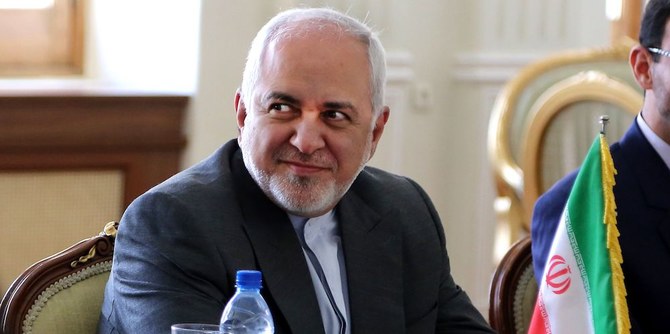
The Treasury Department said it was imposing sanctions on Zarif for acting on behalf of Iranian Supreme Leader Ayatollah Ali Khamenei. (AFP)
Updated 01 August 2019
Follow

US imposes sanctions on Iranian foreign minister Zarif

  • US Treasury says Mohammad Javad Zarif implements the reckless agenda of Iran’s Supreme Leader

WASHINGTON: The United States on Wednesday imposed sanctions on Iranian Foreign Minister Mohammad Javad Zarif, the US Treasury Department’s Office of Foreign Assets Control said on its website.
The Treasury Department said it was imposing sanctions on Zarif for acting on behalf of Iranian Supreme Leader Ayatollah Ali Khamenei.
“Javad Zarif implements the reckless agenda of Iran’s Supreme Leader, and is the regime’s primary spokesperson around the world,” Treasury Secretary Steven Mnuchin said in a statement.
Tensions have risen between the United States and Iran following US President Donald Trump’s withdrawal last year from a 2015 international nuclear accord with Tehran. Fears of a direct US-Iranian conflict have risen since May with several attacks on oil tankers in the Gulf, Iran’s downing of a US surveillance drone, and a plan for US air strikes on Iran last month that Trump called off at the last minute.

In response to the sanctions, Iran’s President Hassan Rouhani said they are “childish” and a barrier to diplomacy.
He says US officials “claim to want to negotiate with Iran, without any pre-conditions . and then they put sanctions” on Zarif.


UNICEF chief says GCC central to supporting operations across the region

Updated 03 February 2026
Follow

UNICEF chief says GCC central to supporting operations across the region

DUBAI: The Gulf Cooperation Council is playing a central role in combating acute crises affecting children and displaced people across the region, says UNICEF’s Gulf Area Office director, Lana Al-Wreikat.

Speaking to Arab News on the sidelines of the World Governments Summit on Tuesday, Wreikat said the GCC had become central to supporting refugees, hygiene and children’s health through funding and diplomatic support.

“Our work with the GCC countries when it comes to the humanitarian crisis goes beyond the refugee response,” Wreikat said.

“We are also dealing with displaced communities inside countries. We also deal with big issues and sectors like the water, sanitation, hygiene, promotion, nutrition, child protection, education. We have our core commitments for children and young people, and these translate across all these sectors. The GCC … has been a very generous donor for us.”

Wreikat revealed the UAE had just announced a $550 million donation for the UN’s 2026 global appeal, part of which goes to funding UNICEF’s operations.

She said Gulf countries had become crucial to supporting the organization diplomatically, especially in difficult situations with access difficulties.

“They also play a big role in terms of the humanitarian diplomacy and negotiations around access, where we really need to support maximum number of children,” she said.

“In terms of their priorities, what’s really high on the agenda is Gaza, Sudan, Yemen, and Syria.”