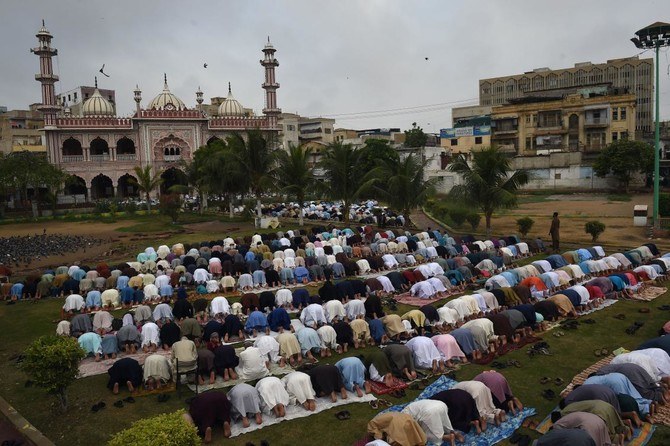
August 12, 13, 14 and 15 will be observed as holidays in Pakistan for the Muslim holiday of Eid ul-Adha, the second of the year’s two major Islamic festivals, the government announced on Wednesday.
Eid ul-Adha commemorates the Qur’anic story of the Prophet Ibrahim’s willingness to sacrifice his son as an act of obedience to Allah before Allah replaced the son with a ram to be sacrificed instead.
Last month, Minister for Science and Technology Fawad Chaudhry announced that both Eid ul-Fitr and Eid ul-Adha would be decided every year based on a ‘scientific’ lunar calendar, launched by the ministry in June in order to end controversies over the sighting of the moon for Islamic months. According to the ministry’s calendar, Eid ul-Adha this year will fall on Monday, August 12.
According to a Ministry of Interior notification, Saturday, August 17, will be a working day in Pakistan.
The science ministry’s calendar, which can be accessed through Pakistan’s first official moon-sighting website and a mobile application, specifies determined dates for all major Islamic festivals in the country.
Pakistan, a Muslim majority country of 208 million people, is the sixth most populous country in the world and has the second-largest Muslim population after Indonesia.

Pakistan government announces Eid ul-Adha holidays from August 12-15
- August 17th, Saturday, will be a working day in Pakistan
- Dates for both Eids will be decided in Pakistan based on a ‘scientific’ lunar calendar launched by the science ministry in June
Pakistani president arrives in Iraq to deepen trade, energy cooperation
- Visit follows recent high-level contacts as Islamabad seeks to expand limited commercial ties with Baghdad
- Talks are expected to cover investment, manpower and facilitation of Pakistani pilgrims visiting holy sites in Iraq
ISLAMABAD: President Asif Ali Zardari arrived in Iraq on Saturday on an official visit aimed at expanding cooperation in trade, energy and investment, as Pakistan seeks to deepen ties with Baghdad after years of limited engagement.
Pakistan and Iraq established diplomatic relations in 1947 and have traditionally maintained cordial ties, though commercial links remain modest, with officials and business groups identifying scope for cooperation in construction services, pharmaceuticals, manpower and agricultural exports.
“President Asif Ali Zardari arrived in Baghdad on a four-day official visit to Iraq,” his office said in a post on X. “He was received by Culture Minister Dr. Ahmed Fakkak Al-Badrani. During the visit, meetings with senior Iraqi leadership are expected to advance cooperation and further strengthen Pakistan-Iraq relations.”
Zardari’s visit follows a series of recent high-level contacts between the two countries, reflecting efforts to broaden bilateral engagement beyond traditional diplomatic ties and explore collaboration across economic, political and people-to-people domains.
According to Pakistan’s foreign office, the president is expected to hold meetings with Iraq’s senior leadership to discuss cooperation in various areas such as trade and investment, energy, technology, education and manpower.
He is also expected to discuss regional and international issues with Iraqi officials.
Earlier this month, Pakistan’s Interior Minister Mohsin Naqvi met his Iraqi counterpart, Abdul Ameer Al-Shammari, on the sidelines of meetings in Brussels, where both sides agreed to enhance cooperation on security and facilitate travel for Pakistani Shia pilgrims to Najaf and Karbala.
The two officials discussed measures to ensure the smoother movement of these pilgrims and their compliance with visa regulations.


