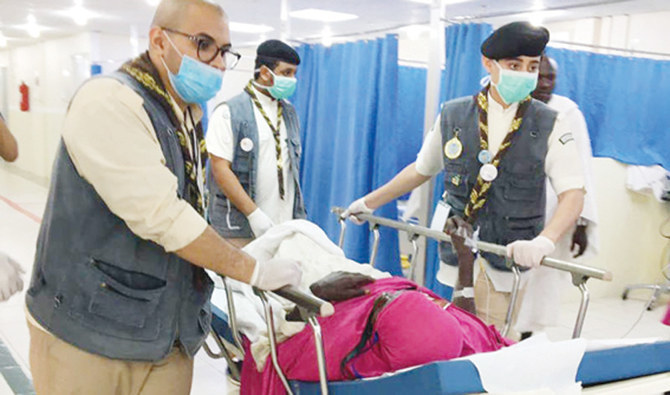
RIYADH: If you face an emergency during Hajj season and don’t know who to call, just pick up the phone and dial 911: whether you are lost and in need of directions, require help on the road, have a medical emergency, find an animal on the street or highways or have lost your belongings, a team of competent young Saudis are always ready to help.
The National Center for Security Operations at the Saudi Interior Ministry launched its 911 call center just 5 years ago in Makkah, and there are now three other centers in Riyadh, Shargiyah and Madinah.
Workers at the centers speak various languages, including English, French, German, Indonesian and Urdu, the national language of Pakistan.
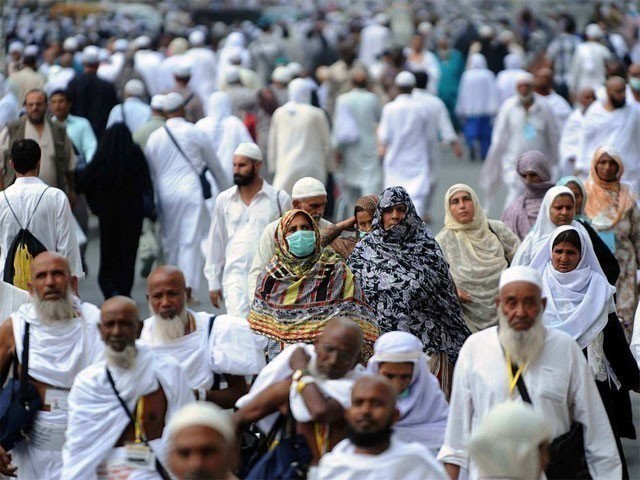
The service is quick, efficient and extremely useful for anyone with an emergency at this particularly busy time of year as Hajj season kicks off and pilgrims make their way to Makkah for sacred rituals and visits to the holy sites.
The service is available 24 hours a day, seven days a week, with text messages having been sent out to mobile phones saying: “Dear pilgrims, your service is an honor and your security is our duty. Policemen are ready to fulfill your urgent needs on 911.”
The centers are also active on Twitter, updating information on the latest dust storms, highway closings due to car crashes and animal sightings on freeways.


Saudi's 911 call operators will attend pilgrims in Urdu during Hajj
Saudi's 911 call operators will attend pilgrims in Urdu during Hajj

- Multilingual helpline service available 24 hours a day seven days a week, also actively updates information on Twitter
- Round the clock call centers set up in Makkah, Riyadh, Shargiyah and Madinah over last 5 years

Pakistan steps up EU trade engagement as India deal raises export fears
- Deputy PM chairs inter-ministerial meeting, calls GSP+ “crucial” for growth
- Move follows India–EU trade pact that industry warns could hit exports, jobs
ISLAMABAD: Pakistan’s Deputy Prime Minister and Foreign Minister Mohammad Ishaq Dar on Friday chaired a high-level inter-ministerial meeting to review and strengthen trade and economic relations with the European Union, as Islamabad scrambles to safeguard market access following India’s new trade deal with the bloc.
The meeting is part of a broader diplomatic and policy push this week after India and the EU confirmed a free trade agreement granting Indian exporters sweeping tariff-free access to Europe — a development Pakistani exporters and analysts warn could erode Pakistan’s competitiveness, particularly in textiles, its largest export sector.
The EU is Pakistan’s second-largest export market, accounting for about $9 billion in annual shipments, mostly textiles and apparel. Industry leaders have warned that India’s tariff-free access could undercut Pakistan’s long-standing advantage under the EU’s Generalized Scheme of Preferences Plus (GSP+), which allows duty-free access in return for commitments on labor rights, human rights and governance.
At Friday’s meeting, Dar emphasized the centrality of GSP+ to Pakistan’s trade strategy with Europe.
“He emphasized that GSP Plus remains a crucial framework for mutually beneficial trade and underlined the need to maximize its potential for Pakistan’s economic growth,” the Foreign Office said in a statement.
Dar also stressed the importance of enhancing trade cooperation with the EU and exploring new avenues for economic engagement, as Pakistan assesses how to respond to shifting trade dynamics in Europe.
The inter-ministerial huddle follows a series of rapid consultations this week, including a meeting between Prime Minister Shehbaz Sharif and the EU’s ambassador to Pakistan, as well as briefings by trade bodies to Finance Minister Muhammad Aurangzeb on the potential impact of the India–EU agreement.
Exporters have warned that unless Pakistan lowers production costs, particularly energy tariffs, and secures continued preferential access, the country could face declining market share in Europe and job losses across its labor-intensive textile sector.
Pakistan’s Foreign Office has said Islamabad is aware of the India–EU agreement and continues to view its trade relationship with the EU as mutually beneficial, but officials acknowledge that the new deal has intensified pressure to defend Pakistan’s position within the bloc.


