

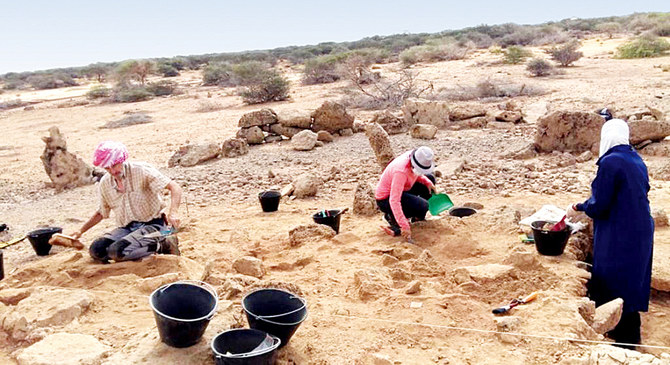
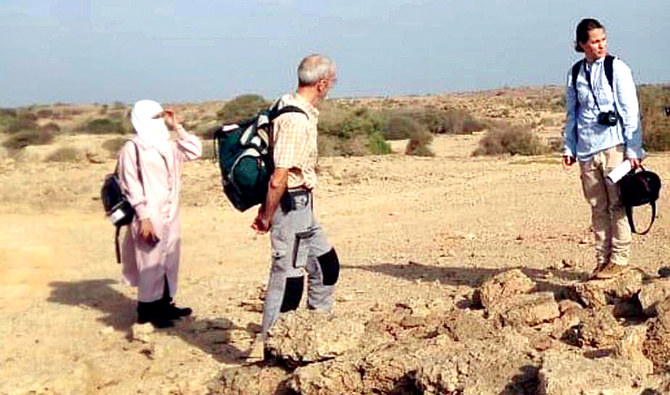

RIYADH: Najlah Salman Al-Saeer, one of Saudi Arabia’s top emerging female archaeologists, talks about her journey into the past and her career ambitions for the future.
A Saudi archaeologist is fast-becoming a leading light in the field for her work delving into the Kingdom’s cultural past.
Through her fascination for all things old, Najla Salman Al-Saeer has been digging back millions of years into the history of the country.
And she is hoping to expand her knowledge by continuing her education abroad to help unearth even more of the Kingdom’s treasures of the past.
After gaining a bachelor’s degree in arts (libraries and information) from Princess Nourah bint Abdulrahman University, Al-Saeer began studying for a master’s degree in tourism and archaeology, graduating this year from King Saud University (KSU).
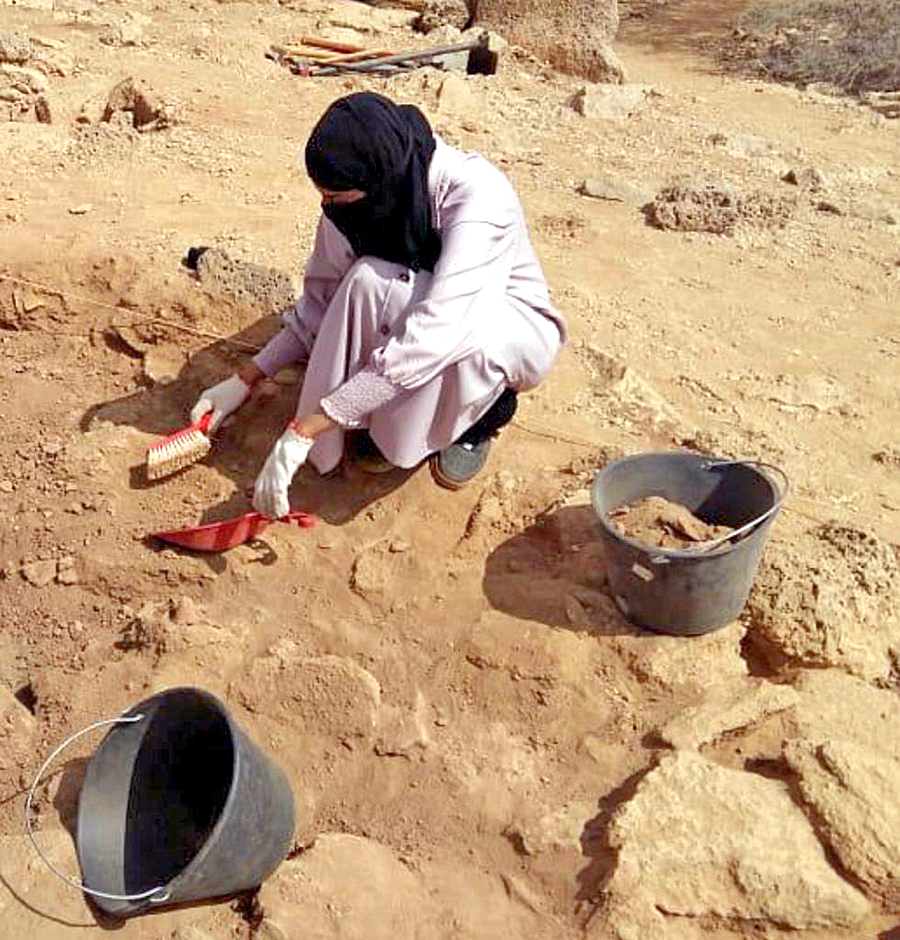
Najla Al-Saeer's team at work. (Photo/Supplied)
The KSU archaeology department was established in 1977 to be the Saudi center for graduated qualified national professionals in the subject and its diverse sciences, and to provide excellent scientific knowledge to serve the job market and provide homegrown experts in the field.
Al-Saeer specializes in material heritage, archaeological sites and everything related to documents and manuscripts. “I write in newspapers about my field visits to archaeological and heritage sites,” she told Arab News.
“Studying archaeology was based on my love of exploration in the first place, and consequent entry into the work field on archaeological surveys and excavations.
“The study of material findings gives the researcher a concrete conception of the first human settlements, successive civilizations, and the culture prevailing in communities up until the period they belong to.
“My studies in libraries and information also played a role in choosing archaeology. My interest in manuscripts, which I call cultural heritage, meant I studied them in an archaeological way so that I could be within the scope of professional archaeological work,” she added.
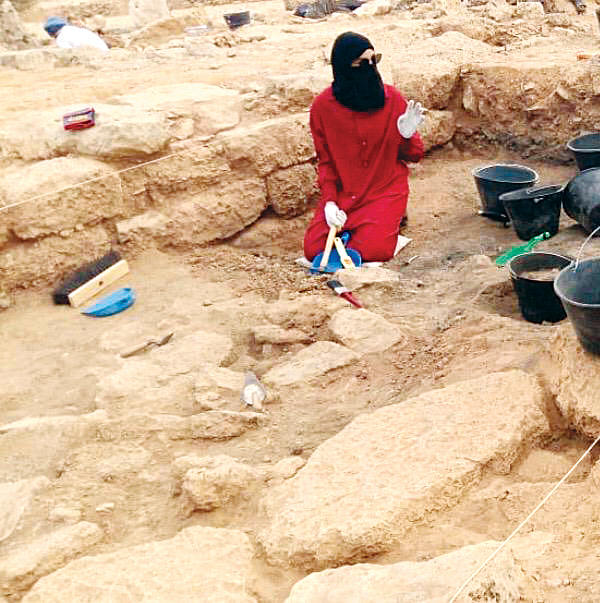
Najla Al-Saeer's team at work. (Photo/Supplied)
Al-Saeer completed her master’s research project on “The Archaeological Study of the Manuscripts in West Africa (such as Timbuktu),” and she is currently working on writing a scientific report related to her surveys and excavations of the Wadi Shami and Wadi Matar sites in the Farasan island of Jazan.
While working on a temple at Wadi Matar, she discovered objects dating back thousands of years. “I found a fragment of Nabati pottery, beads, pottery wares and other artifacts such as bones and shells.”
Al-Saeer is not alone in the Kingdom as a female archaeologist. In 1989, KSU established the first women’s department of archaeology to promote the roles of female students and researchers.
Dr. Samer Sahla, head of the university’s archaeology section, said the department offered a postgraduate program exclusively for female students.
BACKGROUND
While working on a temple at Wadi Matar, Najla Al-Saeer discovered objects dating back thousands of years ago. Al-Saeer is not alone in the Kingdom as a female archaeologist. In 1989, KSU established the first women’s department of archaeology to promote the roles of female students and researchers.
“The number of female students currently in the graduate program is approximately 75. We accept annually 15 to 20 female students in our masters and Ph.D. programs, and applications are generally increasing,” he added.
Al-Saeer’s main aims at present are to work on her Ph.D. project in archaeology and participate in surveys and explorations of other key heritage sites in the Kingdom, and she is also hoping for the opportunity to work abroad.
She said that archaeologists usually located excavation sites by foot surveys or using aerial photography and metal detectors.
One of the oldest Saudi sites is in the village of Al-Shwaihtia, about 45 km from the city of Sakaka in Al-Jawf, where human settlements dating back to the Paleolithic era have been found.
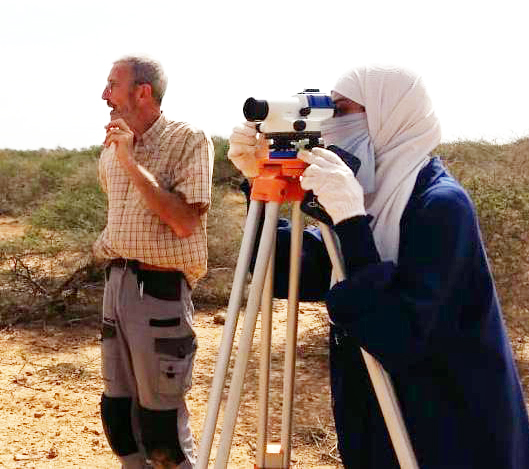
Najla Al-Saeer and her team during their work. (Photo/Supplied)
Al-Saeer pointed to the important role played by the Saudi Commission for Tourism and National Heritage (SCTH). “The commission took the coverage on its behalf by holding lectures and symposia after each task in the archaeological sites of the Kingdom to discuss the most important results, in addition to holding conferences including the first Saudi Archaeological Conference in Riyadh, in 2017.”
She added that the SCTH was able to develop global interest in Saudi archaeological finds through its longstanding partnerships with foreign teams including those from France, Germany and Japan.
She has benefitted from “working on different methodologies of archaeological research and practicing them in archaeological sites, in addition to benefiting from the diverse experiences within the work team, which includes individuals holding various specializations other than archaeology.”


