

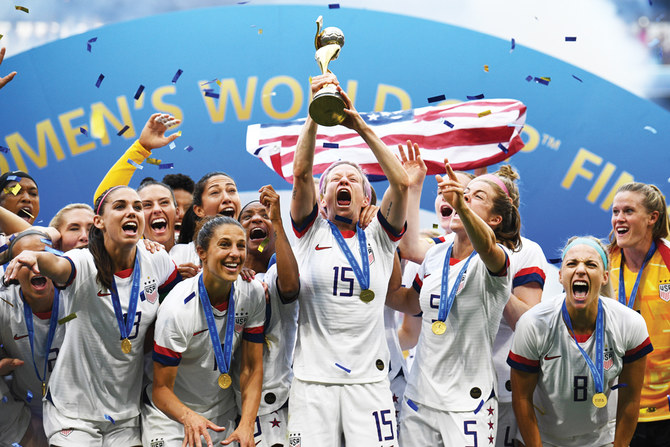


JEDDAH: Football fans around the world celebrated the recognition of women in sports after the recent FIFA Women’s World Cup (WWC) final match, in which the US beat the Netherlands 2-0. One country where the US victory struck a powerful chord among female sports enthusiasts is Saudi Arabia.
Women are participating in sports in increasing numbers in the Kingdom as the reforms being introduced under the Vision 2030 plan enable women to take on different career paths.
Members of Jeddah Eagles, a women’s football squad with 39 players, watched the July 7 WWC final in anticipation of an exciting finish. In the end, they celebrated not only the US team’s victory but the recognition of women in sports as a whole.
Johara Al-Sudairi, who has been playing for Jeddah Eagles as a winger since August 2017, said she is thrilled that football is gaining popularity among women in the Kingdom.
“I’ve been a fan of women’s football ever since I was a kid. Watching Mia Hamm play, then watching Marta Vieira da Silva play for Brazil when I was a teenager got me hooked,” the 26-year-old Saudi told Arab News. “I have never missed a women’s World Cup since. I’m so happy that now the sport is getting more and more recognized. This is a huge step forward.”
FAST FACTS
18 - The Storm, a Saudi women’s football squad, has 18 players.
39 - Jeddah Eagles women’s football squad has 39 players.
Saudi women participate in sports in increasing numbers.
Reforms under Vision 2030 enable women to take different career paths, including professional sports.
Al-Sudairi said women have the drive to succeed in the sport more than their male counterparts.
“I believe that hard work pays off. And from what I’ve seen, I believe women want it more,” she said.
Hala Khashoggi, a Saudi who has also played on the wing for the team since February 2019, said the US team’s victory struck a blow for women’s empowerment worldwide.
“I feel incredible that female empowerment is increasing and it enlightens a lot of young girls and inspires them to play football,” she told Arab News.
Khashoggi believes both men and women can excel equally in the sport. “Comparing the men’s and women’s games is already old hat,” she said.
“Every individual player has their own uniqueness and quality. Every team has its own ability to score well and play incredibly. Thus, comparing is not the solution. Playing better is.”
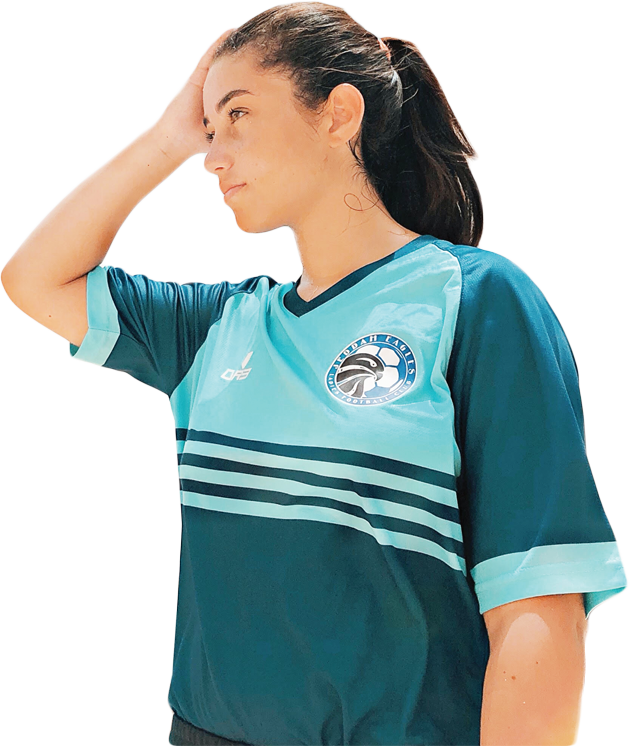
Farah Jefry plays for the Jeddah Eagles as a midfielder. (Supplied photo)
In conclusion, Khashoggi said: “Every woman should follow her dreams, whatever it is and whatever it takes, because football is not just for men or for women. Football is for footballers.”
Fatimah Gari, who joined the team as a striker in 2014, was happy for her fellow female football players in the US for their victory.
“It is a very good feeling,” the 28-year-old Saudi told Arab News. “I wish one day we will have a Saudi team and will be in their place.”
Gari’s views are echoed by Farah Jefry, a Saudi who has been playing for Jeddah Eagles for over a year now. “As a female soccer player I am delighted to see this amount of attention given to women’s sports. I hope it continues to grow,” she said.
The 16-year-old midfielder believes Arab women would perform better than their male counterparts with the right support.
“With the right amount of funding and support, Arab women for sure can be better at playing,” she told Arab News.
“Saudi Vision 2030 is giving us lots of opportunities. I would totally encourage women in the Kingdom to learn to play football.”
The US team’s victory in France was a memorable event for members of another Jeddah female football team, The Storm, which a squad of 18 players.
Dona Adel Rajab, the head coach of The Storm since February 2018, who was born and raised in the US, has played football most of her life. “Women’s sports has been around me and I never felt any difference until I moved to Jeddah in 2015,” the 28-year-old Saudi told Arab News.
Women’s sports have grown in recognition and awareness in Saudi Arabia since then, Rajab said.
“The popularity of football is increasing. However, the initiative in taking the next step is needed,” she said.
Rajab said what really matters in sports most is discipline and seriousness, not gender or ethnicity.
“Since we are talking about sports, ethnicity and gender are not good indicators to differentiate between male and female. As a football coach, I look at performance and discipline,” she said.
Rahaf Al-Hazmi, a 21-year-old Saudi who co-founded The Storm and plays in defence, is enthusiastic about the future of the sport for women in the Kingdom.
“The mentality of Saudi women has changed a lot. Women have started to participate in all kind of sports and requests to join our team are increasing,” she said.
“The love of football is increasing among women in the kingdom. Especially now that the government is focusing on sports for women.”
“Women who take part in sports in general, and play football in particular, felt blessed to have witnessed this achievement in women sports, “ Al-Hazmi told Arab News, referring to the WWC final results.
“Watching women not only play for fun but also as a career and a calling can give us a motivation to move forward. Women have an amazing capacity to reach their aim. If we really focused on developing our skills and we made this our first priority, we can be so much better.”
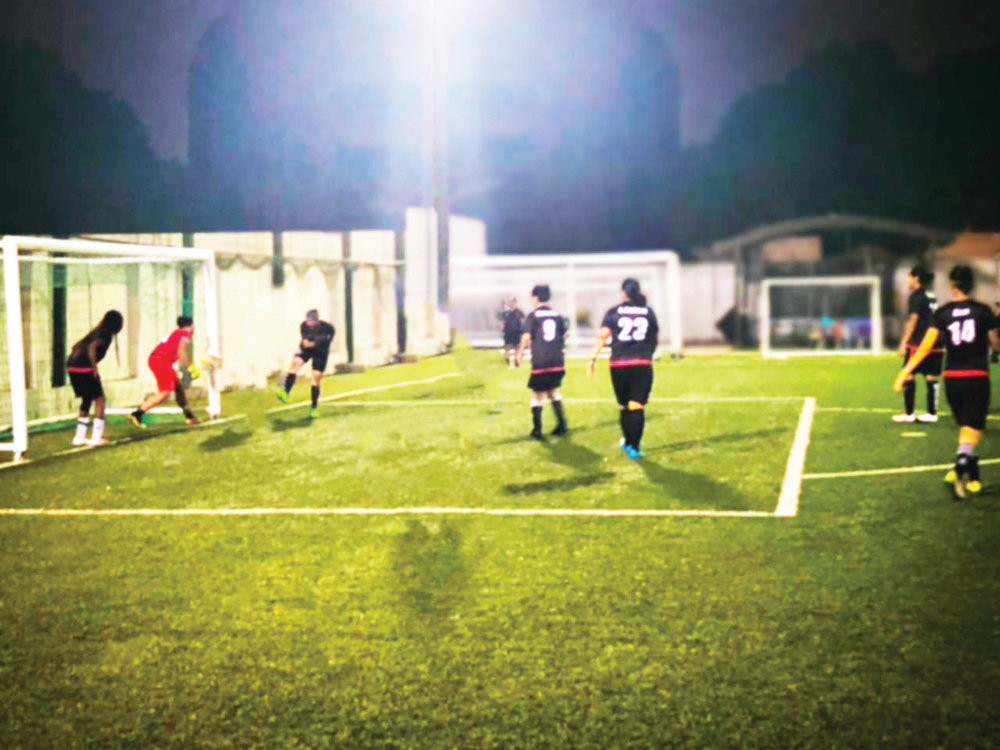
Jeddah’s The Storm playing a warm-up game. (Supplied photo)
Johara Hamad, 21-year-old Saudi winger for The Storm, said: “I was surprised at the amount of people who watched and showed an interest. It actually made me even more motivated to improve my skills so that one day I will be a part of such a great event.”
Hamad is against comparing genders in sports, but she too believes Saudi women can play better than their male counterparts with the right support and equal opportunities.
“I don’t like comparisons but in the context of Saudi Arabia, we can be better than the men’s teams if we get the same chances and support,” she told Arab News.
“I believe that we have it in us to scale far greater heights with the support of the General Sports Authority.”
Danyah Al-Othmany has witnessed a steady increase in the number of women interested in football in Saudi Arabia since she took up the sport.
The 24-year-old Saudi, who plays at right back for The Storm, calls the US team’s victory “a great accomplishment.”
“Women have the potential and can become great players if they set their mind to it,” Al-Othmany told Arab News.
“Honestly, it’s all about the commitment. Regardless of whether the player is male or female, what matters is if they are willing to spend time on themselves to improve and become better.”
Al-Othmany’s message to women in the Kingdom who want to take up football is simple: “Commitment is what really counts.”
Perhaps Al-Hazmi, who co-founded The Storm, spoke for many Saudi female footballers when she said: “Years ago no one in the world imagined having a World Cup tournament for women’s football, so nothing is impossible. We need every single talent we have in the Kingdom so that we can collaborate in order to reach the WWC and play alongside the best professional players of the world.”


