Pakistan to pay firm $6bn over mine closure

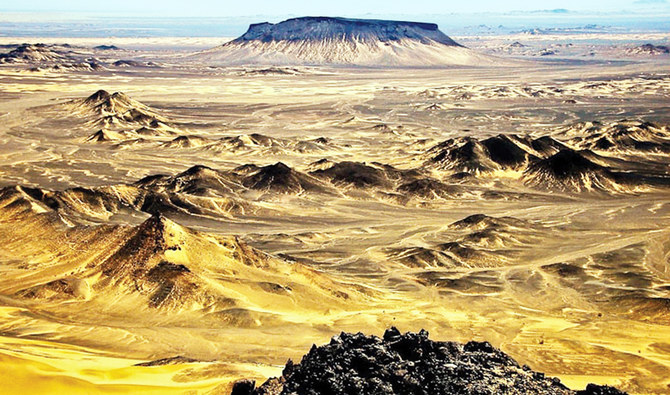
Mining in Pakistan’s Balochistan province is dominated by small companies focused primarily on marble and granite. (Reuters/ File)
Updated 14 July 2019
Follow

Pakistan to pay firm $6bn over mine closure

  • Country’s legal experts are ‘studying’ financial and legal implications
  • The consortium Tethyan Copper is the largest foreign direct investment mining project in Pakistan

ISLAMABAD: Pakistan will have to pay almost $6 billion in damages to a foreign gold mining firm whose dig was shut down by the government in 2011, the World Bank said on Sunday.

The consortium Tethyan Copper company — of which Canadian gold firm Barrick and Chile’s Antofagasta Minerals control 37.5 percent each — is the largest foreign direct investment mining project in the country.

More than a decade ago the group found vast gold and copper deposits at Reko Diq, in the turbulent southwestern Balochistan province, and had planned a hugely lucrative open-pit mine.

But the project came to a standstill in 2011 after the local government refused to renew the consortium’s lease, and in 2013 Pakistan’s top court declared it invalid.

On Friday, the World Bank’s international arbitration tribunal committee awarded $5.84 billion in damages to Tethyan, according to a statement from the company, because of the government’s decision to shut down the mine.

Pakistan’s attorney general, Anwar Mansoor Khan, said in a statement they had noted the decision “with disappointment.”

The country’s legal experts were “studying the Award and reflecting upon its financial and legal implications,” the statement continued.

Ivan Arriagada, Antofagasta’s Chief Executive Officer, said: “We are pleased to reach this milestone after more than seven years of arbitration.”

“We remain willing to discuss the potential for a negotiated settlement with Pakistan and will continue to protect our commercial interests and legal rights until the conclusion of this dispute,” consortium chairman William Hayes added.

It comes weeks after Prime Minister Imran Khan secured a $6 billion bailout from the International Monetary Fund (IMF), amid devaluations of the rupee and soaring inflation.

Barrick and Antofagasta say the proposed plant could produce 600,000 tons of copper and 250,000 ounces of gold a year.

The provincial government is also a sleeping partner in the Reko Diq project with a 25 percent stake.

Mining in Balochistan is dominated by small companies focused primarily on marble and granite, experts say, which waste up to 80 percent of potential because of poor extraction techniques.

Experts have called for more transparent policies to allow mining to flourish.


Oman’s economy grows 2% in Q3 as bank credit expands 

Updated 5 sec ago
Follow

Oman’s economy grows 2% in Q3 as bank credit expands 

JEDDAH: Oman’s economy expanded 2 percent in the third quarter of 2025, supported by steady growth in non-oil activities, while bank lending continued to rise faster than deposits, underscoring improving domestic demand. 

Gross domestic product at constant prices reached about 9.91 billion Omani rials ($26 billion) in the three months through September, up from 9.71 billion rials a year earlier, according to preliminary data from the National Centre for Statistics and Information. 

The expansion was driven mainly by non-oil sectors, where value added increased 2 percent to more than 7.3 billion rials, Oman News Agency reported. 

This comes after Fitch Ratings recently upgraded the Sultanate’s sovereign credit rating to investment grade at BBB-, projecting GDP growth of around 4 percent in 2025, driven largely by robust expansion in the non-oil sector. 

Meanwhile, S&P Global Ratings expects steady real GDP growth of about 2 percent a year through 2028, supported by ongoing economic diversification and momentum in the services sector. 

“By economic activity, construction activities grew 1.3 percent to around 1.035 billion rials, while wholesale and retail trade increased 1.3 percent to 830.5 million rials. Public administration and defense rose 1.5 percent, reaching 932.5 million rials in Q3 2025,” the ONA report stated. 

Oil sector activities increased 1.9 percent to nearly 3.07 billion rials, compared with just over 3.01 billion rials in the same period of 2024. Crude oil production rose 2 percent to more than 2.55 billion rials, while natural gas activities grew 1.6 percent to 512.8 million rials, up from 504.7 million rials a year earlier. 

Meanwhile, total credit extended by conventional commercial banks in the Sultanate rose 8.5 percent by the end of November, with lending to the private sector increasing 5.8 percent to 21.9 billion rials. 

“In terms of investment, total holdings of conventional commercial banks in securities grew 7.4 percent, reaching approximately 6.4 billion rials by the end of November 2025,” ONA stated in another report. 

Within this category, investments in government development bonds rose 9.5 percent year on year to 2.2 billion rials, while investments in foreign securities declined 4.4 percent to 2.3 billion rials. 

On the liabilities side, total deposits with conventional commercial banks increased 6.3 percent to 26.4 billion rials by the end of November. 

Among total deposits, government deposits rose 7.6 percent to about 5.8 billion rials, while deposits from public sector institutions fell 25.6 percent to roughly 1.9 billion rials. 

Private sector deposits climbed 9.5 percent to 17.8 billion rials in November, accounting for 67.2 percent of total deposits with conventional commercial banks.