World Bank court orders Pakistan to pay $5.8 billion damages to Tethyan Copper

1 / 2
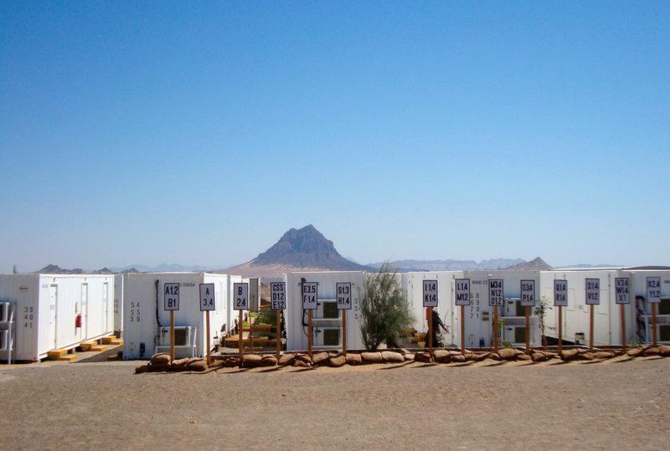
This is a file photo of the site of the gold and copper mine exploration project of Tethyan Copper Company (TCC) in Reko Diq, in Balochistan, Pakistan. (Photo Courtesy - TCC)
2 / 2
Empty trailers for housing workers at the site of the gold and copper mine exploration project of Tethyan Copper Company (TCC) are seen in this undated photo in Reko Diq, in Balochistan, Pakistan. (REUTERS)
Updated 14 July 2019
Follow

World Bank court orders Pakistan to pay $5.8 billion damages to Tethyan Copper

  • Tethyan discovered vast mineral wealth more than a decade ago in Reko Diq in southwestern Balochistan province
  • Company says had invested over $220 million when Pakistan government unexpectedly refused to grant them the mining lease in 2011

SANTIAGO: A World Bank arbitration court has ordered the Pakistani government pay damages of $5.8 billion to Tethyan Copper, a joint venture between Chile’s Antofagasta Plc and Canada’s Barrick Gold, the Chilean miner said late on Friday.
Tethyan Copper discovered vast mineral wealth more than a decade ago in Reko Diq, at the foot of an extinct volcano near Pakistan’s frontier with Iran and Afghanistan. The deposit was set to rank among the world’s biggest untapped copper and gold mines.
The company said it had invested more than $220 million by the time Pakistan’s government, in 2011, unexpectedly refused to grant them the mining lease needed to keep operating.
The World Bank’s International Center for Settlement of Investment Disputes (ICSID) ruled against Pakistan in 2017, but until now had yet to determine the damages owed to Tethyan.
Tethyan board chair William Hayes said in a statement the company was still “willing to strike a deal with Pakistan,” but added that “it would continue protecting its commercial and legal interests until the dispute was over.”
The Reko Diq mine has become a test case for Prime Minister Imran Khan’s ability to attract serious foreign investment to Pakistan as it struggles to stave off an economic crisis that has forced it to seek an International Monetary Fund bailout.


Pakistan interior minister urges FIA to intensify crackdown against money launderers

Updated 5 sec ago
Follow

Pakistan interior minister urges FIA to intensify crackdown against money launderers

  • Pakistan’s Interior Minister Mohsin Naqvi holds high-level meeting at Federal Investigation Agency Karachi Zone 
  • FIA launched nationwide crackdown against illegal currency dealers in August to curb financial corruption, “terrorism”

KARACHI: Pakistan’s Interior Minister Mohsin Naqvi ordered a “comprehensive crackdown” against money launderers and human smugglers, his ministry said on Sunday amid Islamabad’s efforts to curb financial corruption and illegal migration. 

The directives from Naqi came as he visited the Federal Investigation Agency (FIA) Karachi Zone and held a special meeting to review the institution’s performance. 

‎“Interior Minister Mohsin Naqvi ordered a comprehensive crackdown against the money-laundering mafia and directed that major money launderers be dealt with firmly,” the ministry said. 

“He instructed that the entire money trail of those involved in money laundering be exposed.”

Since August 2025, the FIA has been targeting illegal currency dealers, including operators of hundi and hawala, informal money transfer systems that operate outside official banking channels. The government launched the crackdown after concerns over a sharp decline in the value of the rupee, which fell to a 22-month low against the US dollar in August.

While commonly used for remittances, informal money transfer systems are also prone to abuse for money laundering and terror financing.

Naqvi also ordered effective action against agent mafias involved in human smuggling, his ministry said. He said elements who deceive innocent people with false promises of employment abroad do not deserve any leniency. 

The minister said that the shortage of human resources in the FIA Karachi Zone would be addressed on a priority basis.

During the briefing, the minister was told that over the past four months, 20 agents involved in human smuggling have been arrested, and non-custom-paid goods and drugs worth Rs140 million [$500,173] have been seized.

“The interior minister sought performance reports from in-charge officers regarding their respective circles and directed them to work with greater diligence,” the statement said.