

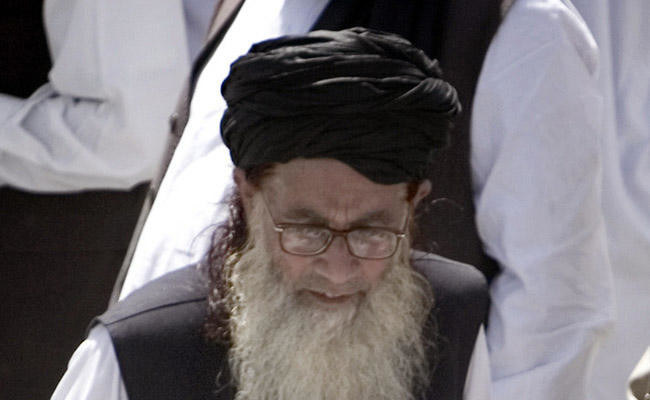
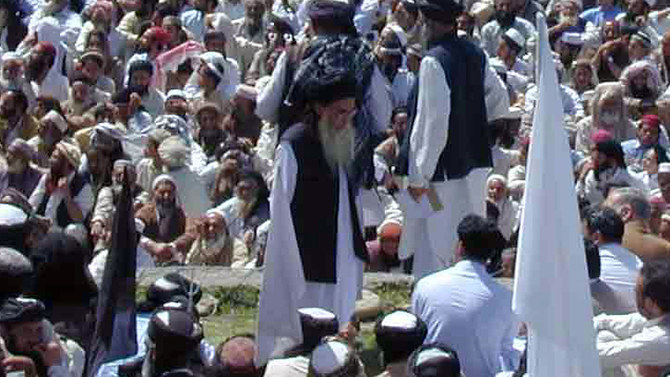

KARACHI: Sufi Mohammad, a radical cleric at the vanguard of a struggle a decade ago to impose Islamic law in Pakistan’s picturesque Swat valley, passed away after a long illness on Thursday, his son said. He was 92 years old.
Mohammad, who founded the Tehrik-e-Nifaz Shariat Muhammadi (TNSM), or movement for the introduction of Shariah law, famously led about 3,000 Taliban militants in Swat, a one time tourist haven in the mountains just 130 km northwest of the Pakistani capital of Islamabad. At the height of his movement between 2007-2009, Mohammad was able to keep 12,000 troops at bay and terrorized the local population with floggings and the burning of schools. According to government figures, more than 1,200 people were killed during the violence.
“My father, who had multiple health issues, died during Fajar (early morning) prayers at our home in Peshawar,” Mohammad’s son Fazlullah told Arab News via phone from Peshawar, adding that he would be buried in Maidan in Pakistan’s Lower Dir district.
Mohammad, the father-in-law of the now slain chief of the Pakistani Taliban, Maulana Fazlullah, took over Swat and negotiated a truce with the government in February 2009 that imposed Shariah in the valley in exchange for an end to two years of fighting.
The deal collapsed in April when the Taliban advanced into neighboring districts, setting off a military offensive that prompted a spree of retaliatory attacks by militants and led to thousands of people being displaced.
In July 2009, Mohammad was arrested and spent almost nine years in jail on charges of sedition and waging war against Pakistan. He was released on bail last year for health reasons. He had also previously served six years in prison between 2002-2008 for leading fighters to Afghanistan in a vain bid to help the Taliban repel US-backed forces.
Mohammad was born in Maidan, Lower Dir, and received his religious education from a hard-liner seminary in the Swabi region. He initially joined the religious political party, the Jamaat-e-Islami, but parted ways with the outfit and established his own TNSM in 1992.
“He was sincere but very emotional,” said Maulana Asadullah, a leader of the Jamaat-e-Islami from Mohammad’s hometown, adding that the cleric’s emotional nature prompted him to adopt a way to bring about change, “which was violent and wrong … He wasn’t willing to wait for too long, so he picked up the gun and resorted to violence.”
In his last years spent in jail, Mohammad is known to have softened his stance, even describing his son-in-law Fazlullah as an ‘infidel’ in TV interviews and calling for him to surrender before authorities.
Fazlullah was killed in a US-Afghan airstrike in Afghanistan in June last year.


