


PESHAWAR: She gave up city life to ensure a healthier environment for her family.
Today, Seema Babar, 42, is pushing for change in her native village of Pirpai, by asking residents to opt for earth-friendly alternatives, one small step at a time.
Situated in Nowshera district, her small hamlet is located on the bank of the Kabul river which meanders through the area. Babar says she became conscious for an immediate need for a change after moving to Pirpai where she discovered that the lush green fields of her childhood were slowly being replaced by plastic bags and other litter.
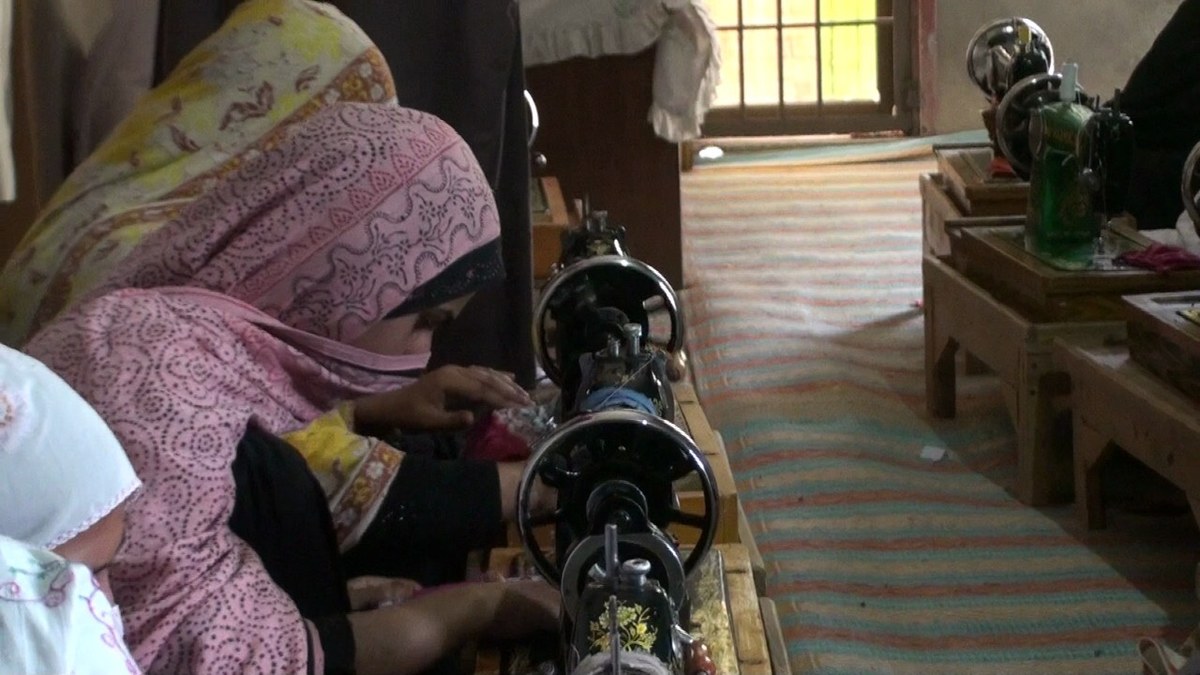
Inside the vocational training center, girls can be seen sewing dresses and cloth bags. (Photo Courtesy - Seema Babar)
“I left the city for a calm, green and peaceful environment for my children. Our urban life is full of air and noise pollution. But even in this village, the undying polythene bags and daily use plastic items ruin the environment,” Babar, a mother-of-four told Arab News during a routine visit to her vocational center which she set up to empower women in the area.
She’s not alone in her fight for a cleaner environment.
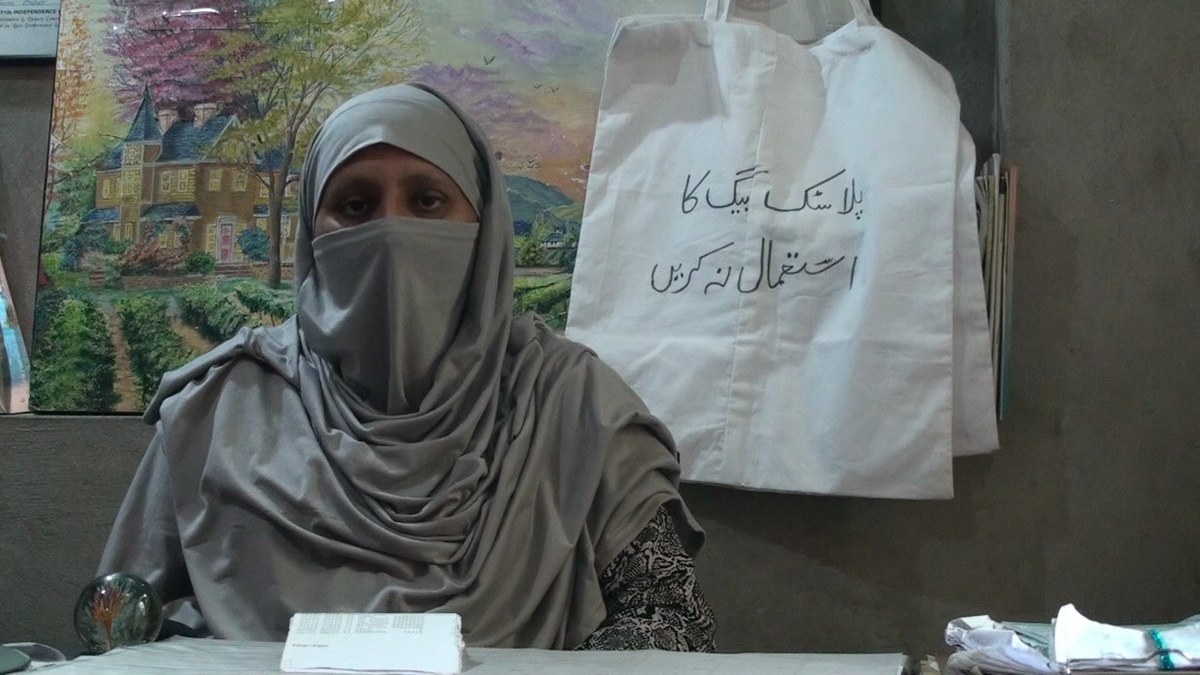
Seema Babar moved to her village for a better and healthier life but was disappointed to see plastic bags strewn in green fields and clogging the drainage system. She decided to sew cloth bags and distribute them among villagers in a bid to protect the environment for future generations. (Photo Courtesy - Seema Babar)
In 2014, the Khyber Pakhtunkhwa (KP) assembly introduced an environmental protection act to ban plastic bags from the province.
Five years on, district officials continue to issue deadlines to plastic manufacturers and shopkeepers to implement the policy.
This year, the provincial administration has given itself the challenge to turn KP into Pakistan’s first federating unit that is free of plastic bags.
For this purpose, only stamped biodegradable bags can now be used for shopping purposes.
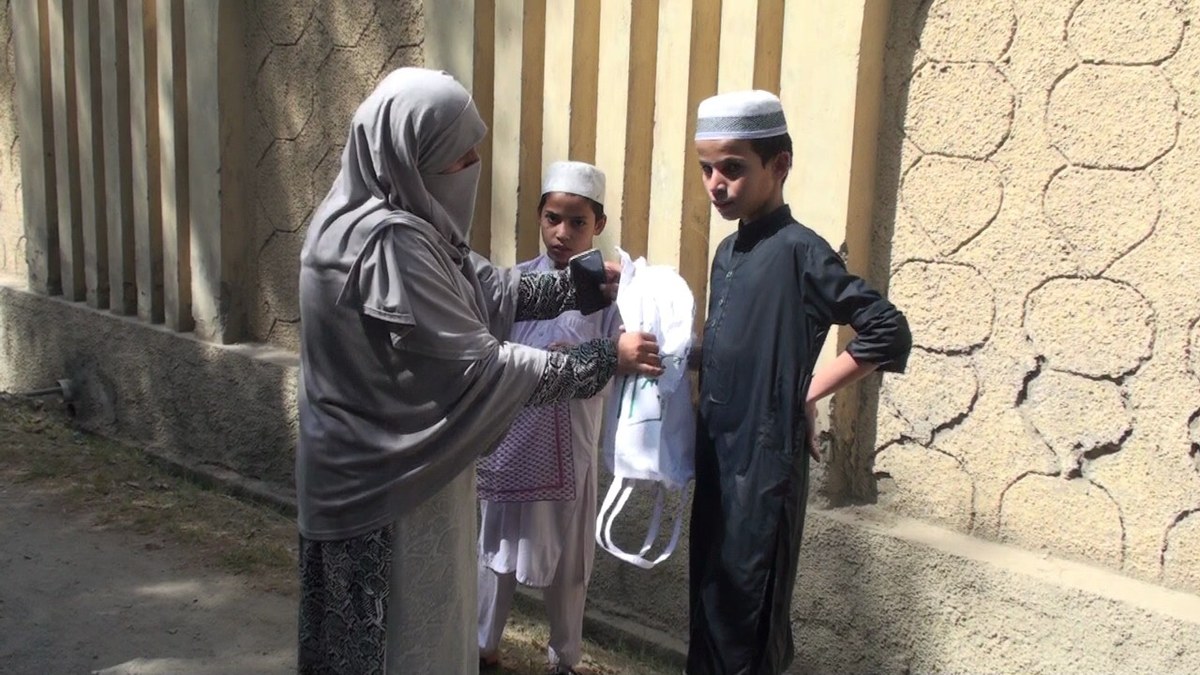
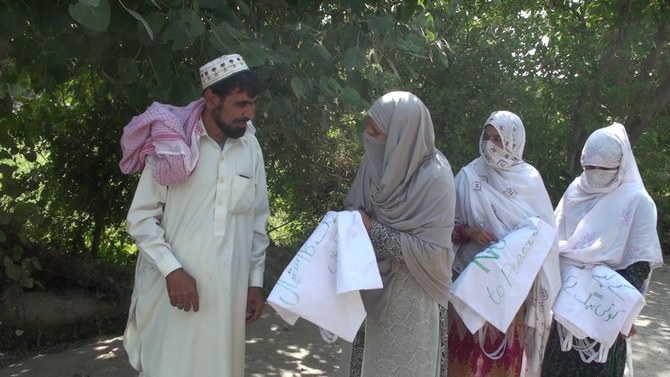
Social Activist Seema Babar and her colleagues distribute free cloth bags in their village of Pirpai, on July 1, 2019. (Photo Courtesy - Seema Babar)
Every month, the Water and Sanitation Services Company Peshawar (WSSP) dumps tons of waste in KP’s provincial capital, Peshawar, at authorized sites.
“We collect 850 to 1000 tons of waste every day. While we haven’t started segregating the garbage, it surely contains large numbers of plastic items and materials,” WSSP Spokesperson Hassan Khan said.
“We have run awareness campaigns and told residents not to throw plastic bags in the drainage system. Yet, polythene bags block canals and drains, posing the biggest challenge to our cleaners who work in cities and rural areas,” Khan said.
Plans are in place to ban plastic bags in Islamabad from August 14 onwards, too. The decision was announced by the environment minister, Zartaj Gul, in a Twitter post during the first week of June, wherein she added that the legal prohibition would be extended to other parts of Pakistan as well.
Babar told Arab News how she decided to make cotton totes to replace plastic bags and do her bit as a responsible citizen.
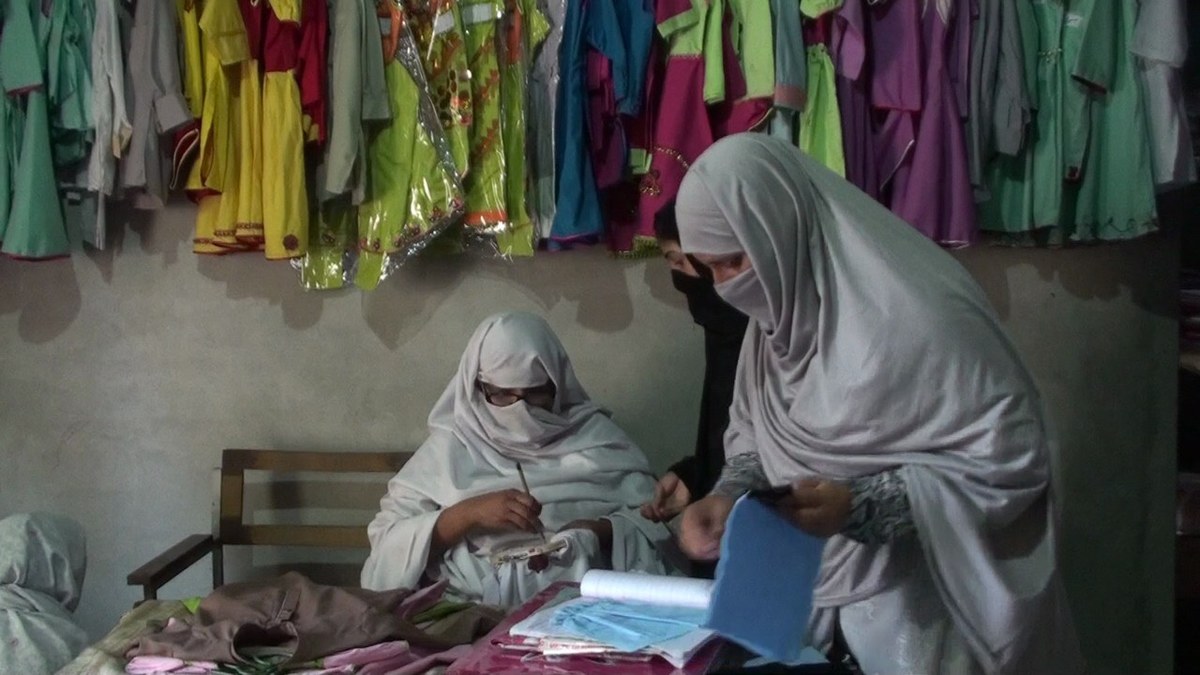
Training at this vocational center is free of cost. Seema Babar sometimes gets funding from non-governmental organizations to advance her cause. Photo taken on July 1, 2019. (Photo Courtesy - Seema Babar)
“We found unused fabric in the vocational center and I also asked village women to bring raw pieces of cloth with them. I made the first cotton bag and other women followed me,” she added.
At first, Babar distributed the bags free of cost among villagers and tried to convince people in the street – both male and female – to stop using polythene bags, too. “I want to discourage villagers from using plastic bags to protect the environment for our children,” she said.
Adding further impetus to the cause, Dr. Shams Ali Baig, who has completed his PhD in Environment Science from Chinese Zhejiang University and now teaches at Mardan, said plastic bags have caused significant environmental degradation. “If you dump it, it pollutes the soil; if you burn it, it ruins fresh air; and if you throw it into the sea, it pollutes water and puts marine life at risk.”
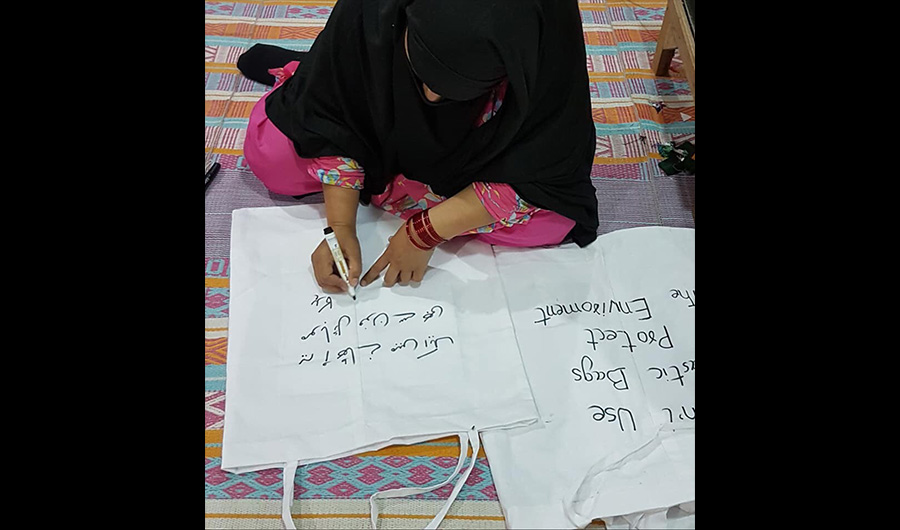
One of Seema Babar’s students writting anti-plastic slogans on cloth bags to create awareness among people on July 1, 2019. (Photo Courtesy - Seema Babar)
“Either biodegradable or old-fashioned bags made of cloth can provide us much needed alternative to plastic bags. The government should heavily tax plastic items and use the revenue to create awareness about recycling processes,” Dr. Baig suggested.
Meanwhile, Babar is searching for merchants who can help advance her project since cloth bags cost about Rs10 to 15 per piece. She also wants the government to run an awareness campaign to promote the use of cloth bags.
Inside her vocational training center, women can be seen writing anti-plastic messages on cotton totes in Pashto, Urdu, and English. More than 60 women, including schoolgirls, sew local attire and bags. With the support of district administration, Babar has also addressed several gatherings in Nowshera to throw light on the matter.
“Being a mother and a wife, always give this bag to your son or husband for shopping,” she said, adding that it takes one tiny change to make a big difference.


