

The incredible story of Egypt’s Museum of Islamic Art

1 / 3
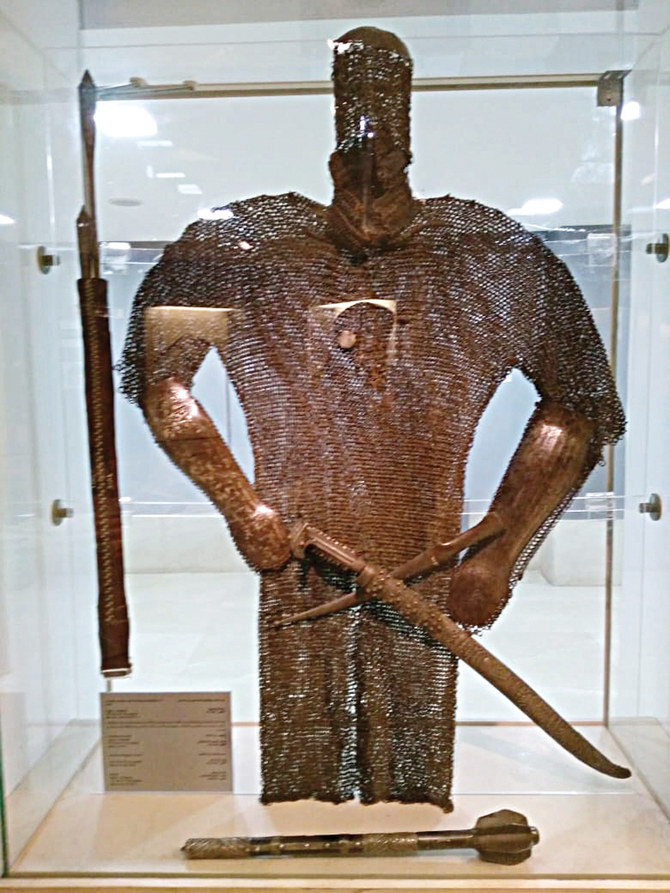
There are halls containing coins and weapons, and another section devoted to items used by Egyptians in their daily lived throughout history. (Supplied)
2 / 3
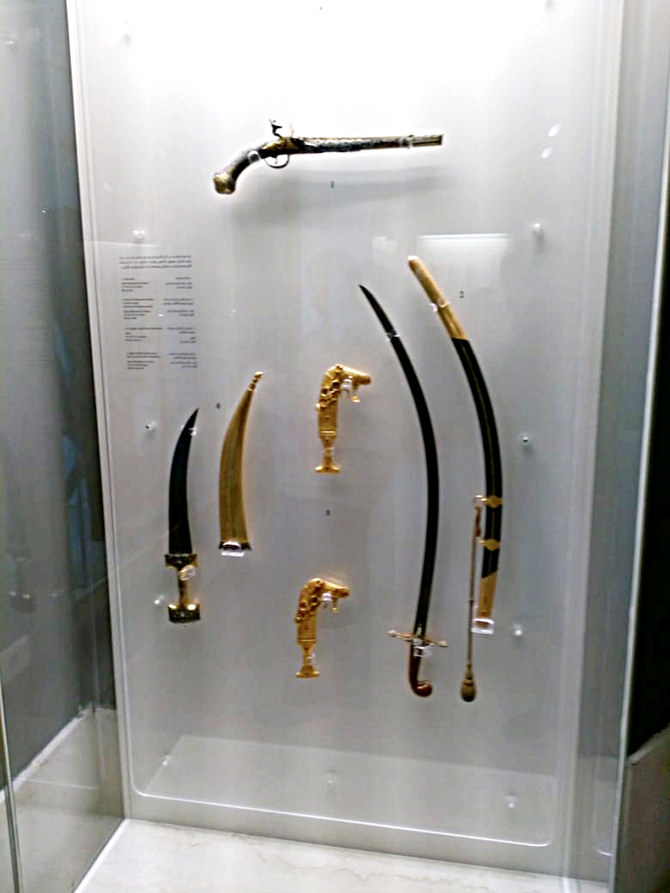
There are halls containing coins and weapons, and another section devoted to items used by Egyptians in their daily lived throughout history. (Supplied)
3 / 3
There are halls containing coins and weapons, and another section devoted to items used by Egyptians in their daily lived throughout history. (Supplied)
Updated 26 June 2019
Follow

The incredible story of Egypt’s Museum of Islamic Art

  • The museum has a library that contains collections of rare books and manuscripts in ancient and modern languages
  • The Museum of Islamic Art is one of the largest museums of Islamic archaeology in the world

CAIRO: With more than 100,000 antiquities from India, China, Iran, Arabia, Syria, Egypt, North Africa and Andalusia, the Museum of Islamic Art in Egypt is the largest institution of its kind in world.

The museum, located in the Bab Al-Khalk area in the heart of Cairo, is also the largest educational institute in the world in the fields of Islamic archaeology and Islamic art. It is renowned for its diverse collection, which includes works in metals, wood and textiles, among other mediums.

The idea of a museum in Egypt dedicated to Islamic art and archaeology began during the rule of Ismail Pasha (the grandson of Mohammed Ali Pasha), who was khedive of Egypt and Sudan from 1863 to 1879. In 1869, court
architect Julius Franz Pasha installed a collection of Islamic archaeological artifacts in the courtyard of the then-abandoned Al-Hakem Mosque.

The collection grew when the Committee for the Preservation of Arab Antiquities was established in 1881 and was adopted by the Governor’s Mosque. Space was limited however, and a decision was made to construct the current purpose-built museum building in Bab Al-Khalq, which was initially named the House of Arab Antiquities. The foundation stone was laid in 1899, construction was completed in 1902 and the museum opened on Dec. 28, 1903. The number of items in the collection had grown by them from about 111 in 1882 to about 3,000.

The name was changed to the Museum of Islamic Art in 1952 at the start of the July 23 Revolution. The artifacts were displayed in 25 halls, divided up according to their age and materials. On Aug. 14, 2010, former President Hosni Mubarak officially reopened the museum following an eight-year project to develop and renovate it. The work was supported by the Aga Khan Foundation and carried out with the assistance of specialists from France.

On the morning of Jan. 24, 2014, the residents of Cairo felt the shock waves from a large explosion. A car bomb had exploded close to the city’s Security Directorate. Four people were killed and many buildings were badly damaged, including the Museum of Islamic Art. Many of the exhibits were damaged or destroyed, especially fragile glass pieces.

On Jan. 18, 2017, President Abdul Fattah El-Sisi and former Egyptian Minister of Antiquities Khalid Al-Anani reopened the museum after three years of repairs and restoration work. New exhibits were added to replace those damaged or destroyed.

“The Museum of Islamic Art is one of the largest museums of Islamic archaeology in the world thanks to its rare archaeological artifacts related to Egypt’s Islamic heritage,” said Elham Salah, head of the museum department at the Egyptian Ministry of Antiquities.

A tour of the museum is a hugely rewarding experience. The right side of the museum is dedicated to artifacts from the Umayyad era through to the end of the Ottoman era. The left side includes galleries dedicated to Islamic art from Turkey and Iran (Persia). It also includes halls devoted to science and engineering, along with tombstones from different eras and countries.

There are halls containing coins and weapons, and another section devoted to items used by Egyptians in their daily lived throughout history. There is also a displays of artifacts from the era of Mohammed Ali Pasha, which marked time of major transformation for the country.

Museum tour guide Aya Ahmed said that the museum also has a library on the upper floor that contains collections of rare books and manuscripts in ancient and modern languages, as well as a collection of books about Islamic and historical monuments. She added that there are also calligraphic works, including copies of the Holy Qur’an from the Ottoman era, which were written in a very precise way using brushes made of hair from a horse’s tail.


Syrian Alawites protest in coastal heartland after mosque bombing

Updated 59 min 20 sec ago
Follow

Syrian Alawites protest in coastal heartland after mosque bombing

  • Syrian Alawites took to the streets on Sunday in the coastal city of Latakia to protest after a mosque bombing that killed eight people in Homs two days before

LATAKIA: Syrian Alawites took to the streets on Sunday in the coastal city of Latakia to protest after a mosque bombing that killed eight people in Homs two days before.
The attack, which took place in an Alawite area of Homs city, was the latest against the religious minority, which has been the target of several episodes of violence since the December 2024 fall of longtime ruler Bashar Assad, himself an Alawite.
Security forces were deployed in the area, and intervened to break up clashes between demonstrators and counter-protesters, an AFP correspondent witnessed.
“Why the killing? Why the assassination? Why the kidnapping? Why these random actions without any deterrent, accountability or oversight?” said protester Numeir Ramadan, a 48-year-old trader.
“Assad is gone, and we do not support Assad... Why this killing?“
Sunday’s demonstration came after calls from prominent spiritual leader Ghazal Ghazal, head of the Islamic Alawite Council in Syria and Abroad, who on Saturday urged people to “show the world that the Alawite community cannot be humiliated or marginalized.”
“We do not want a civil war, we want political federalism. We do not want your terrorism. We want to determine our own destiny,” he said in a video message on Facebook.
Protesters carried pictures of Ghazal along with banners expressing support for him, while chanting calls for decentralized government authority and a degree of regional autonomy.
“Our first demand is federalism to stop the bloodshed, because Alawite blood is not cheap, and Syrian blood in general is not cheap. We are being killed because we are Alawites,” Hadil Salha, a 40-year-old housewife said.
Most Syrians are Sunni Muslim, and the city of Homs — where Friday’s bombing took place — is home to a Sunni majority but also has several areas that are predominantly Alawite, a community whose faith stems from Shiite Islam.
The community is otherwise mostly present across their coastal heartland in Latakia and Tartus provinces.
Since Assad’s fall, the Syrian Observatory for Human Rights monitor and Homs province residents have reported kidnappings and killings targeting members of the minority community.
Alawite massacres 
The country has also seen several bloody flare-ups of sectarian violence.
Syria’s coastal areas saw the massacre of Alawite civilians in March, with authorities accusing armed Assad supporters of sparking the violence by attacking security forces.
A national commission of inquiry said at least 1,426 members of the minority were killed, while the Syrian Observatory for Human Rights monitor put the toll at more than 1,700.
Late last month, thousands of people demonstrated on the coast to protest fresh attacks targeting Alawites in Homs and other regions.
Before and after the March bloodshed, authorities carried out a massive arrest campaign in predominantly Alawite areas, which are also former Assad strongholds.
Protesters on Sunday also demanded the release of detainees.
On Friday, Syrian state television reported the release of 70 detainees in Latakia “after it was proven that they were not involved in war crimes,” saying more releases would follow.
Despite assurances from Damascus that all Syria’s communities will be protected, the country’s minorities remain wary of their future under the new Islamist authorities, who have so far rejected calls for federalism.