ISLAMABAD: Prime Minister Imran Khan said on Monday his government would not extend a June 30 deadline to avail a new tax amnesty scheme aimed at broadening the revenue base and warned that those who did not declare assets under the facility would face “confiscation and punishment.”
The scheme, approved by cabinet last month, will allow Pakistani citizens, except public office holders and their spouses, to declare hidden assets by paying 4 percent tax on domestic and 6 percent tax on offshore assets.
Speaking to Pakistan’s Geo News channel on Monday evening, Khan urged people to avail the tax amnesty scheme to avoid punishment.
“Government would not extend the deadline of the tax amnesty scheme ending on June 30,” he said, adding that people who did not declare ‘benami’ (anonymous) properties and bank accounts “would face confiscation and punishment” under new laws.
Pakistan’s $300 billion economy faces a ballooning current account deficit and dwindling foreign exchange reserves due to rising imports, low revenue collection and loss making state owned enterprises.
In a budget proposal announced earlier this month, the government targeted federal tax revenues of 5.55 trillion rupees ($36.80 billion), up 25% and driven by a lower introductory threshold for income tax and a clampdown on tax evasion. The government had failed to hit last fiscal year’s goal of 4.44 trillion rupees. The Pakistani rupee has also lost about a third of its value this year and inflation has jumped above 9%.
Last month, Pakistan reached an accord with the International Monetary Fund for a three-year, $6 billion bailout package aimed at shoring up fragile public finances and strengthening a slowing economy. The program envisages reforms to improve public finances and cut public debt, including “revenue mobilization measures to eliminate exemptions, curtail special treatments, and improve tax administration,” the IMF statement said.
The IMF loan is contingent on measures being taken to cut a budget gap that the Fund forecast at 7% in 2018/19.
In Monday’s interview, Khan said the economy was under severe stress because half the government’s income went to debt repayments and servicing interest on heavy foreign loans.
Pakistan’s national debt had increased from Rs6,000 billion to Rs30,000 billion in the last decade, the PM said, adding that the debt trap had compelled the country to keep seeking fresh loans in order to pay the interest on previous loans.
This situation was the result of rampant tax evasion and corruption, which Khan said he was resolved to weed out.
“Tax money will be utilized for the welfare of the people,” PM Khan said, directing his economic team to establish a special helpline to receive complaints against harassment by tax collecting body, the Federal Board of Revenue.


![]()

‘Confiscation and punishment’ if assets not disclosed by June 30, PM tells nation
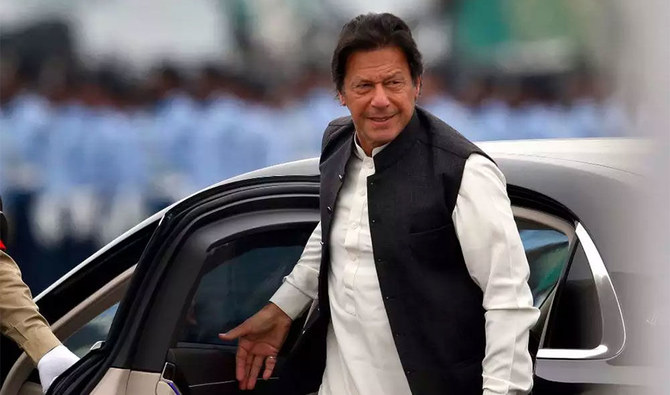
‘Confiscation and punishment’ if assets not disclosed by June 30, PM tells nation
- Directs economic team to establish helpline for harassment complaints against tax collecting body
- Promises tax revenue will be used for “welfare of the people”
Latest updates


Recommended


© 2026 SAUDI RESEARCH & PUBLISHING COMPANY, All Rights Reserved And subject to Terms of Use Agreement.