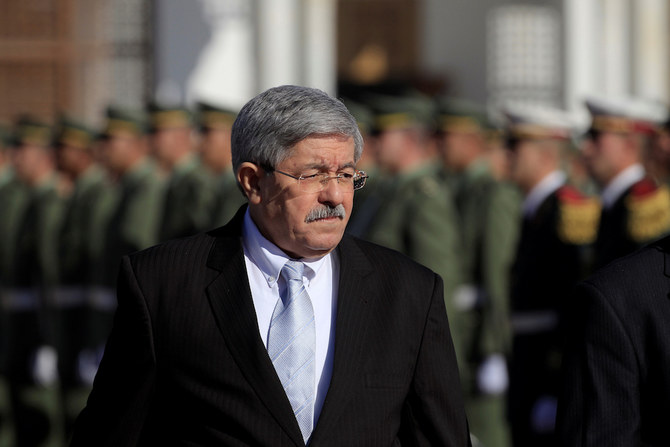
ALGIERS: Algeria’s former Prime Minister Ahmed Ouyahia appeared before the Supreme Court on Wednesday as part of a raft of anti-graft investigations opened into senior figures since President Abdelaziz Bouteflika stepped down, state television reported.
Ouyahia, who left the government in March as part of a cabinet reshuffle, will be investigated over corruption cases including “awarding illegal privileges,” it said, without giving details.
His former transport minister, Abdelghani Zaalane, later also appeared before the court in connection with a corruption investigation. State TV gave no more details on either case.
Their lawyers could not be reached by phone for comment.
State television gave no details of what would happen next in the judicial processes involving Zaalane and Ouyahia, who is the leader of Algeria’s second largest party, the Democratic National Rally (RND).
The two politicians are the latest figures to be investigated on corruption allegations since mass protests erupted more than three months ago demanding the departure of the ruling elite and the prosecution of people they see as corrupt.
Bouteflika stepped down on April 2 under pressure from the army and protests that broke out on Feb. 22. Zaalane had been named campaign manager for Bouteflika for an April 18 presidential election, which was canceled.
The army is now the most powerful institution and its chief Ahmed Gaed Salah has urged the judiciary to investigate all people suspected of being involved in corruption.
Several senior figures including another former prime minister, Abdelmalek Sellal, and eight former ministers appeared last month in a court in Algiers on suspicion of corruption.
Bouteflika’s youngest brother, Said, and two former intelligence chiefs have been placed in custody by a military judge for “harming the army’s authority and plotting against state authority.”
Several prominent businessmen, some of them close to Bouteflika, have been detained pending trial.
Protesters are now seeking the departure of interim President Abdelkader Bensalah and Prime Minister Noureddine Bedoui, both seen as part of the elite that has ruled the North African country since independence from France in 1962.
Ouyahia’s RND supports the interim government, but is not part of it.
Authorities have postponed a presidential election previously planned for July 4, citing a lack of candidates. No new date has been set for the vote.


![]()

Algeria’s former PM appears in Supreme Court over alleged corruption: state TV
Algeria’s former PM appears in Supreme Court over alleged corruption: state TV
- It is the second time in less than two months that the former prime minister appears in court in connection with corruption investigations
- Since the resignation of Abdelaziz Bouteflika, several wealthy businessmen have been held in custody for benefiting from government contracts


Latest updates


© 2026 SAUDI RESEARCH & PUBLISHING COMPANY, All Rights Reserved And subject to Terms of Use Agreement.