ALGIERS: Algeria’s Constitutional Council on Sunday canceled the July 4 presidential election in this energy-rich North African country, plunged for months in a political crisis, after the two candidates — both unknowns — were rejected.
The council said in a statement that it is now up to the interim president, Abdelkader Bensalah, to set a new date for the vote.
Only two candidates turned in their files by the May 25 deadline, but the Constitutional Council rejected them. It did not say why.
A presidential election was ordered after ailing long-time leader Abdelaziz Bouteflika stepped down on April 2 under pressure from the public and the powerful army chief, ending two decades of rule.
Citizens have held pro-democracy protests each Friday since Feb. 22 to press for a new era with new leadership that has no links to Bouteflika, who was rarely seen in public since a 2013 stroke.
The protests were triggered by Bouteflika’s plan to seek a fifth term.
Protesters want other top officials, including the interim president — an ally of Bouteflika — to leave office to ensure a new era for Algeria, which has been run since independence from France in 1962 by a generation that fought in the seven-year-long war.
Bensalah was named interim leader for a 90-day period, in keeping with the constitution. The Constitutional Council’s decision to cancel the July 4 voting and ask him to organize a new election suggests that he will remain in office beyond that limit, which will end in the second week of July. The council statement said that organizing elections was the interim leader’s “essential mission.”
The cancelation of the elections, decried by protesters, carried little surprise. Army chief Ahmed Gaid Salah appeared to acknowledge that the date was no longer firm, in an address last week to soldiers in which he called for dialogue — but rejected a transitional period demanded by numerous party leaders and by protesters, out of fear it could lead to chaos and a dangerous vacuum.
He said elections should be held “in the shortest delay possible.”
Judicial authorities, meanwhile, have gone after Bouteflika’s entourage, with a military court investigating his brother Said Bouteflika and two former generals once in charge of intelligence for “plotting against the authority of the state.” Said Bouteflika was widely viewed as the real power behind the ailing former president, and alleged by many to have contributed to raising corruption in an already corrupt system to new levels. Top business leaders also have been jailed.


![]()

Algeria cancels July 4 presidential vote, rejects candidates
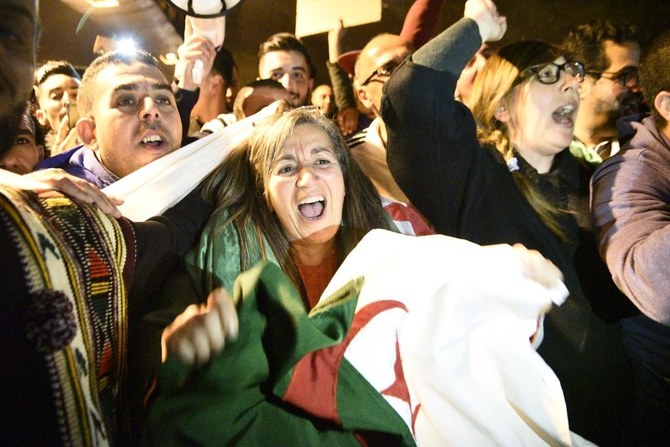
Algeria cancels July 4 presidential vote, rejects candidates
- The constitutional council said it only received two candidates, who were seen as invalid
- The vote was supposed to elect a new president after Bouteflika’s 20-year rule ended


Latest updates


Recommended


© 2026 SAUDI RESEARCH & PUBLISHING COMPANY, All Rights Reserved And subject to Terms of Use Agreement.