Dubai issues new financial center insolvency law after Abraaj collapse

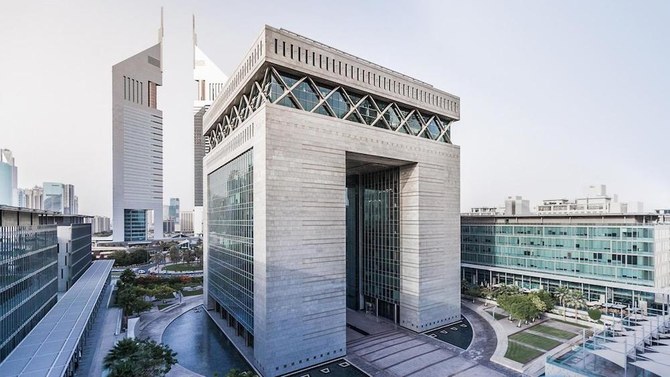
Dubai International Financial Center (DIFC) is the largest financial hub in the Middle East, Africa and South Asia. (Courtesy of DIFC)
Updated 11 June 2019
Follow

Dubai issues new financial center insolvency law after Abraaj collapse

  • New procedures in line with global best practices introduced as a first for the region
  • The new Insolvency Law and Regulations will come into effect on Aug. 28, 2019

DUBAI: Dubai’s ruler Sheikh Mohammed bin Rashid Al-Maktoum issued a new insolvency law on Tuesday for companies operating in the Dubai International Financial Center (DIFC), the largest financial hub in the Middle East, Africa and South Asia.
The new law, due to come into effect in August, has been issued following the collapse of Dubai-based private equity firm Abraaj, which had a DIFC-regulated entity Abraaj Capital.
The firm that had been the Middle East and North Africa’s biggest buyout fund unraveled after a row with some investors over the use of money in a $1 billion health care fund.
The new law introduces a “new debtor in possession bankruptcy regime” for debtors that have filed for bankruptcy but still hold assets, according to a statement on the Dubai’s ruler official website.
Abraaj, its founder Arif Naqvi and a former executive are being investigated by the US Securities and Exchange Commission (SEC) on US charges that they defrauded investors, including the Bill & Melinda Gates Foundation.
The Dubai Financial Services Authority (DFSA) said in April it was in touch with the SEC and had been investigating Abraaj Capital Ltd, an entity of the collapsed firm, over a range of matters but has not specified what they are.


Saudi Arabia leads outcome-based education to prepare future-ready generations: Harvard Business Review

A Harvard sign is seen at the Harvard University campus in Boston, Massachusetts, on May 27, 2025. (AFP)
Updated 10 February 2026
Follow

Saudi Arabia leads outcome-based education to prepare future-ready generations: Harvard Business Review

  • The Riyadh-based school group developed a strategy that links every classroom activity to measurable student competencies, aiming to graduate learners equipped for the digital economy and real-world contexts

RIYADH: Saudi Arabia’s education system is undergoing a sweeping transformation aligned with Vision 2030, shifting from traditional, input-focused methods to outcome-based education designed to equip students with future-ready skills, Harvard Business Review Arabic reported.

The transformation is being adopted and spearheaded by institutions such as Al-Nobala Private Schools, which introduced the Kingdom’s first national “learning outcomes framework,” aimed at preparing a generation of leaders and innovators for an AI-driven future, the report said.

Al-Nobala has leveraged international expertise to localize advanced learning methodologies.

The Riyadh-based school group developed a strategy that links every classroom activity to measurable student competencies, aiming to graduate learners equipped for the digital economy and real-world contexts. The school’s group approach combines traditional values with 21st-century skills such as critical thinking, communication, innovation and digital fluency.

According to the report, the shift addresses the growing gap between outdated models built for low-tech, resource-constrained environments and today’s dynamic world, where learners must navigate real-time information, virtual platforms, and smart technologies.

“This is not just about teaching content, it’s about creating impact,” the report noted, citing how Al-Nobala’s model prepares students to thrive in an AI-driven world while aligning with national priorities.

The report noted that Saudi Arabia’s Ministry of Education has paved the way for this shift by transitioning from a centralized controller to a strategic enabler, allowing schools such as Al-Nobala to tailor their curriculum to meet evolving market and societal needs. This is part of the long-term goal to place the Kingdom among the top 20 global education systems.

Al-Nobala’s work, the report stated, has succeeded in serving the broader national effort to link education outcomes directly to labor market demands, helping to fulfill the Vision 2030 pillar of building a vibrant society with a thriving economy driven by knowledge and innovation.

Last February, Yousef bin Abdullah Al-Benyan, Saudi Arabia’s minister of education, said that the Kingdom was making “an unprecedented investment in education,” with spending aligned to the needs of growth and development. He said that in 2025, education received the second-largest share of the state budget, totaling $53.5 billion.