Eid events at King Salman Social Center focus on heritage

1 / 3
2 / 3
3 / 3
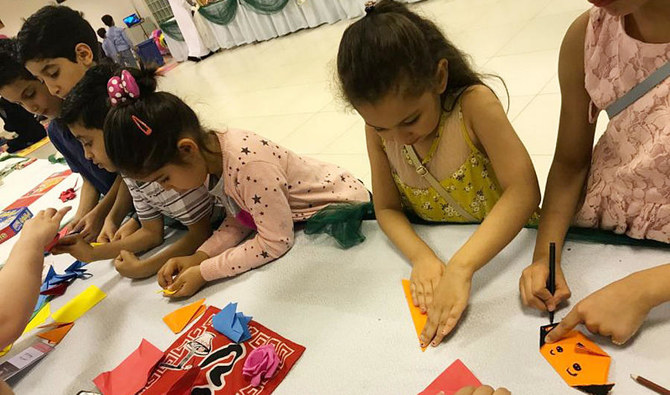
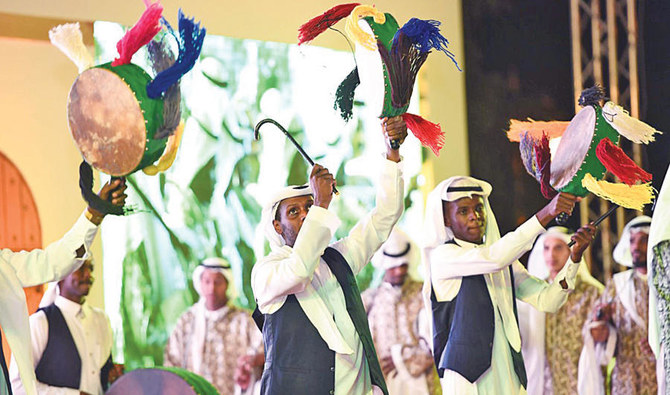
The cultural activities include traditional dances, folkloric songs, operettas, games, plays and a fashion show. (SPA)
Updated 09 June 2019
Follow

Eid events at King Salman Social Center focus on heritage

  • Saudi Arabia’s General Authority of Civil Aviation celebrated Eid Al-Fitr by holding many relevant events and activities at the Kingdom’s airports

RIYADH: Riyadh municipality concluded its Eid Al-Fitr celebrations at the King Salman Social Center with a myriad of cultural activities that included traditional dances, folkloric songs, operettas, games, plays and a fashion show.
One such play was presented by female students from Princess Nourah bint Abdul Rahman University and King Saud University, who performed “Musarqaah,” a production that addresses social issues in a comic context.
Students from Princess Nourah University also performed a traditional Japanese umbrella show.
Yemen’s consulate presented various shows, including one that highlighted the country’s ceremonial customs and traditions of women. The consulate also featured a clothes and trinkets pavilion, as well as a fashion show.
Dr. Samah Riadh Malhu, the Yemeni Foreign Ministry’s diplomatic attache, said the women’s department at the consulate performed three types of folkloric dances, hosted a clothes and crafts pavilion, and showcased heritage products such as incense.
Sudan also took part with a number of shows, most notably a wedding procession and Sudanese dances.
The celebrations concluded by announcing the winners of a contest for the best Eid greeting message, an effort to show appreciation for the brave soldiers on duty at the southern borders.

Eid with passengers
Saudi Arabia’s General Authority of Civil Aviation (GACA) celebrated Eid Al-Fitr by holding many relevant events and activities at the Kingdom’s airports.
Passengers were greeted and bid farewell with flowers and gifts; the airports had Eid decorations and greeting statements; and folkloric shows were held.
King Abdul Aziz International Airport in Jeddah gave passengers flowers, sweets and souvenirs.
King Khalid International Airport in Riyadh held many events, including folkloric and Ardeh dance shows. Passengers were offered sweets, flowers and souvenirs.
King Fahd International Airport in Dammam held several events, and had an area dedicated to children’s entertainment.
Children from the Charity Association for Orphans Care at Eastern Region (BENAA) enjoyed the celebrations and participated in offering passengers flowers and gifts.
At Prince Mohammed bin Abdul Aziz International Airport in Madinah, the Tibah Airports Operation Co. offered workers and passengers flowers, sweets and gifts.


Saudi Arabia targets 50 wildlife breeding programs within 5 years

Updated 12 February 2026
Follow

Saudi Arabia targets 50 wildlife breeding programs within 5 years

  • Strategy follows surging interest in protecting prized native species

RIYADH: Saudi Arabia’s top wildlife protection body has launched a plan to operate 50 breeding programs by 2030 and improve environmental balance, its CEO has said.

Mohammed Ali Qurban, head of the National Center for Wildlife, said the number of programs has already surged from seven to 21 in recent years, amid renewed interest in the protection of valued native species.

The breeding programs are based on precise scientific principles, starting with the selection of suitable species at research centers, followed by veterinary care and specialized nutrition programs, he added.

At the final stage, protected species are rehabilitated for release and monitored using the latest tracking and data analysis technologies.

The relocation of more than 10,000 animals in Saudi Arabia is “an important step in restoring ecosystems and enhancing environmental balance in the Kingdom,” Qurban said.

Veterinary scientists at work at the National Center for Wildlife's laboratory. (Supplied)

“Releasing wildlife into the wild contributes to forming new populations capable of self-reproduction; these releases support the genetic diversity of wild populations and enhance their ability to resist disease and adapt to environmental changes,” he added.

Releases have so far included more than 80 priority species, most notably reem antelopes, Arabian oryx, idmi gazelles, mountain ibex, houbara bustards, ostriches and sandgrouses. The animals were released within their historical and ecological ranges.

Qurban said that the plans take into account the carrying capacity of natural habitats and the importance of safe ecological corridors that connect protected areas to facilitate species movement and population sustainability.

Release sites are spread across more than 60 diverse environmental locations, including natural reserves, royal reserves and national parks, as well as strategic sites within the Kingdom’s giga-projects, ensuring the dispersal of animals across their targeted geographical ranges.

The efforts are part of a national integrated framework to support the goals of the Saudi Green Initiative, Vision 2030 and the National Environment Strategy, aiming to achieve thriving and sustainable wildlife and ecosystems, Qurban said.