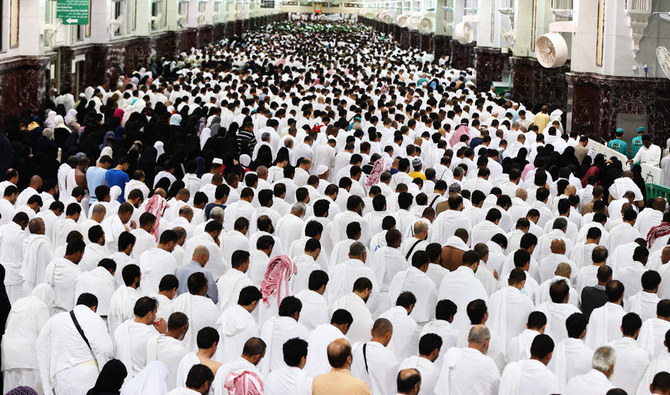
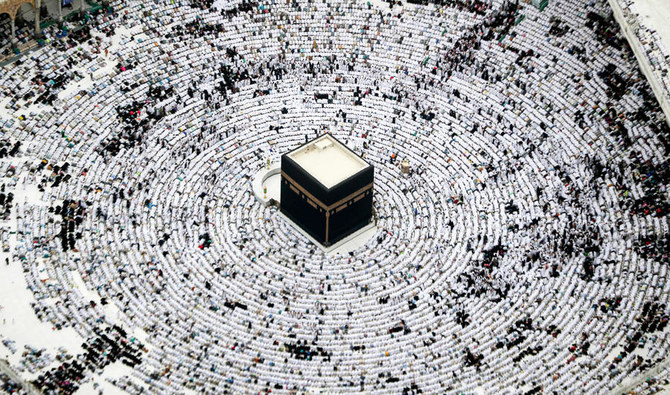
RIYADH: The number of Umrah visas issued this year has reached 7,584,428, of which 7,201,851 pilgrims have arrived in the Kingdom, according to data provided by the Hajj Ministry.
There are 1,056,618 pilgrims still in the Kingdom, with 732,559 in Makkah and 324,059 in Madinah, the Saudi Press Agency reported.
Most pilgrims — 6,386,751 — came to the Kingdom by air, while 696,094 entered by land and 119,006 arrived by sea.
The largest number of pilgrims are from Pakistan (1,590,731) followed by Indonesia (946,962), India (643,563), Egypt (535,861), Algeria (364,707), Yemen (334,186), Turkey (306,987), Malaysia (274,066), Iraq (270,995) and Jordan (200,857).
The weekly data also included the number of Saudi staff within Umrah companies and institutions. They are 10,933 Saudis including 9,060 males and 1,873 females.
Developing Hajj and Umrah organizations and services in the Kingdom is among the top priorities of the Saudi government. The Vision 2030 reform plan aims to attract more than 30 million Umrah pilgrims, and provide them with excellent services and an outstanding experience.


![]()
![]()

Saudi Arabia issues more than 7.58 million Umrah visas
Saudi Arabia issues more than 7.58 million Umrah visas
- The Vision 2030 reform plan aims to attract more than 30 million Umrah pilgrims, and provide them with excellent services and an outstanding experience


Latest updates


© 2026 SAUDI RESEARCH & PUBLISHING COMPANY, All Rights Reserved And subject to Terms of Use Agreement.