


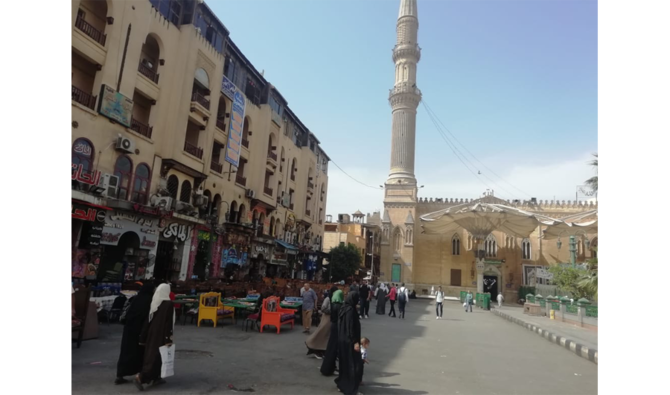
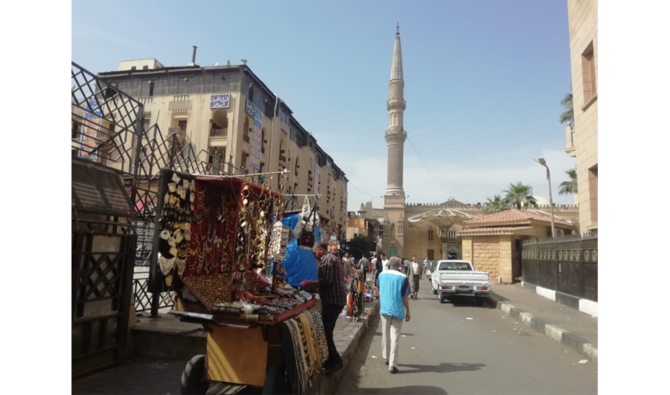


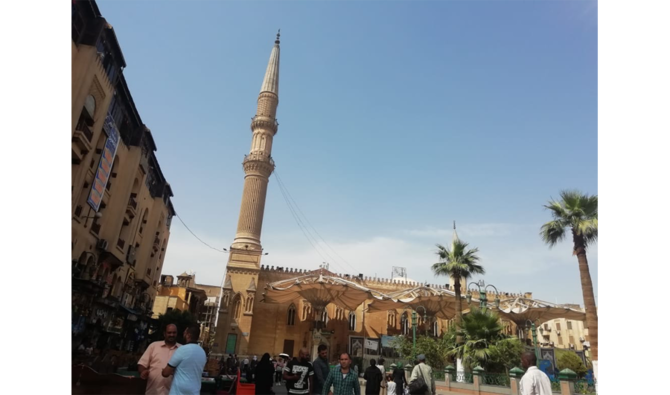
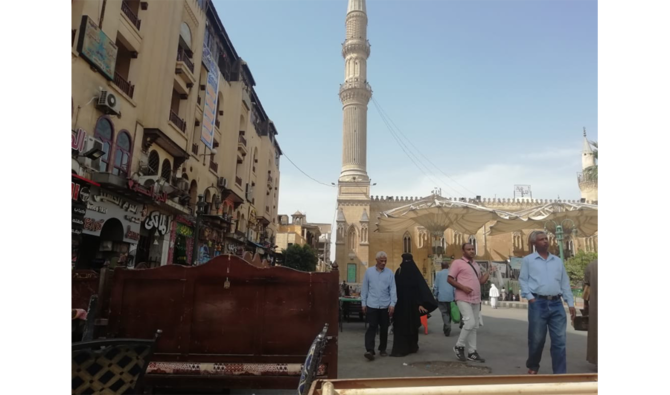
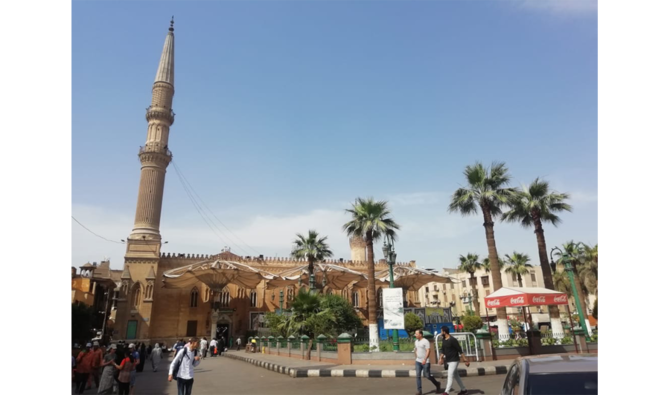

CAIRO: For many in Egypt, and beyond, Ramadan would not be complete without a short visit to the historical area of Midan Al-Hussein in the heart of Cairo.
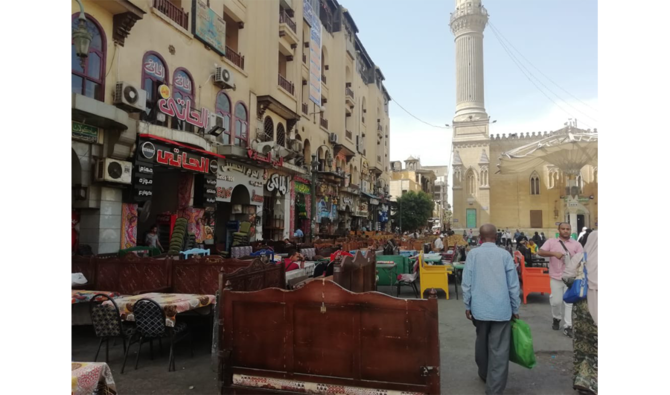
It’s a district that has come to symbolize the spirit of the country, particularly during the holy month. It’s even earned itself an alternative name — Hayy Al-Bahga Al-Ramadenya (The “Ramadan Joy Neighborhood”). Throughout Ramadan, Midan Al-Hussein is full of life, its bustling streets echo with greetings, and there is a multitude of entertainment on offer.
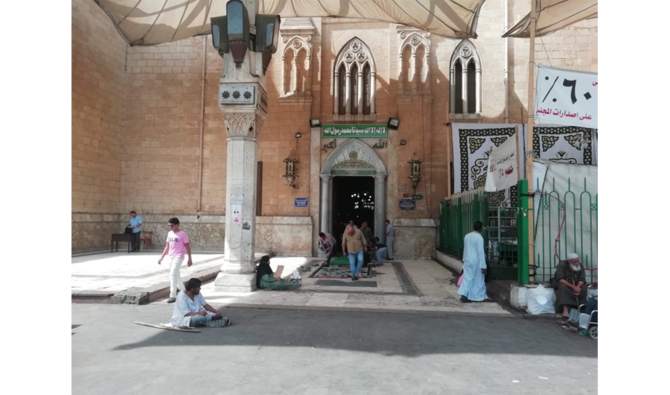
This year, as it is every year, Midan Al-Hussein is lit with traditional Ramadan lanterns and decorations. The Al-Hussein Mosque, which towers over the area, is full of Muslims praying, reading the Qur’an, or reciting Zikr.
“Ramadan in Al-Hussein is completely different from any other place,” Ahmed Shawky, a frequent visitor to the area, told Arab News. “There is an amazing here,
which is why I like to spend a lot of time here.”
Al-Fishawy — one of Cairo’s more-popular traditional coffee shops — is one of the spots that Shawky cites as a good place to spend time with his friends. “I also walk around the narrow alleys of Khan Al-Khalili, and I sometimes go to the mosque for taraweeh prayers. Then I end my day with sahoor.”
Sayyed Al-Noursi, one of the caretakers of Al-Hussein Mosque, echoes Al-Fishawy’s sentiments about the neighborhood’s unique Ramadan spirit.
“Blessings and prayers increase during Ramadan,” Al-Noursi told Arab News. “In Al-Hussein, I feel like I’m in the pulsing heart of Egypt. The area radiates with all shades of greatness, love and joy.
“Tourists also love to visit Midan Al-Hussein in Ramadan,” he continues. “They like to take part in the festivities. They don’t even eat or drink during daytime, which
is why we love them and enjoy telling them about the characteristics of this neighborhood
and the mosque.”
The coffee shops are another sign of the festivities of the month. Abdel Qader Biso, manager of an establishment near the mosque, told Arab News that he eagerly awaits the special atmosphere of the holy month every year.
“There are times in the year where business is slow, but in Ramadan the coffee shop is always a full house,” Biso said.
During Ramadan, customers crowd the coffee shops to drink traditional Ramadan drinks including karkadeh — which Bisho says is the best-selling drink in his shop — and Egyptian tea with mint.
“We also serve sweets,” Biso said. “The top sellers are rice pudding and Om Ali. Both Egyptians and foreigners order these items.”
Perhaps the busiest spot of all in Al-Hussein during iftar is Farahat — a restaurant renowned for its stuffed pigeon dish. The restaurant was already crowded as we approached, and there were twice as many people again queuing up outside.
For Al Hajj Samir, one of the waiters, Farahat’s popularity has its drawbacks. “As waiters, we can’t eat until the last customer leaves,” he explained.
It’s clear the Ramadan Joy Neighborhood is living up to its name, and remains as popular as ever. Thousands of people flock here for its marvelous atmosphere, and it is in the rich culture and history of Midan Al-Hussein — more than any other place — that one finds the embodiment of Egyptian Ramadan.


