BEIRUT: The government of heavily indebted Lebanon formally approved a 2019 budget on Monday that includes deep spending cuts to narrow the projected deficit to 7.6 percent of gross domestic product (GDP) in a bid to stave off financial crisis.
The budget reflected “a real government will to take a corrective path” in state finances and is based on a growth forecast of 1.2 percent this year, Finance Minister Ali Hassan Khalil said in a news conference broadcast live on television.
It is seen as an important test of Lebanon’s will to enact reforms that could stabilize its debt trajectory in a state plagued by chronic corruption and waste. The cabinet had already agreed to the budget in principle on Friday, and it must still pass in parliament.
Lebanon’s public debt burden, equivalent to about 150 percent of GDP, is one of the heaviest in the world. Last year’s deficit was equal to about 11.5 percent of GDP, and economic growth rates have been weak for years.
Khalil said the budget had been well received by foreign states. Last year, international donors at the Paris Cedre conference pledged $11 billion in spending on Lebanese infrastructure in return for its government implementing reforms.
“This is a national need, reducing the deficit, before being linked to Cedre ... For sure there is a positive view from all those concerned abroad to what has been achieved on this level: the reform steps and the level of deficit reduction,” he said.
Khalil said that Lebanon now expected the new investment projects to start, and that the Finance Ministry’s efforts to keep the deficit in line with budget projections would show its seriousness.
This would result in the “injection and launching of new investment projects that will have a big impact on moving the economy,” he said.
Khalil said the government had taken steps, which he did not spell out, to bring down Lebanon’s huge trade deficit which he said was “putting pressure on the matter of the foreign currency reserve.”
He said those steps had stirred some “reservations” in government.
Cuts to benefits and pensions for state workers and the military led to protests and strikes as the coalition government spent weeks discussing the budget.
Lebanon’s public sector is its biggest expense, followed by the cost of servicing the public debt and subsidies to an inefficient electricity sector.
The budget includes a government plan to cut some $660 million from debt-servicing costs by issuing treasury bonds at a 1 percent interest rate to the Lebanese banking sector, Khalil has previously said.
Central Bank Governor Riad Salameh said on Monday the bank was “keen to follow up on current efforts with a focus on respect for Lebanese law and global financial rules that do not permit any obligatory measures on banks,” without elaborating.
Salameh said that measures to reform the budget and the power sector were “positive signs” and that financial markets and the Lebanese pound remained stable.
Approving the budget in parliament could take another month, Parliament Speaker Nabih Berri was quoted saying in local newspapers. Lebanon’s parliament is dominated by parties in the coalition.


![]()

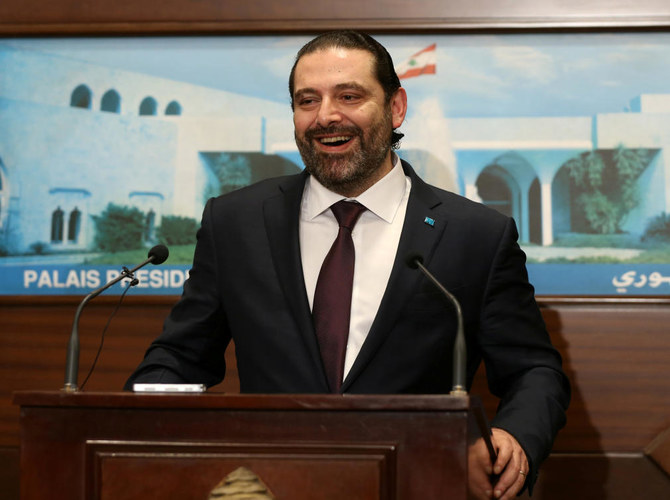
Lebanon 2019 state budget approved by cabinet
Lebanon 2019 state budget approved by cabinet
- Budget is based on a growth forecast of 1.2 percent this year
- Lebanon’s public debt burden, equivalent to about 150 percent of GDP, is one of the heaviest in the world


Latest updates


© 2026 SAUDI RESEARCH & PUBLISHING COMPANY, All Rights Reserved And subject to Terms of Use Agreement.