

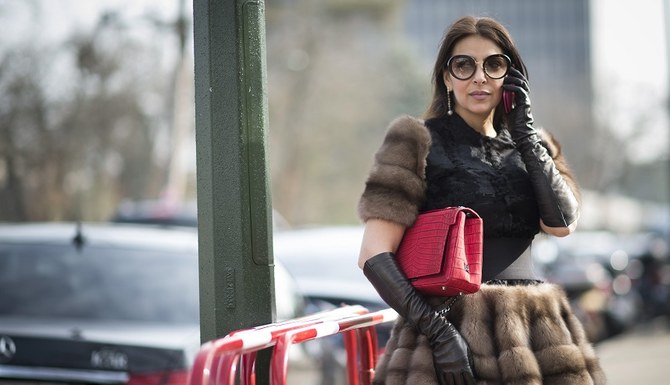
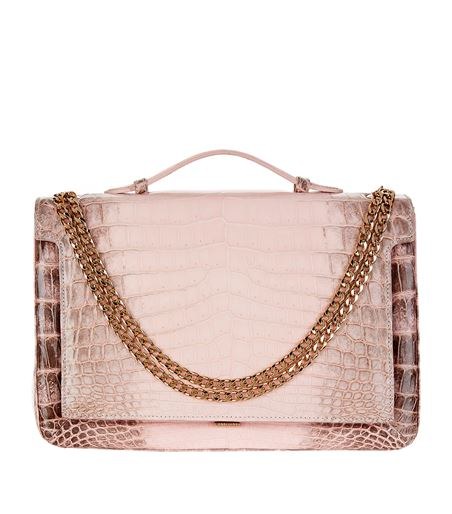
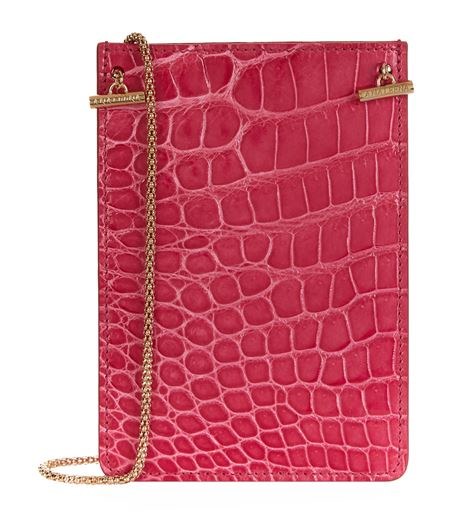
Meet Lina Hamed, the designer behind ultra-luxury handbags
Hamed is the founder of Analeena, which translates to “I am Lina,” the high-end label that was founded in 2009
London is this designer’s city of choice and she lauds its many cultures
Updated 18 May 2019
INTISAR ALYAMANI
LONDON: Riyadh-born designer Lina Hamed sits at her drafting desk in her home in west London holding a delicate looking pen. She raises her head to look at the view from the window and comments that certain daylight is ideal for drawing.
Hamed is the founder of Analeena, which translates to “I am Lina,” the high-end label that was founded in 2009.
The label is stocked in London’s ultra-glamorous department store, Harrods — a good indicator of its luxurious designs.
Analeena’s focus on exotic leather — she is known for her use of crocodile, alligator and ostrich leather — and attention to detail is what sets the brand apart.
“My handbags are worn by the woman who understands luxury and appreciates quality,” she told Arab News.
“I want the bags to have a long life and be passed down to the next generation. I have built in torches with chargers inside the bags and bag hangers inside each bag,” she said, referring to her now famous secret pockets and hideaways for trinkets.
London is this designer’s city of choice and she lauds its many cultures.
“London is a very rich city with many cultures,” she said with fondness.
Hamed has a message for young designers who are starting out in the field.
“Focus on what you want to achieve. Don’t waste time thinking about the competition, there will always be someone new.”
Analeena’s designs have been spotted on the likes of Blake Lively’s “Gossip Girl” character on the much-loved TV show, as well as celebrities Dita Von Teese and Molly Sims.
Mini op-ed: Why emotional wellbeing is not only an individual concern in Arab societies
Updated 57 min 13 sec ago
Nancy Zabaneh and Sophie Gregoire Trudeau
ABU DHABI: Across much of the world, emotional wellbeing is now being discussed in similar ways with familiar language: self-care, boundaries, resilience.
These terms have helped people speak more openly about stress and mental health, often for the first time. That matters. But the language also carries an assumption, one that is not always questioned. It suggests that healing begins, and largely takes place, within the individual.
In many Arab societies, that idea does not fully apply. The self is rarely experienced in isolation. Identity forms early through family life, shared responsibility, and social roles that extend beyond personal choice.
Sophie Gregoire Trudeau and Nancy Zabaneh. (Supplied)
Emotions are often managed in relation to others, not apart from them. This difference has practical consequences, particularly as pressure and uncertainty.
Wellbeing is not just something that happens on a mat or during a six-day retreat, it shows itself in daily life, in our relationships, in how we respond under pressure, and in the choices we make when no one is watching.
That observation runs counter to a global trend that treats emotional health as a private task.
Western approaches have introduced useful tools, including emotional vocabulary, self-reflection, and psychological insight. But when these ideas travel without adaptation, they can overlook the social structures that shape behavior in societies where family and community play a central role.
Healing often begins with the individual in the West. In the East, the sense of self is more closely tied to family, community, and spirituality. Both are powerful — wellbeing lives where self-awareness meets belonging.
In the Gulf, fast economic growth, changing work patterns, and constant digital connection have altered how people live and relate to one another. Traditional support systems still play an important role, but they are under pressure.
At the same time, imported wellness language can feel out of place when it prioritizes inward focus over shared responsibility.
In this region, community and compassion belong together and remain a source of balance and meaning. Emotional awareness, in this setting, is less about self-improvement and more about how people treat one another, whether at home, at work, or during moments of stress.
The UAE has begun to reflect this broader view at a policy level. The National Strategy for Wellbeing 2031 frames emotional and mental health as a part of social wellbeing, not simply personal coping.
That emphasis is reinforced by the government’s designation of 2026 as the Year of Family, which places family relationships at the center of social stability and long-term wellbeing.
Together, these initiatives point to the vital role of families, schools, and workplaces, while leaving open the question of how collective responsibility and individual needs should be balanced in practice.
If there is one message, it is that wellbeing begins with connection to ourselves, to each other, and to what we value most.
As emotional awareness becomes a global language, its meaning will continue to shift. The task ahead may not be choosing between individual insight and collective care, but recognizing where each works, where it falls short, and how the two can exist alongside one another.
Nancy Zabaneh is a Dubai-based wellbeing educator and trauma-informed facilitator of Palestinian origin who has lived and worked in the UAE for more than 25 years. Sophie Gregoire Trudeau is a Canadian author and mental health advocate and has a decade of experience in the public eye as Canada’s former first lady. They are writing ahead of the Kayan Wellness Festival in Abu Dhabi.