Dubai theme-park operator DXB Entertainments sees drop in visitors

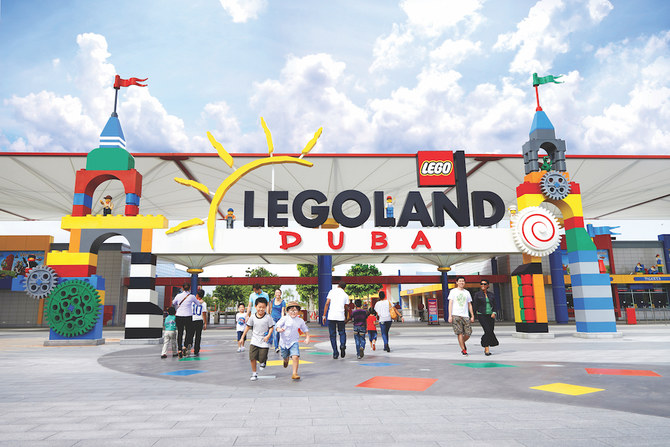
DXB Entertainments said its attractions saw 760,000 visitors in the first quarter of 2019, an 11% decline on the year-ago period. (Supplied)
Updated 14 May 2019
Follow

Dubai theme-park operator DXB Entertainments sees drop in visitors

LONDON: Dubai theme-park operator DXB Entertainments saw an 11 percent drop in visitors in the first quarter of 2019 — but says it is looking for growth in international guests as it aims to break even next year.
The the first phase of the company’s main asset — where attractions include Bollywood Parks and Legoland — opened in 2016.
DXB Entertainments said in a statement Tuesday that its attractions saw 760,000 visitors in the first quarter of 2019, an 11 percent decline on the year-ago period. 
Revenues for the quarter stood at 142 million dirhams ($38.7 million), an 18 percent decline on last year, while the company’s net loss grew by 3 percent to 216 million dirhams. 


Despite the drop in top-line figures, the company said its average hotel occupancy rose to 72 percent from 62 percent, while a growth in international guests means that the latter group now represents 45 percent of visitors.
“Not unexpectedly we have seen a reduction in this quarter’s visitor numbers compared to last year, a typical pattern for a theme park in its second year as the domestic target market consolidates to a core of repeat visitors. Our job now is to maximize the revenue potential of our established domestic base whilst growing our international visitor numbers,” said Mohamed Almulla, CEO and managing director of DXB Entertainments.
“Building our international visitation, which delivers higher yields, will play an important role in delivering our target of EBITDA (earnings before interest, tax, depreciation and amortization) breakeven during the second half of 2020. Our target is to achieve upwards of 60 percent international visitation.”
This will be achieved through the group’s hotel strategy, strategic partnerships and the expansion of its Motiongate Dubai and Bollywood Parks, Almulla added.

FASTFACTS

60%

Proportion of international visitors targeted by DXB Entertainments


Saudi Arabia leads outcome-based education to prepare future-ready generations: Harvard Business Review

A Harvard sign is seen at the Harvard University campus in Boston, Massachusetts, on May 27, 2025. (AFP)
Updated 10 February 2026
Follow

Saudi Arabia leads outcome-based education to prepare future-ready generations: Harvard Business Review

  • The Riyadh-based school group developed a strategy that links every classroom activity to measurable student competencies, aiming to graduate learners equipped for the digital economy and real-world contexts

RIYADH: Saudi Arabia’s education system is undergoing a sweeping transformation aligned with Vision 2030, shifting from traditional, input-focused methods to outcome-based education designed to equip students with future-ready skills, Harvard Business Review Arabic reported.

The transformation is being adopted and spearheaded by institutions such as Al-Nobala Private Schools, which introduced the Kingdom’s first national “learning outcomes framework,” aimed at preparing a generation of leaders and innovators for an AI-driven future, the report said.

Al-Nobala has leveraged international expertise to localize advanced learning methodologies.

The Riyadh-based school group developed a strategy that links every classroom activity to measurable student competencies, aiming to graduate learners equipped for the digital economy and real-world contexts. The school’s group approach combines traditional values with 21st-century skills such as critical thinking, communication, innovation and digital fluency.

According to the report, the shift addresses the growing gap between outdated models built for low-tech, resource-constrained environments and today’s dynamic world, where learners must navigate real-time information, virtual platforms, and smart technologies.

“This is not just about teaching content, it’s about creating impact,” the report noted, citing how Al-Nobala’s model prepares students to thrive in an AI-driven world while aligning with national priorities.

The report noted that Saudi Arabia’s Ministry of Education has paved the way for this shift by transitioning from a centralized controller to a strategic enabler, allowing schools such as Al-Nobala to tailor their curriculum to meet evolving market and societal needs. This is part of the long-term goal to place the Kingdom among the top 20 global education systems.

Al-Nobala’s work, the report stated, has succeeded in serving the broader national effort to link education outcomes directly to labor market demands, helping to fulfill the Vision 2030 pillar of building a vibrant society with a thriving economy driven by knowledge and innovation.

Last February, Yousef bin Abdullah Al-Benyan, Saudi Arabia’s minister of education, said that the Kingdom was making “an unprecedented investment in education,” with spending aligned to the needs of growth and development. He said that in 2025, education received the second-largest share of the state budget, totaling $53.5 billion.