

Saudi Arabia returns to prestigious Venice Biennale after 8-year absence

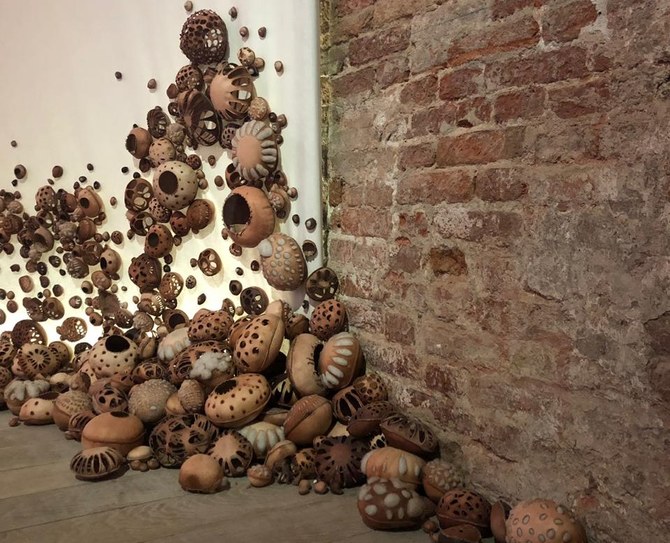
Al-Ghamdi's “After Illusion” installation will be displayed in the Saudi pavilion. (Supplied)
Updated 11 May 2019
Follow

Saudi Arabia returns to prestigious Venice Biennale after 8-year absence

  • The event has previously displayed the works of Pablo Picasso, Henry Moore and Marina Abramović
  • Saudi Arabia debuted their architects Abdulrahman and Turki Gazzaz in last year’s Venice Architecture Biennale

VENICE: Saudi Arabia is taking part in one of the world’s most prestigious art exhibitions after an eight-year absence.

The Kingdom has made its comeback for the 58th edition of the Venice Biennale that brings together thousands of artists, collectors, critics, curators, journalists, and art enthusiasts from around the globe.


The artist Zahrah Al-Ghamdi. (Supplied) 

Over the years the event has showcased the works of some of the biggest names in art including painters Pablo Picasso and Helen Frankenthaler, sculptors Henry Moore and Barbara Hepworth, and conceptual artists Marina Abramović and Ai Weiwei.

Often referred to as the “Olympics of the art world,” the exhibition dates back to 1895, and Saudi Arabia first took part in 2011 when Makkah-born sisters and contemporary artists Shadia and Raja Alem collaborated to present “The Black Arch,” a dazzling steel installation based on personal narrative and “the duality between Makkah and Venice.”


(Supplied)

The Kingdom enjoyed another debut last year at the Venice Architecture Biennale, when architects Abdulrahman and Turki Gazzaz explored the topic of vast, empty spatiality on Saudi land and its effect on the nation’s modern society through their project “Spaces In Between.”

Under the title of “May You Live in Interesting Times,” this year’s biennale is curated by Ralph Rugoff, the director of London’s Hayward Gallery, whose edition reflects the ever-changing current state of world affairs.

“In an indirect fashion, perhaps art can be a kind of guide for how to live and think in ‘interesting times,’” said Rugoff.

Hosting a total of 90 national pavilions at this year’s event, four other Arabic-speaking countries will be joining Saudi Arabia, namely Egypt, Iraq, Syria and the UAE. In addition, the biennale has expanded its programming by welcoming new participants Ghana, Madagascar, Malaysia and Pakistan.

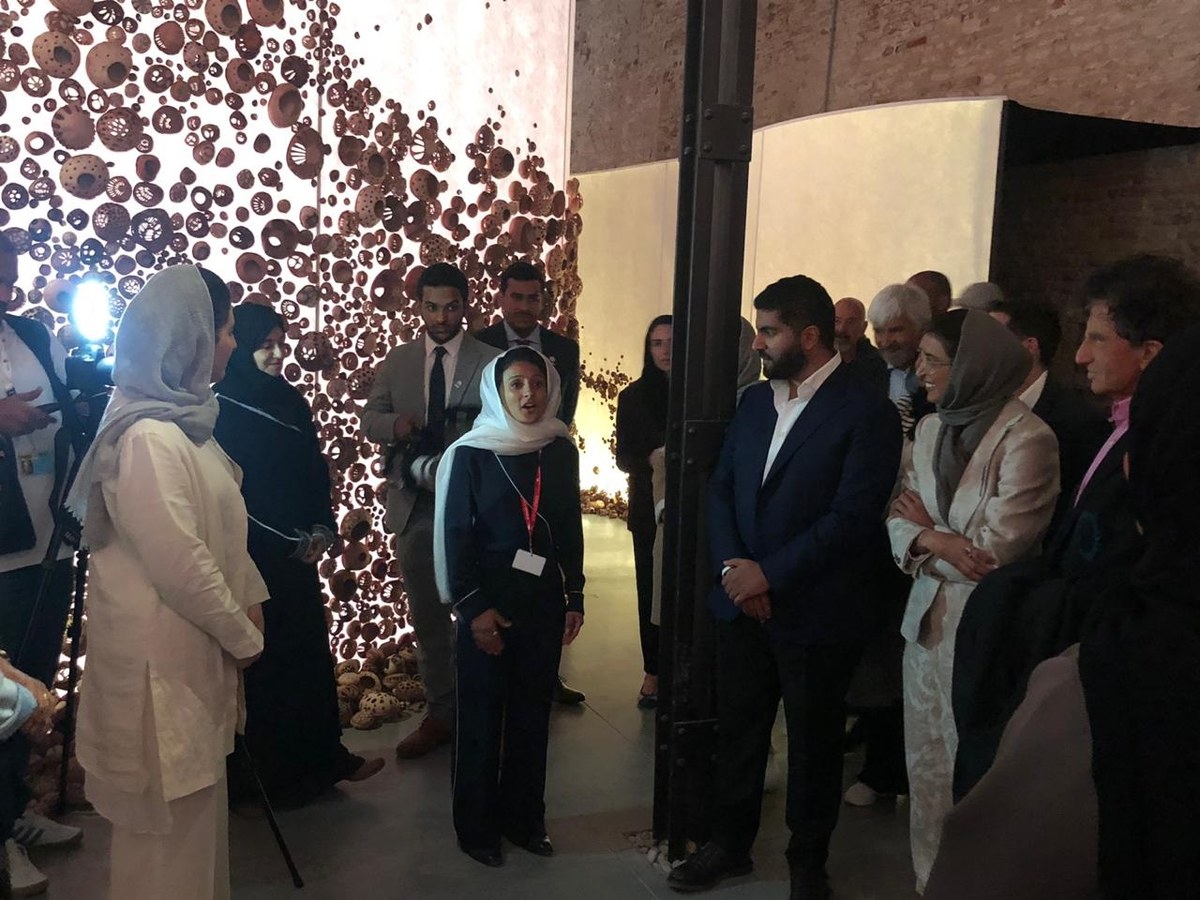
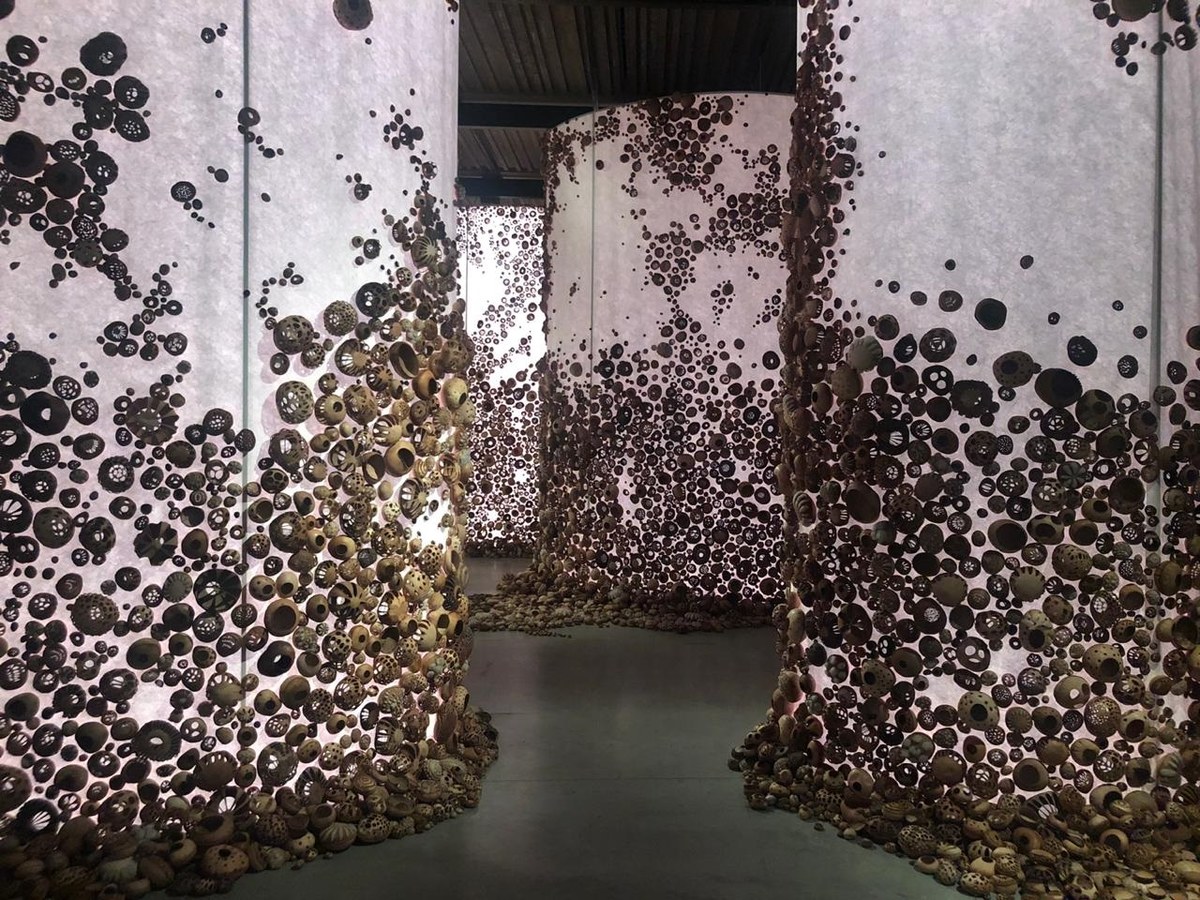
The Venice Biennale opens to the public on May 11 and runs until November 24. Saudi Arabia’s pavilion (located in the Arsenale exhibition venue) will be fronted by Jeddah-based land artist and professor Dr. Zahrah Al-Ghamdi’s “After Illusion” installation, which has been curated by Saudi lecturer and artist Eiman Elgibreen.


(Supplied)

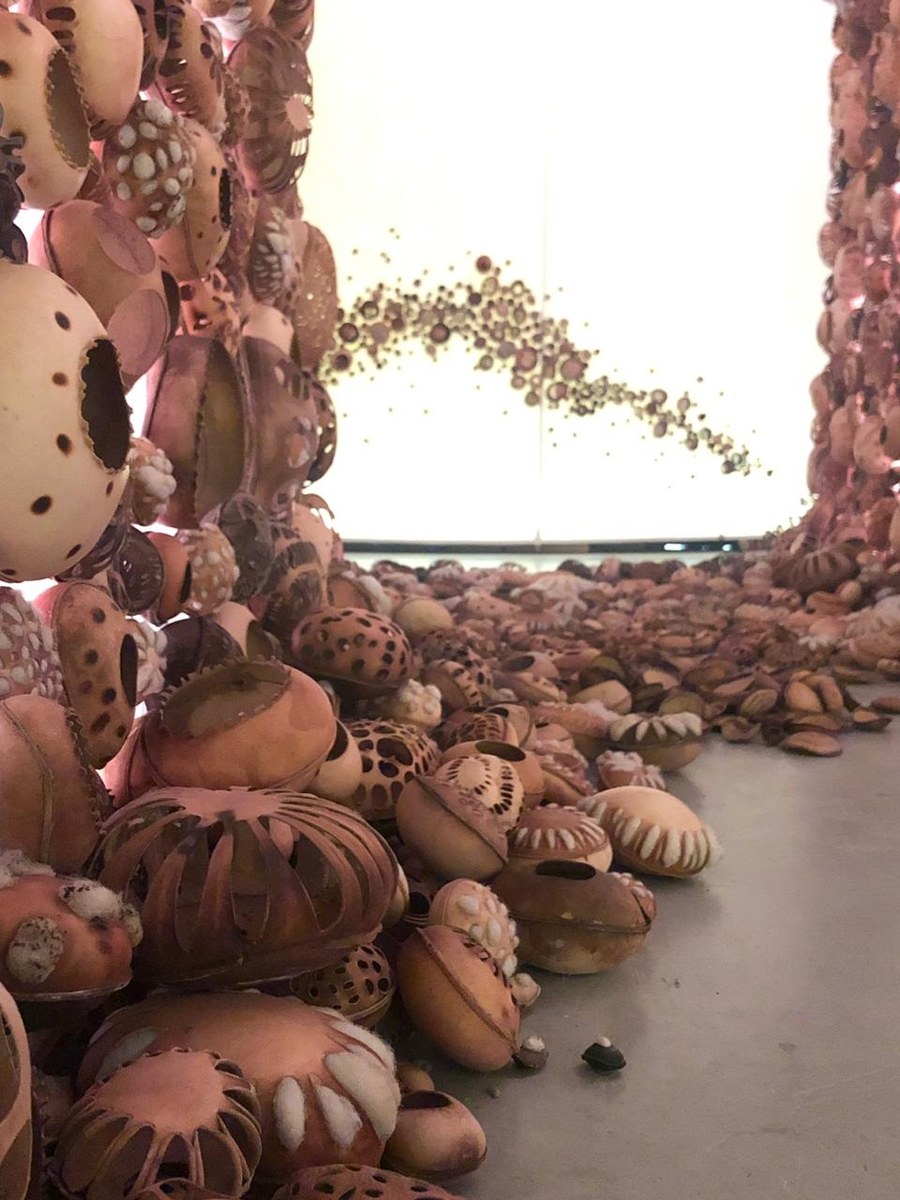
Born in the Hijaz city of Al-Baha in 1977, Al-Ghamdi works with natural materials such as sand, clay, and leather to “reflect the memory of past traditional architecture of southwest Saudi Arabia and to explore this memory with emphasis on poetics,” the artist said.

Al-Ghamdi’s debut at the biennale came after her selection by the Saudi Ministry of Culture and the Misk Art Institute, a government initiative established in 2017 to encourage the arts in the Kingdom. 

“To be honest, when I used to read about the Venice Biennale and its unique concept, I felt so far away from the world of this event – it was like a dream,” Al-Ghamdi told Arab News.

“In recent years, I worked really hard and always hoped to achieve more through each work I would present. So, when I received the call from the Misk Art Institute to participate at the biennale, it was like a dream I never thought I’d dream.


(Supplied)

“I was elated but simultaneously felt a great deal of responsibility, as I am not representing myself but my country and all its artists,” she added.

The other Arab pavilions include a trio of artists – Ahmed Chiha, Ahmed Abel Karim and Islam Abdullah – who are showcasing works inspired by the ancient Egyptian deity Khnum, a figure representing the source of the Nile.

Participating since 2007, Syria’s pavilion is titled “Syrian Civilization Is Still Alive,” and has displays of paintings and photographs by nine Syrian and foreign artists, reflecting on the themes of surrealism and abstraction.

Commissioned by the Ruya Foundation, Iraq’s pavilion presents “Fatherland,” revealing expressive and combative works by the Baghdad-born painter and war artist Serwan Baran.

Meanwhile, poet and filmmaker Nujoom Al-Ghanem has made history by becoming the first woman to have a solo presentation at the Emirati pavilion. Curated by Sam Bardaouil and Till Fellrath, the pavilion will take the viewer through Al-Ghanem’s site-specific video installation, entitled “Passage.”


Hear them out: The best Arab alternative albums of 2025 

Updated 25 December 2025
Follow

Hear them out: The best Arab alternative albums of 2025 

  • Bojan Preradovic’s pick of records released by indie artists from the Arab world this year 

Saint Levant 

‘Love Letters’ 

With his sophomore LP, the Palestinian artist matures from viral breakout to more vulnerable, multilingual pop and R&B, shaping a compact set of love songs with a firmly Palestinian center. He braids sleek synths, North African grooves, and earworm melodies into pieces that drift between late-night infatuation and clear-eyed reflections on home, distance, and belonging. “DALOONA,” a collaboration with Shamstep pioneers 47Soul, and “KALAMANTINA,” featuring Egyptian rap star Marwan Moussa, both lean into joyful release, while “EXILE” sits with the emotional cost of separation and absence. “Love Letters” threads romance, memory, and identity into understated, exceedingly replayable art. 


Zeyne 

‘Awda’ 

Rising Palestinian-Jordanian star Zeyne uses her debut LP to alchemize the last few years of upheaval and her meteoric ascent into a 13-track map of who she is and where she comes from. Folding contemporary R&B and pop into playful rhythms, dabke pulses, and Arabic melodic turns, she sings of home, pressure, and stubborn hope on tracks that feel both diaristic and cinematic. The record shifts between tenderness, unease, and quiet celebration, while guest appearances from Saint Levant and Bayou mix perfectly with the record’s unique flavors rather than overpowering them. This is an exhilarating, soul-searching foray into Arabic alt-pop that treats vulnerability and pride as two sides of the same coin. 


Yasmine Hamdan 

‘I remember I forget’  

A quietly piercing LP from the indie icon about what we choose to carry and what we try to erase. Recorded with her trusted musical confidant Marc Collin, the album folds muted electronics, trip-hop beats, oud, and Arabic strings into songs in which personal memory, folk echoes, and her country’s never-ending tumult blur into one. Album closer “Reminiscence” lets the record fade like a long-held breath, reminding us that Hamdan is still one of the few artists capable of molding private anxieties into a shared, luminous language.  


Kazdoura

 ‘Ghoyoum’ 

The Toronto-based duo’s debut weaves a story of migration and fracture into a quietly dazzling Arabic fusion record. Vocalist Leen Hamo and multi-instrumentalist John Abou Chacra root everything in Levantine maqams, then let the songs drift toward jazz, psychedelia, and dream pop without ever losing sight of the tarab they grew up on. From the yearning of opener “Marhaba Ahlen” and the fiery feminist chant of “Ya Banat” to the reworked folk of “Hmool El Safar” and the woozy sway of “Khayal” and “Titi Titi,” they sculpt homesickness, resilience, and slow healing into something genuinely transformative. 


Tamara Qaddoumi  

‘The Murmur’ 

On her first full-length album, Tamara Qaddoumi stretches the trip-hop and shadowy pop universe she explored on 2021’s EP “Soft Glitch” into a deeper, intensely moving world. Written with longtime collaborator Antonio Hajj, and produced by indie mainstay Fadi Tabbal, “The Murmer” leans on low-end throb, smoldering synths, and incisive guitar lines that feel both intimate and vast. Her voice hovers between confession and spell, circling questions of identity, grief, and attachment that evoke her own hybrid Kuwaiti, Palestinian, Lebanese, and Scottish heritage. The result is a delightfully cobwebby, absorbing LP that lingers long after it ends. 


Sanam 

‘Sametou Sawtan’ 

Recorded between Beirut, Byblos, and Paris, “Sametou Sawtan” – Arabic for “I heard a voice” – is a poignant, unsettled collision of noise rock, free jazz, and Arabic folk that fizzes with tension. Produced by Radwan Ghazi Moumneh, the eight tracks by the art-rock sextet are anchored by Sandy Chamoun’s remarkable vocals, which move from murmured prayer to visceral intensity, drawing on classical Arabic poetry and prose and her own lyrics to inhabit figures who are bewildered, grieving, or stubbornly alive. From the opening surge of “Harik” to the slow burn of “Hamam,” Sanam distill personal and collective unease into work that’s urgent, physical, and impossible to ignore. This is an act on the precipice of wider, global renown.  


Nabeel 


‘Ghayoom’  

On “Ghayoom,” the Iraqi-American songwriter — real name Yasir Razak — firmly plants the flag of an audacious musical explorer venturing across roads less traveled. He sings in Arabic over a wall of distorted guitars and slowcore drums, enveloped by captivating, shoegaze-colored soundscapes. The artwork, built from worn family photographs, hints at what the music is chasing. These eight tracks pair devotional tenderness with the grit of DIY rock. Opener “Resala” aches with unsent words; “Khatil” hits with uneasy momentum; while the elegant flicker of pop-tinged moments scattered throughout the album maintain a raw and bruised edge.  


Malakat 

Al Anhar Wal Oyoon 

On its first showcase, Jordan-based label Malakat gathers seven Arab woman artists and enables them to pull in seven different directions that end up flowing as a single current. “Al Anhar Wal Oyoon” (‘The Rivers and the Springs’), moves from Intibint’s hauntingly inspired vocalization to Liliane Chlela’s serrated electronics, and from Sukkar and DAL!A’s skewed pop to Sandy Chamoun’s voice-led piece, and Bint Mbareh’s closing track, developed in dialogue with visionary producer Nicolas Jaar. Mixed across Amman, the UK, and New York, and mastered by the highly-sought-after Heba Kadry, this is a deeply textured statement of intent from a label quietly redrawing the map of experimental Arab music.