

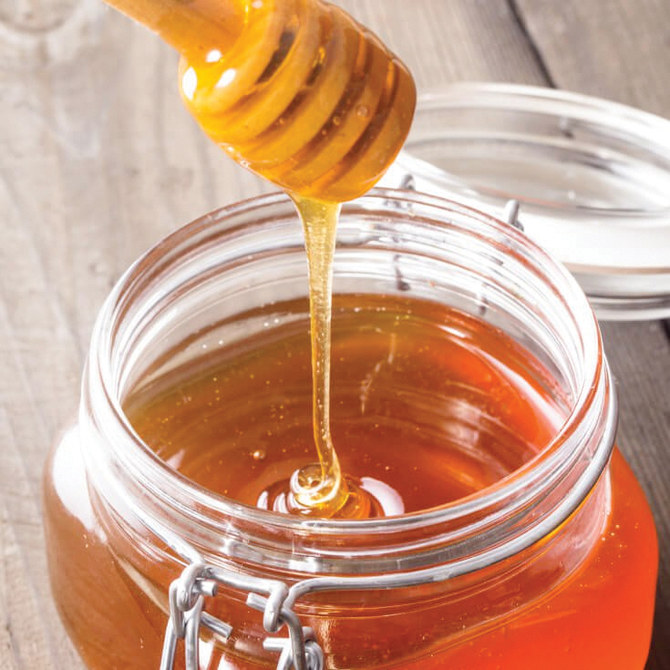
Startup of the Week: House of Honey: Offering nature’s health tonic in its purest form

Updated 07 May 2019
Follow

Startup of the Week: House of Honey: Offering nature’s health tonic in its purest form

Honey is nature’s gift to humanity. With so much reliance on commercial medicines and antibiotics, it is easy to overlook the amazing antiseptic and antibacterial properties that honey contains.

Rich in antioxidants, honey has many benefits linked to cardiovascular health, the treatment of wounds and acid reflux, and its popularity as a home remedy for ailments such as coughs or pharyngitis.

Saudi-based brand House of Honey aims to raise awareness of the benefits of the product and encourage people to use it as part of a lifestyle routine.

The business venture was established in the second quarter of 2017 by Saudi industrial engineers Mohammed Jamjoom, Abdulrahman Shalabi and Hassan Mutwalli.

“The idea came in late 2016 when we used pure honey as an energy booster,” Shalabi told Arab News. “When we found that there was a lack of reliable sources for trusted, pure honey in our market, we started to search for natural honey for our own consumption.

“We were able to find a trusted source for our use. During the process, we saw an opportunity in the market and pursued it. We realized that a high-quality Saudi brand would gain consumer trust and meet high expectations, while also contributing to a healthier future and well-being,” he added.

House of Honey currently offers 250g, 500g and 1kg jars of Hadrami Sidr, a type of honey specific to the Sidr tree in Hadramout, Yemen. Customers in Jeddah and Riyadh can have honey delivered for no charge and can find House of Honey products in concept stores Homegrown Market in Jeddah and Healthy Market in Riyadh.

House of Honey is developing its website to make it more user-friendly, while looking to increase its core distribution network with a range of natural honey products.

Shalabi said the company aimed to maintain consistency of quality and reliability of availability for its products.

Nutrition experts advise people to consume 250 grams of honey per month.


Where We Are Going Today: Auria

Photo/Supplied
Updated 02 March 2026
Follow

Where We Are Going Today: Auria

  • The restaurant itself is very spacious, offering seating on both sides of the dining area

Situated on the bustling Takhassusi Road, Auria offers a high-end dining and bakery experience in the heart of the capital.

The best way to describe the restaurant is modern and cozy, featuring dim lighting, comfortable seating, and attentive staff.

Before diving into the menu and recommendations, it is worth noting the restaurant’s no-children policy — a choice that feels somewhat unusual given that Riyadh is such a family-oriented city.

Those arriving with children under the age of 13, whether with a reservation or as a walk-in, can expect to be turned away and denied service.

The restaurant offers a fine-dining experience characterized by smaller, more refined portions at a higher price point.

Most starters range from SR55 ($15) to SR75, while the majority of main dishes fall between SR85 and SR135.

Among the starters, the highly recommended dishes include the crispy shrimp tempura — four pieces served with a zesty chili-yuzu mayo — and the lobster kari, which features prawns, cream cheese, and a vibrant coriander-jalapeno dressing.

Another top-rated starter is the grilled corn salad, a vibrant mix of avocado, citrus, and fresh herbs topped with caramelized nuts. The shrimp salad also makes for a refreshing beginning, though it remains a third-choice contender when compared to the standout corn salad.

Regarding the pasta, both the penne arrabbiata and the rigatoni pecorino felt somewhat standard. While well-executed, they were not quite as exciting as the rest of the menu.

For the main courses, there is a choice of several proteins, including sea bass, lamb, veal, chicken and steak. Of these, the most highly recommended are the grilled prime angus fillet and the veal al limone.

The steak was exceptionally tender and juicy, yielding easily to the knife, while the veal was light and buttery with a bright citrus finish.

We were warmly greeted with traditional Saudi coffee, and throughout our meal, our coffee cup was never allowed to run dry.

The restaurant itself is very spacious, offering seating on both sides of the dining area.

While the oversized, cozy chairs are a key attribute of the luxurious ambiance, they are quite heavy and difficult to adjust, often requiring the assistance of a server to help you slide in or out of the table.

In addition to the lunch and dinner service, the restaurant offers a breakfast menu which we have not tried yet.

While the no-children policy and the premium price point may be factors, the quality of the food and the quiet, upscale atmosphere make it a notable, under-the-radar destination in Riyadh.
