RIO DE JANEIRO: Police killings in the state of Rio de Janeiro have hit a record high, rising by 18% in the first three months of this year in a spike partly attributed to a zero tolerance for criminals campaign by state leaders.
Official data reviewed by The Associated Press show police forces in Rio killed 434 people during clashes in those months, compared to 368 people in same period last year.
The number, released on April 17, is the highest since record keeping began in 1998.
The rise comes under the watch of Gov. Wilson Witzel, a former marine and political ally of far-right President Jair Bolsonaro. Witzel has promised a zero tolerance policy against criminals, calling drug traffickers “narco-terrorists” and vowing to ease gun possession laws.
On the campaign trail, he said he wanted to send sharp shooters aboard helicopters to target armed criminal in favelas. Weeks ago, the governor acknowledged that police were using shooters.
The police communications department declined to comment about the latest statistics.
“Even though there is no direct order (to kill), you have a governor and officials that use this language, that we should commemorate the deaths of suspects, that a (police) operation was successful when there were nine or 10 deaths,” said Felippe Angeli, a public security expert with the Sou da Paz institute in Brazil. “This ends up having an impact.”
Police killings in the state, however, did not begin with the current administration, sworn in on Jan. 1.
Last June, Orlando Dos Santos found out his 27-year-old stepson had disappeared in the wake of a police operation in the Babilonia slum, which sits on a hill behind the city’s iconic Sugarloaf mountain.
The following day, guided by local residents, Dos Santos and other people whose relatives had also disappeared, began searching with the help of the local fire department. They found seven bodies at the bottom of a cliff, which were later linked to the police operation.
Dos Santos’s stepson, whom he said had gotten involved with criminal groups not long before the police crackdown, was never found.
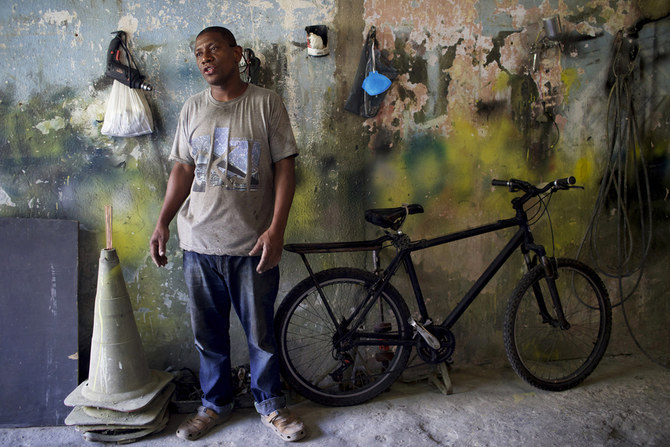
“The place where they were found and the way their bodies were, made it very clear that it had been an execution,” Dos Santos, a car mechanic, told The Associated Press.
Police killings have intensified in the last couple of years.
Since 2013, the number of victims in Brazilian police operations has continued to rise from 416 victims to 1,534 last year.
In 2018, the military was put in charge of Rio state’s security forces. Rates for crimes such as theft dropped, but critics say structural problems remained unsolved.
Widespread violence is a historical problem in Brazil and in Rio, one of its main tourist destinations.
Paulo Storani, former deputy commander of an elite squad of officers known by the acronym BOPE, said the increase in the number of deaths is a “natural” consequence of the police’s decision to try to recover territories abandoned by the state to organized crime for many years.
“There is no license to kill in the police. The criminals are armed with weapons of war and police are oriented to recover territories. There are violent confrontations because the criminals were strengthened by the inaction of past governments,” Storani said.
In parallel, overall homicides in the state have declined by 26% in the first three months of the year to 1,046 registered deaths.
But some experts fear the government’s rhetoric combined with their desire to pass legislation facilitating gun possession will further deepen the crisis.
“Violence engenders more violence,” Dos Santos said. “I think the duty of the police officer is to catch, apprehend and for the justice to judge.”


![]()

Police killings in Brazil’s Rio de Janeiro state reach record high
Police killings in Brazil’s Rio de Janeiro state reach record high
- Police forces in Rio killed 434 people during clashes in the first quarter of 2019
- The rise comes under the watch of Gov. Wilson Witzel, who calls drug traffickers “narco-terrorists”


Latest updates


© 2026 SAUDI RESEARCH & PUBLISHING COMPANY, All Rights Reserved And subject to Terms of Use Agreement.