


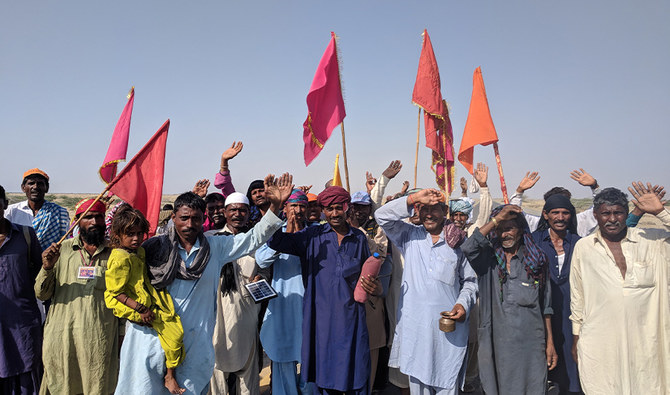
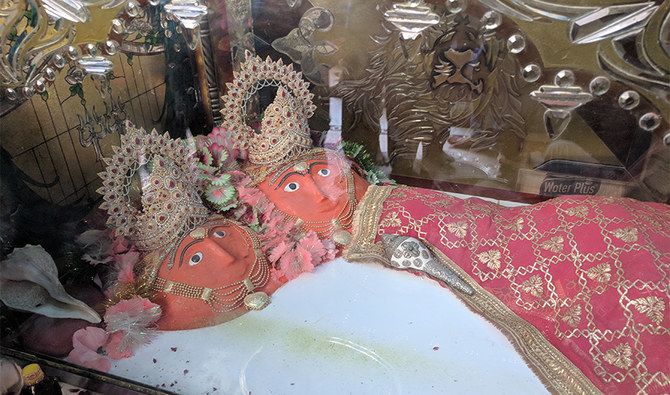


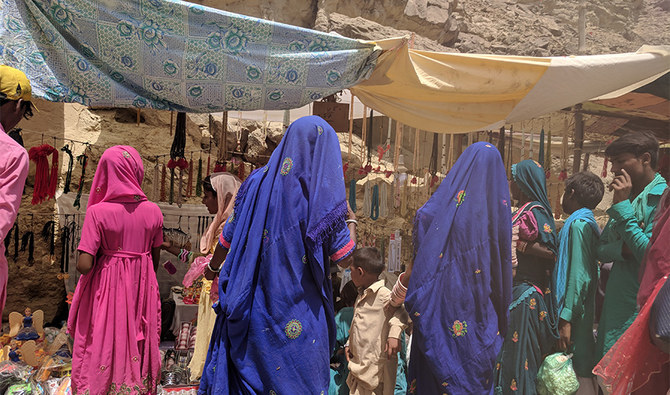


BELA, BALOCHISTAN: Thousands of Pakistani Hindus flocked last week to the cave temple of Hinglaj Mata in Pakistan’s southwestern Balochistan province in what is considered the largest Hindu pilgrimage in Pakistan.
The festival happens in April each year and concluded this Sunday after four days of high priests chanting mantras and beseeching Hindu gods to accept the offerings of the devotees and bestow peace and prosperity on them.
According to Hindu mythology, Lord Vishnu cut up the dead body of Sati into 50 pieces, which fell to the earth. Her head, it is believed, fell at Hinglaj and it has since been the site for a revered pilgrimage.
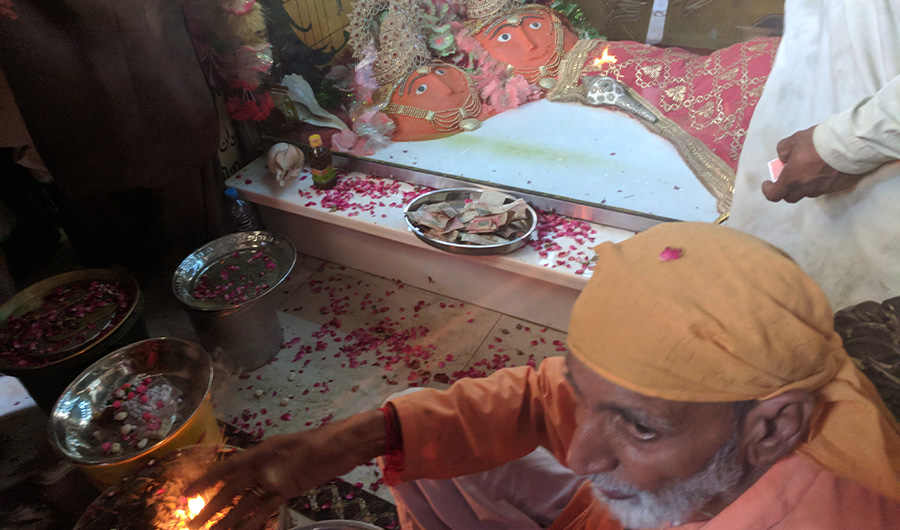
Maharaj Gopal, who is associated with Hinglaj Mata Mandir, for last eleven years says hundreds of Hindus from abroad, including India, visit the temple annually (AN Photo)
Pilgrims arrive from all over Pakistan, adorned in decorative red-and-gold head-scarves and saffron headbands to mark the holy colors of Hinglaj Mata.
The Hinglaj Yatra is “as significant to Hindus as is Hajj important to Muslims,” said Maharaj Gopal, a pundit in traditional orange robes.
Most pilgrims come in buses, some on private cars and even on bicycles all the way from Karachi. Others prefer to walk. The greater the suffering, the pilgrims say, the greater the reward.
Lakshmi, 65, began her journey from the town of Matli in southern Sindh province on April 9 and walked a distance of 448 kilometers to reach the cave temple located in a narrow gorge on the mouth of the Kheerthar hills in Pakistan’s ancient Makran desert.
“The journey is long but the blessing is huge,” she said.
Pesumal Arlani, General Secretary of the Hinglaj Mata committee who launched the four-day festival in 1988, told Arab News the number of pilgrims was increasing each year due to better arrangements and the construction of the Makran Coastal Highway, a 653 kilometer national highway that extends along Pakistan’s Arabian Sea coast from Karachi in Sindh province to Gwadar on the top of Balochistan.
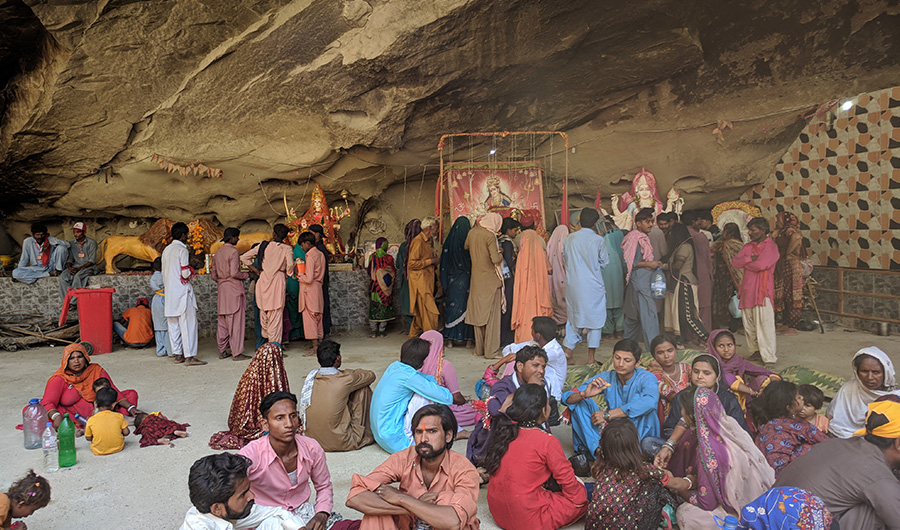
Thousands attend the annual Hinglaj Mela in Hingol National Park of Lasbela Balochistan (AN Photo)
Baluchistan has long been plagued by violence and a stubborn insurgency, with several separatist groups and Islamist militants operating in a region that boasts vast gas and mineral resources.
Security has improved considerably across much of Pakistan in recent years but Balochistan is still plagued by attacks. Last month, gunmen pulled 14 members of the Pakistani armed forces off buses and shot them dead in the town of Ormara.
Deputy Commissioner Lasbela Shabbir Ahmed Mengal said better security arrangements and ease for pilgrims was now the authorities’ priority.
“We have plans to build resorts and provide other facilities to encourage more and more Hindus from abroad to visit the temple,” Mengal told Arab News.
Most pilgrims come from the southern Sindh province where a majority of Pakistan’s tiny Hindu minority of around 3 million people lives. A few hundred also visit from India, the United States, the United Kingdom, France and other countries, pundit Gopal said. “When they go back, they are considered saints due to the importance of this pilgrimage.”
Devotees from Pakistan’s arch-rival and neighboring India, a Hindu majority nation, too want to visit but find it hard to get visas.

Thousands attend the annual Hinglaj Mela in Hingol National Park of Lasbela Balochistan (AN Photo)
“Strained relations is a big hurdle,” said Preeti Sompura, a Mumbai based journalist associated with India TV. “If relations between the two neighbors normalize it will allow people from India to go to Pakistan for this important pilgrimage.”
In the past, many prominent Indians, including former external affairs minister, Jaswant Singh, have visited Hinglaj for the pilgrimage. A large number of the Muslims also visit each year.
“Chief Minister Balochistan Jam Kamal has announced Rs200 million for the master plan of the Hinglaj Mandir and Rs100million for making the road” that leads up to the temple, said Danish Kumar, Balochistan’s parliamentary secretary for religious affairs.
“Our government is making efforts to turn the festival into a religious tourist gathering. In the future, it will be an international festival.”


