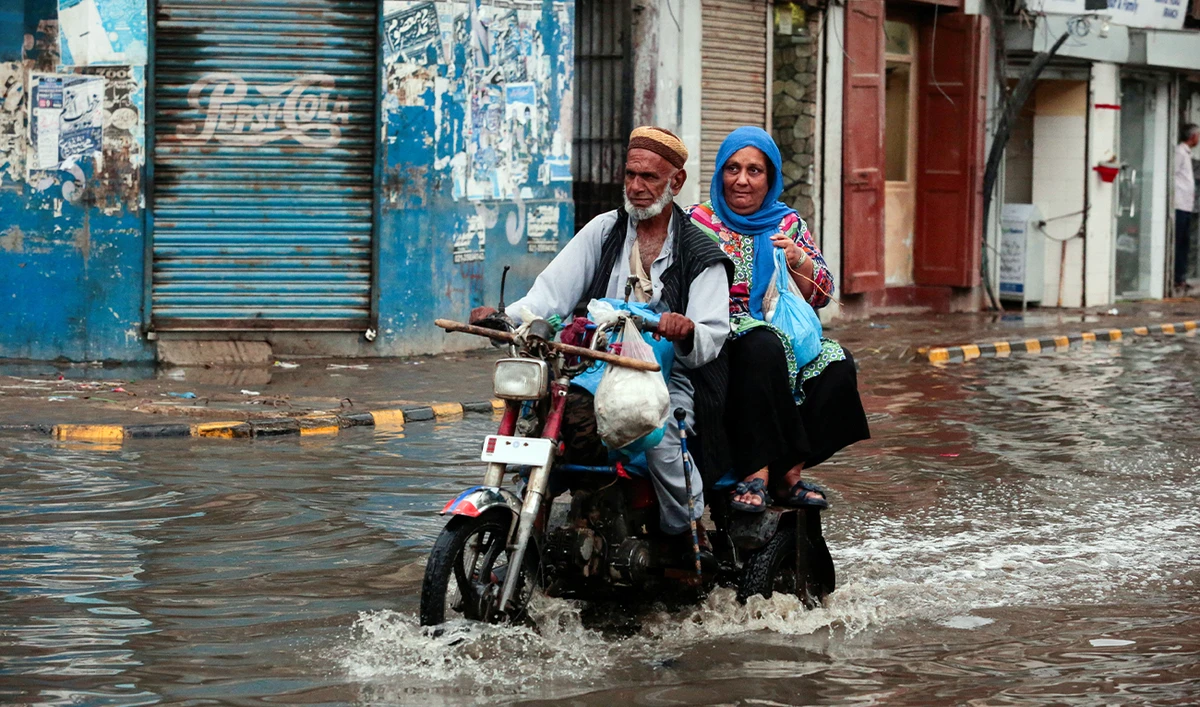
- Temperatures drop sharply in Karachi alongside record rainfall, Met Office says
- Balochistan reports fresh deaths and damage as storms hit multiple districts
ISLAMABAD / QUETTA: Pakistan’s coastal city of Karachi recorded its highest-ever April rainfall in a single day this week, a meteorological official said on Friday, as country-wide weather-related deaths climbed past 50 since mid-March and authorities warned of more rain, snowfall and strong winds over the next 24 hours.
The fatalities include at least 21 people in Karachi who were killed last month when strong winds and rain caused walls, roofs and trees to collapse. Similar incidents in recent weeks claimed 25 lives in Khyber Pakhtunkhwa and nine in Balochistan.
Karachi in southern Sindh reported six more deaths on Thursday night as torrential rains lashed the city again.
“Our stations recorded 38.7 mm of precipitation within a single day [on Thursday], surpassing the previous long-standing record of 37 mm established on April 2, 1985,” Chief Meteorologist Ameer Hyder told Arab News over the phone, describing the rainfall as a “historic weather event.”
“Alongside this record-breaking rain, the city experienced an unusually cold spell,” he said, adding that temperatures dropped to 16°C compared to the April average of 21.8°C.
Meanwhile, in southwestern Balochistan, at least three people, including two children, were killed in the past 24 hours in rain-related incidents, while overall fatalities in the province have reached nine since March 20, according to provincial disaster management officials.
Torrential rains, hailstorms and strong winds have affected multiple districts including Quetta, Zhob, Chaman and Lasbela, damaging homes and infrastructure, with at least 28 mud houses destroyed and several people injured.
Pakistan’s National Disaster Management Authority has warned of heavy rain, thunderstorms and strong winds in parts of Punjab, Sindh, Balochistan and Khyber Pakhtunkhwa over the next 12 to 24 hours, while snowfall is expected in mountainous regions of Gilgit-Baltistan and Azad Jammu and Kashmir, according to the Associated Press of Pakistan.
Authorities have also warned of possible urban flooding in parts of Khyber Pakhtunkhwa, including Peshawar and surrounding districts, as well as landslides in northern areas that could disrupt travel.
Pakistan is among the countries most vulnerable to climate change and has in recent years experienced increasingly erratic weather patterns, including extreme rainfall, floods and heatwaves that have exposed gaps in infrastructure and disaster preparedness.
The country is still recovering from catastrophic floods in 2022 that killed more than 1,700 people and affected over 33 million, while last year’s monsoon season also triggered widespread flooding, killing more than 900 people.