NEW DELHI: An Indian Hindu nationalist group allied with Prime Minister Narendra Modi called on Wednesday for a ban on veils after Sri Lanka prohibited the garments worn by some Muslim women following militant bomb attacks there.
Sri Lanka imposed its ban on Monday to help security forces identify people under an emergency law put in place after Easter Sunday suicide bomb attacks in churches and hotels killed more than 250 people.
“We welcome this decision and demand Prime Minister Narendra Modi follows in Sri Lanka’s footsteps and bans the burqa and niqab in India,” the Mumbai-based Shiv Sena party wrote in an editorial in the Saamana newspaper.
A burqa is a loose all-enveloping garment worn by some Muslim women when they go outside. A niqab is a veil that covers the face, apart from the eyes.
The hard-line Hindu group said the burqa had nothing to do with Islam and Indian Muslim women who wore it were only following the tradition of the Arab world, where women wear it outside to protect themselves from the sun.
The Ministry of Home Affairs declined to comment.
Some Muslim leaders said a ban on the burqa would be an attack on civil liberties, and the demand was being made now to whip up controversy as Hindu-majority India votes in a staggered general election.
About 14 percent of India’s 1.3 billion people are Muslim.
Some liberal Muslim women see the burqa and the niqab as part of a culture that suppresses women’s freedom.
Bangladeshi author Taslima Nasreen, who lives in India, said she supported the ban on the burqa, but not because she thought it would stop terrorism.
“People are saying banning the burqa won’t stop terrorism,” Nasreen wrote on Twitter. “I agree, it won’t stop terrorism but it will definitely stop women from being faceless zombies.”
Nasreen had to leave Bangladesh because of hostility from conservatvies in response to her criticism of militant Islam.


![]()
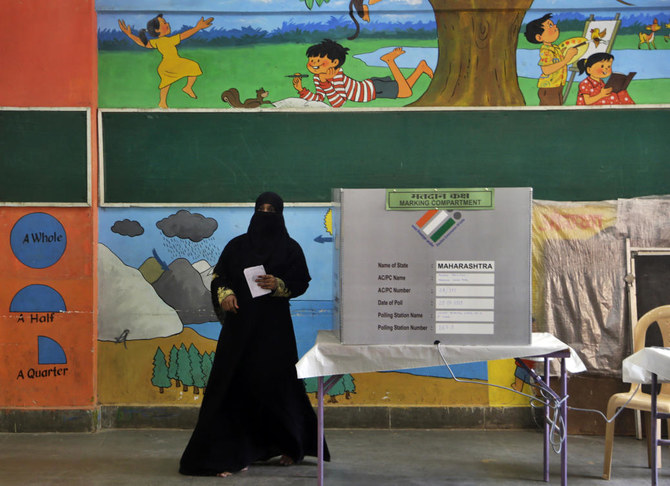
Hard-line Indian group allied with Modi calls for ban on the veil

Hard-line Indian group allied with Modi calls for ban on the veil
- The hard-line Hindu group said the burqa had nothing to do with Islam and Indian Muslim women who wore it were only following the tradition of the Arab world
- Some Muslim leaders said a ban on the burqa would be an attack on civil liberties, and the demand was being made now to whip up controversy as Hindu-majority India votes in a staggered general election

Latest updates


© 2026 SAUDI RESEARCH & PUBLISHING COMPANY, All Rights Reserved And subject to Terms of Use Agreement.