



JAKARTA: A 19-member surgical team from Saudi Arabia has trained Indonesian doctors in oral, maxillofacial and thyroid surgery under a King Salman Humanitarian Aid and Relief Center program to expand access to advanced medical procedures in eastern Indonesia.
The Saudi medics were embedded with their Indonesian colleagues at the Wahidin Sudirohusodo Central General Hospital in Makassar, South Sulawesi province.
“KSrelief’s medical team consisted of surgeons and consultants, so doctors from our hospital had the opportunity to directly observe surgical procedures done by the Saudi doctors that have never been performed here,” Aulia Yamin, spokesperson of the Makassar hospital, told Arab News on Tuesday.
“There were also in-depth discussions on diagnosis and plans for surgery for highly complex cases.”
The KSrelief team was in Indonesia in late December, during which Saudi doctors performed free maxillofacial and thyroid surgery on 60 patients, she added.
The transfer of knowledge by KSrelief also supported Indonesia’s health system transformation plan, which seeks to improve access and quality of services in all regional government hospitals, particularly in eastern Indonesia.
“Makassar is the primary transportation and health referral hub for eastern Indonesia, which means there’s a high number of cases requiring maxillofacial and thyroid surgeries,” Yamin said.
“We hope that this collaboration can continue in the future for other cases, so that more Indonesians can benefit from the program.”
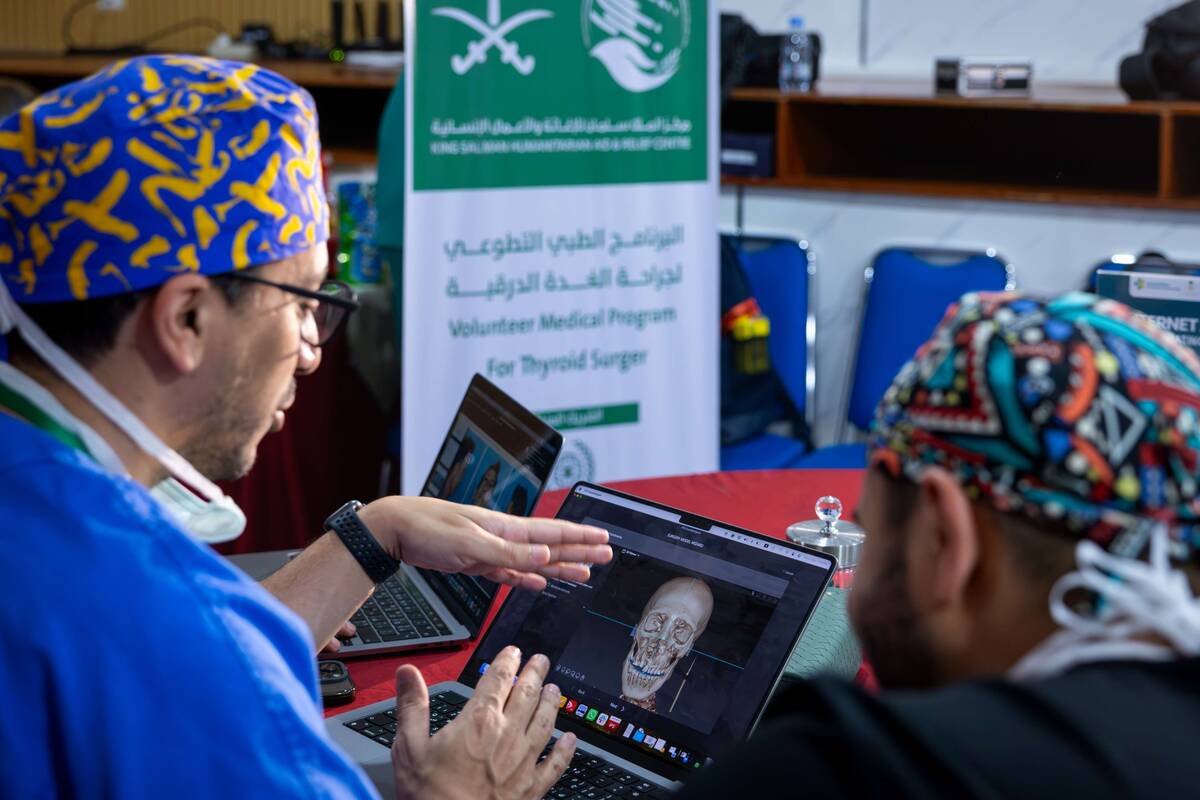
In this photo provided by the Saudi Embassy in Indonesia on Dec. 31, 2025, Saudi doctors are discussing a case at Wahidin Sudirohusodo Central General Hospital in Makassar, South Sulawesi. (Saudi Embassy in Indonesia)
The KSrelief program had also included guest lectures by the Saudi doctors, covering facial and jaw reconstruction as well as updated and new approaches to paranoid gland surgery.
“We’re really thankful to the very hard work that we saw here. The (Indonesian) team was with us day and night and throughout very long surgeries and very complex surgeries,” Prof. Basem T. Jamal, who led the KSrelief team in Makassar, said in a video statement.
“And not only was it supporting the medical effort, but there was always interest in expressing and exchanging knowledge and experiences, and it was really really, a very rich experience for all of us.”
KSrelief has conducted similar programs in other parts of Indonesia, including in Medan, North Sumatra in 2024 that focused on training Indonesian doctors in advanced cardiac procedures on adults and children.


