CARACAS, Venezuela: Venezuelans reacted with despair and resourcefulness on Tuesday as nationwide power cuts closed schools and businesses, paralyzing a nation that was only starting to recover from its worst blackouts earlier this month.
The new outages, which began Monday, forced people to follow now-familiar routines: scour neighborhoods for food in the few shops that were open or seek out the few spots where they could find a signal on their mobile phones and get in touch with family and friends. The collapse of the power grid was yet another setback for a country whose oil reserves made it one of Latin America’s wealthiest decades ago.
“Venezuela doesn’t stand a chance anymore, there is no life here,” said Johnny Vargas, a frustrated restaurant worker who said he wishes he could leave the country. “People can’t work anymore; we can’t do anything.”
In Caracas, lights flickered on and off in various districts, raising hopes and then dashing them as people once again reflected on divergent explanations from the government of President Nicolas Maduro, which alleged sabotage, and the US-backed opposition, which said state corruption and incompetence is to blame.
Communications Minister Jorge Rodriguez posted a video of a fireman training a hose on smoking equipment at a power facility, seeking to reinforce his claims that Venezuela is under attack by “terrorists” executing a US-led scheme to sow chaos. Authorities said they had detained six people in connection with the outage, but provided no details outlining the accusations against them.
The US and Venezuelan opposition leader Juan Guaido say allegations of sabotage are an attempt to deflect attention from government failures.
The government’s allegations aren’t credible in part because it said the military had deployed to protect the entire power grid after the last blackouts, Guaido said.
Jose Aguilar, an expert on the Venezuelan electrical grid, said images of a blaze shared by the government as well as information from engineers on the ground indicate the fire began inside one of three critical transformers near the Guri dam, which provides most of the country’s electricity. He attributed the blaze to neglect, saying equipment that facilitates an electrical current’s passage was not regularly maintained.
Sitting on a bench in a plaza, 72-year-old Armando Taioli gestured at people walking in the streets or traveling in buses and said they were adapting as best they could to the power outages, but that he fears social unrest if the situation deteriorates.
“That calm, you have to be worried about it,” Taioli said.
Vice President Delcy Rodriguez said schools and industries would be suspended for a second day on Wednesday as officials work to restore electricity.
After the last blackouts started on March 7, the situation became increasingly desperate for many Venezuelans who lost access to water because pumps failed without electricity. Looters ransacked hundreds of businesses in the city of Maracaibo. The blackouts eased nearly a week later, but many areas only had intermittent power even after the government said the problem was solved.
The new outage appeared to have affected the majority of the 23 states in Venezuela, whose steep economic decline contributed to the flight of more than 3 million people, or one-tenth of the population, to other countries as the crisis escalated. Guaido says Maduro’s re-election last year was rigged, and the US has imposed sanctions on Venezuela in an attempt to force the Russia-backed president from power.
Simmering political tension was apparent Tuesday, as a video circulating on social media showed a man appearing to kick a car and other men throwing objects at it. Guaido’s spokesman Edward Rodriguez said the incident was an attack on vehicles carrying lawmakers from the opposition-controlled National Assembly after a session. Opposition activists say they are sometimes targeted by “colectivos,” a term for pro-government enforcers in civilian clothing who are seen on Caracas streets from time to time.
US Secretary of State Mike Pompeo condemned the attack and called on state security forces to protect civilians against violent armed groups.
“These acts of intimidation will not succeed in delaying the inevitable — the peaceful restoration of democracy, stability, and prosperity to the people of Venezuela,” he said.
Netblocks, a non-government group based in Europe that monitors Internet censorship, tweeted Tuesday that network data shows 85 percent of Venezuela was offline “with little evidence of recovery.”
Dr. Julio Castro, one of the leaders of the non-profit Doctors for Health, said on Twitter that one person had died as a result of the latest outage — an 81-year-old woman who perished after doctors were unable to connect her to a respirator on a different floor of the Central Hospital of Maracay because they could not use the elevators. A survey of hospitals conducted by Castro’s group found most had power or access to a generator but lacked water.
The country’s main airport at Maiquetia said its emergency generator was operating and that international flights were on schedule. Many international airlines have stopped flying to Venezuela in recent years.
Debit cards are a common form of payment in Venezuela, where cash is scarce and hyperinflation hit several years ago. Without power, the cards weren’t working on Tuesday. So some shops that were open gave meat and dairy products to customers in hopes of getting paid later, since the goods won’t last without refrigeration.
Shopkeeper Jose Ferreira, 59, said he’d rather give to a stranger and hope for payment later than lose everything. “There are still honest people in this country,” he said.
Rocio Perez, 31, bought a kilogram of meat on credit.
“I’d like to buy more, but I have to cook and eat it immediately to avoid problems,” Perez said. “I don’t even want to think about getting sick.”

Weary Venezuelans adapt to more nationwide power cuts
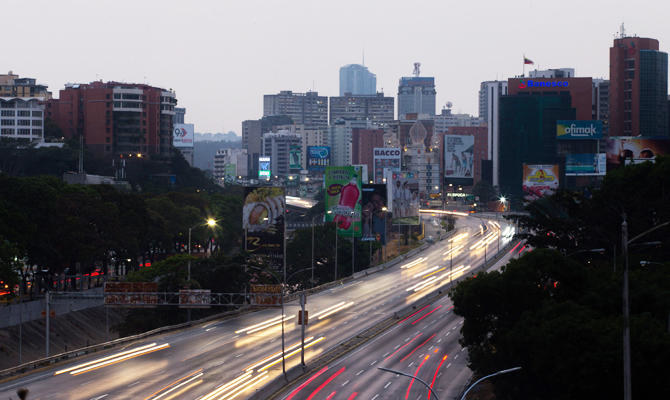
- The new outage appeared to have affected the majority of the 23 states in Venezuela, whose steep economic decline contributed to the flight of more than 3 million people
What to know about the Israeli president’s state visit to Australia
- Netanyahu had been outraged by Australia’s decision four months earlier to join France, Britain and Canada in recognizing a Palestinian state
MELBOURNE, Australia: The stated purpose of Israel President Isaac Herzog’s visit to Australia is to support the Jewish community still reeling from an antisemitic attack at Sydney’s Bondi Beach that left 15 dead. But his critics warn his presence undermines rather than repairs social cohesion frayed by the far away war in Gaza.
Protest rallies are expected to follow the president, who performs a largely ceremonial role as head of state, as he travels to Sydney, Melbourne and Canberra over four days starting Monday. Some critics demand he be arrested in Australia on suspicion of inciting genocide in Gaza.
He is the first Israeli head of state to visit Australia since Reuven Rivlin in 2020. Herzog’s father, Chaim Herzog, also visited Australia as Israel’s president in 1986.
Here’s what to know:
The Australian visit comes at a time of extraordinary bilateral tensions
Within hours of two gunmen allegedly inspired by the Daesh group launching their attack in Sydney on Dec. 14 last year, Israeli Prime Minister Benjamin Netanyahu blamed his Australian counterpart Anthony Albanese, posting on social media “your call for a Palestinian state pours fuel on the antisemitic fire.”
Netanyahu had been outraged by Australia’s decision four months earlier to join France, Britain and Canada in recognizing a Palestinian state.
Netanyahu has repeatedly sought to link widespread calls for a Palestinian state, and criticism of Israel’s military offensive in Gaza, to growing incidents of antisemitism worldwide.
Albanese has accused Netanyahu of being “in denial” over the humanitarian consequences of war in Gaza. Netanyahu has branded the Australian a “weak politician who betrayed Israel and abandoned Australia’s Jews.”
Australian Jews have appealed to both leaders to restore “diplomatic norms” to a bilateral relationship that had been friendly for decades.
Albanese has made clear his government’s invitation to Herzog to make that state visit was the idea of Jewish leaders.
“President Herzog is coming particularly to engage with members of the Jewish community who are grieving the loss of 15 innocent lives,” Albanese said.
“People should recognize the solemn nature of the engagement that President Herzog will have with the community of Bondi in particular, and bear that in mind by the way that they respond over coming weeks,” he added.
Jewish leaders welcome Herzog’s visit
Sydney-based Jewish leader Alex Ryvchin, co-CEO of the Executive Council of Australian Jewry, said his community “warmly anticipates” Herzog’s arrival.
“His visit will lift the spirits of a pained community and we hope will lead to a much-needed recalibration of bilateral relations between two historic allies,” Ryvchin said.
“President Herzog is a patriot and a person of dignity and compassion and holds an office that is above party politics. He is a person who has sadly had to comfort families, police and first responders after terrorist attacks many times, and will know how to reassure and fortify our community in its darkest time,” he added.
Ryvchin is one of the Australian Jewish leaders who have accused Albanese’s center-left Labour Party government of not doing enough to curb an increase in antisemitism in Sydney and Melbourne, where 85 percent of Australia’s Jewish population live, since the Israel-Hamas war began in 2023.
Herzog sees opportunity to reset relations
Herzog, a former head of Israel’s centrist Labour Party, now holds a job meant to serve as a unifier and moral compass for all Israelis. A onetime rival of Netanyahu, he has good working relations with the prime minister.
Ahead of his visit, Herzog told The Associated Press that the “primary reason” for the trip was to stand with Australia’s Jewish community as the representative of all Israelis.
“From thousands of miles away in Israel, we feel the deep pain of our Jewish Australian sisters and brothers. I am coming to show them our love and support at this devastating time,” he said.
But Herzog also said the visit is an opportunity “to reinvigorate relations” between Israel and Australia.
“There is a long history of partnership between our two nations and deeply held shared values,” he said, adding that the visit “offers a chance to reignite the longstanding bipartisan support for ties between Israel and Australia.”
“I hope to be able to communicate this message of goodwill and friendship to the Australian people, and dispel many of the lies and misinformation spread about Israel over the last two years,” he said.
Israel’s critics have called for Herzog’s invitation to be withdrawn
“This is one of the most divisive figures in the world. Bringing him to Australia will undermine social cohesion, it will not rebuild it. It will increase division, it will not bring about national unity,” Australian human rights lawyer Chris Sidoti said. Sidoti described the invitation as a ”crazy idea.”
Sidoti was one of three experts appointed by the UN’s Human Rights Council to an inquiry that reported in September last year that Herzog, Netanyahu and former Israeli Defense Minister Yoav Gallant had incited the commission of genocide in Gaza.
The findings carry no legal consequence and Israel has rejected genocide allegations against the country as antisemitic “blood libel.” Sidoti and other lawyers say Australian police could potentially arrest Herzog on suspicion of inciting genocide, which is a crime under Australian law as well as international law. Australian Federal Police have declined to comment.
A lawmaker in Albanese’s government, Ed Husic, said he was “very uncomfortable” with Herzog’s visit. Husic, a Muslim and vocal critic of Israel’s conduct in Gaza, said he was “concerned that a figure like that doesn’t necessarily enhance social cohesion.”
Some state government lawmakers from Albanese’s Labour Party have said they will join a protest in downtown Sydney on Monday planned by the Palestine Action Group activist organization.
“We need to send a clear message to our government and to the world … we are fundamentally opposed to this tour, which is designed to normalize genocide,” protest organizer Josh Lees said.
Police prepare to use enhanced powers of arrest to control protesters in Sydney
In response to the Bondi shooting, the New South Wales state parliament rushed through legislation increasing police powers to arrest protesters in the aftermath of a declared terrorist attack.
New South Wales Premier Chris Minns said a heightened police response in Sydney during Herzog’s visit was necessary to ensure safety.
“We will have thousands of mourners and thousands of protesters as well as a visiting head of state all in the same city at the same time. And we’ve got a responsibility to keep people safe in those circumstances,” Minns said.
“Every international city anywhere in the world would apply exactly the same geographical restrictions so that the two groups don’t meet and as a result there’s not a major confrontation,” Minns added.


