

Watchdog tasked with tracking illegal money due in Pakistan for review

1 / 2
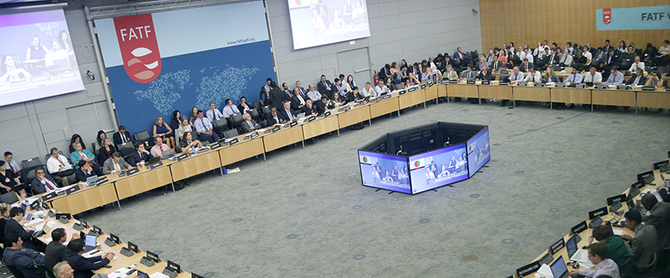
Financial Action Task Force (FATF) is a Paris-based global body and its delegation will start talks with Pakistani officials from Tuesday – (Photo Courtesy – FATF Facebook)
2 / 2
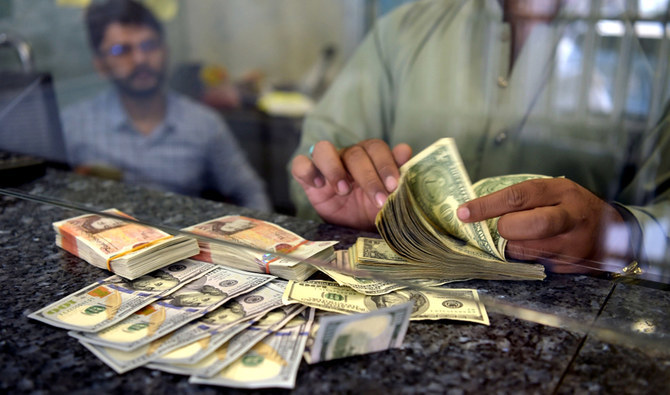
The FATF, in a statement issued in February, had termed Pakistan’s progress on the implementation of its action plan as “limited” and asked Islamabad to address all strategic deficiencies. (AFP/File)
Updated 26 March 2019
Follow

Watchdog tasked with tracking illegal money due in Pakistan for review

  • Meetings with the Financial Action Task Force are scheduled to begin from Tuesday
  • Had said earlier that progress in the implementation of measures was "limited"

ISLAMABAD: Representatives from a Paris-based global body, which is tasked with tracking sources of illegal money, were due to arrive in Islamabad on Monday, media reports said.

The Financial Action Task Force (FATF), in a statement released in February this year, had termed Pakistan’s progress on the implementation of its action plan as “limited” and asked Islamabad to address all strategic deficiencies.

The group is set to hold talks with representatives from the Securities and Exchange Commission of Pakistan, State Bank of Pakistan, Ministry of Foreign Affairs, Ministry of Interior, and other Pakistani officials from Tuesday.

Pakistan had been on the FATF grey list from 2012 to 2015, before being put on the list again in June 2018.

“Pakistan has revised its TF [terror financing] risk assessment. However, it does not demonstrate a proper understanding of the TF risks posed by Da'esh (ISIS), Al-Qaeda, JuD [Jamaat-ud-Dawa], FIF [Falah-e-Insaniat Foundation], LeT [Lashkar-e-Taiba], JeM [Jaish-e-Mohammad], HQN [Haqqani Network] and persons affiliated with the Taliban,” the FATF statement read.


Pakistan PM approves framework for National Energy Plan aimed at cutting power costs

Updated 4 sec ago
Follow

Pakistan PM approves framework for National Energy Plan aimed at cutting power costs

  • Electricity costs in Pakistan have been a major concern for both industries and domestic consumers
  • PM Shehbaz Sharif instructs authorities to expedite privatization of power distribution companies

ISLAMABAD: Prime Minister Shehbaz Sharif on Wednesday approved the framework for a National Energy Plan aimed at ensuring low electricity costs for industries and facilitating domestic consumers, Pakistani state broadcaster reported. 

The development took place during a meeting of the Cabinet Committee on Energy in Islamabad presided over by Sharif. The Pakistani prime minister directed all ministries and provincial governments to present a “workable and coordinated” strategy under the proposed plan.

Electricity costs in Pakistan have been a major concern for both industries and domestic consumers. Industrial users often face high tariffs that increase production cost while residential consumers struggle with rising bills that impact household budgets. 

“Prime Minister Shehbaz Sharif has given in-principle approval for the formulation of a comprehensive National Energy Plan in consultation with relevant ministries and provincial governments,” Radio Pakistan said in a report.

“He emphasized that the government’s top priorities include ensuring electricity supply to industries at the lowest possible cost and providing facilitation for domestic consumers.”

Sharif also approved the establishment of a dedicated secretariat for the National Energy Plan and gave approval to the framework guidelines for auctioning wheeling charges, it added.

Wheeling charges are fees paid for using another company’s power grid to transmit electricity from a generator to a consumer, covering the cost of transporting electricity over someone else’s network.

The report said Sharif instructed authorities to include the recommendations of the climate change, finance, industries and petroleum ministries into the plan. 

Sharif also gave instructions to expedite the privatization of power distribution companies (DISCOs) and urged competitive tariffs for industries to boost production capacity.

Fluctuations in fuel prices, inefficiencies in the power sector, and reliance on imported energy have contributed to high electricity costs in Pakistan in recent years, making energy affordability and stability a key focus for government policies and reforms.

Pakistan has pushed energy sector reforms to tackle long-standing issues like circular debt, power theft, and transmission losses, which have caused blackouts and high electricity costs. 

In February, Pakistan developed a new energy policy that it says will help the country attract $5 billion in investment through public-private partnerships.