

Pakistani exporters strive to recapture Saudi rice market

1 / 7
Biryani comes in a variety of flavors and is one of the most popular dishes in Pakistan and India. (AN photo)
2 / 7
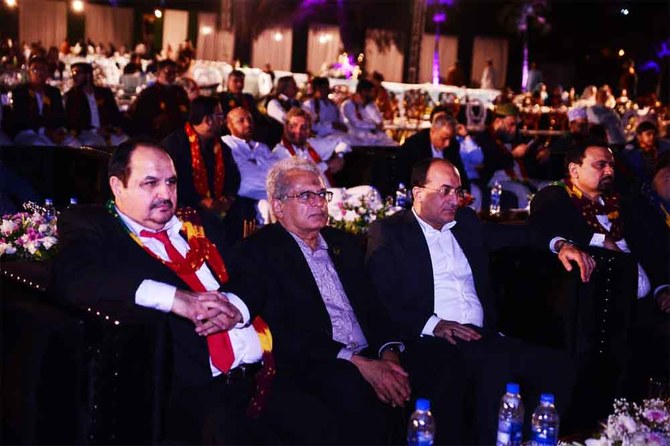
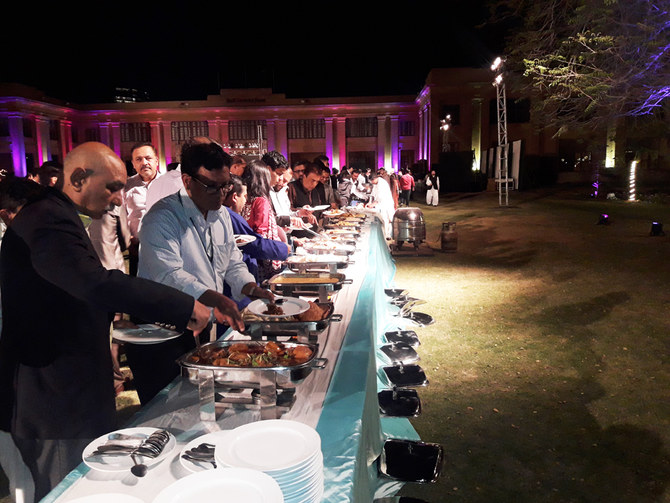
Biryani lovers enjoy at the 22nd Biryani Festival held at Governor House. (AN photo)
3 / 7
Biryani lovers enjoy at the 22nd Biryani Festival held at Governor House. (AN photo)
4 / 7
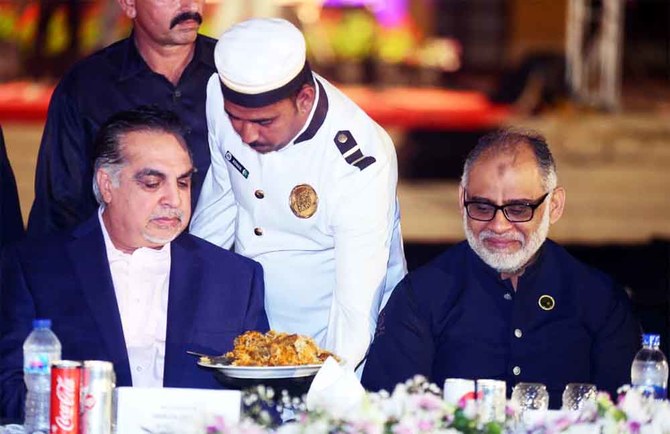
 Governor Sindh,  Imran Ismail (left) and Safder Hussain Mehkri, Chairman Rice Exporters Association of Pakistan at the Biryani festival on Friday. (Photo courtesy: REAP)
5 / 7
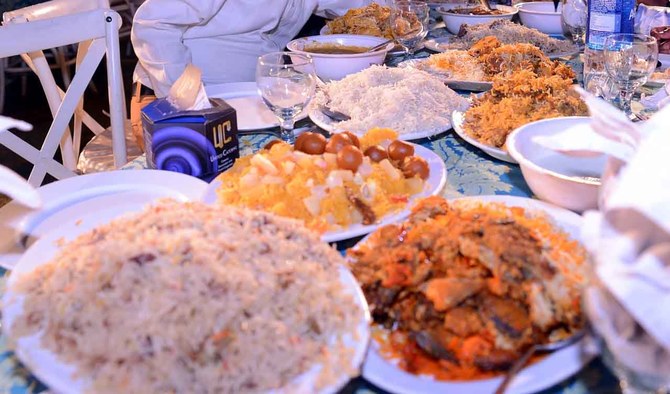
 Pakistani biryani comes in a variety of regional flavors and ingredients. (Photo courtesy: REAP)
6 / 7
Pakistani rice exporters present a shield to the governor of Sindh, Imran Ismail, on Friday. (Photo courtesy: REAP)
7 / 7
 Participants at the Biryani festival at the governor house on Friday. (Photo courtesy: REAP)
Updated 22 March 2019
Follow

Pakistani exporters strive to recapture Saudi rice market

  • 17-member Pakistani delegation to leave for Saudi Arabia on Saturday to attend Biryani Festival, other important events
  • Pakistan used to account for 80 percent Saudi rice imports, now down to 10 percent

KARACHI: A 17-member delegation of Pakistani rice exports is leaving for Dammam, Saudi Arabia, on Saturday to attend a number of events, including a Biryani Festival, in a bid to boost the country’s share in the Kingdom’s rice import market, exporters told Arab News on Friday.

“Our prices are at par with India and our quality is far superior. We are going to capture the Indian market,” Ali Hussam Asghar, Senior Vice Chairman of the Rice Exporters Association of Pakistan (REAP), who is leading the delegation, told Arab News.

He said the delegation would start the trip in Dammam to meet and hold business-to-business meetings with rice importers of the eastern region. It would then travel to Riyadh to meet top Saudi buyers of Indian rice.

“Then we will move on to Jeddah for the mega Biryani festal in Park Hide Hotel where 130 top buyers including Saudis, Pakistanis, and Indians are invited,” Asghar said. “Saudis will be able to taste 15 varieties of biryani there.”

Pakistani exporters say they have been energized by the recent visit of Saudi Crown Prince Muhammad Bin Salman and their businesses have received a new lease of support from the Saudi embassy in Pakistan and Pakistan’s ambassador to Saudi Arabia, Asghar said.  

Pakistan was the major rice import market for Saudi Arabia in the nineties, and accounted for 80 percent of rice imports to the Kingdom, now down to 10 percent.

“We want to get back our share in the Saudi market which was more than 80 percent,” Safder Hussain Mehkri, REAP chairman told Arab News on the sidelines of the 22nd Biryani Festival held at the Sindh Governor House on Friday night. “We request the Saudi government to accommodate and facilitate our exporters so that we can increase our bilateral trade.”

He said REAP was working with the federal and provincial governments to increase rice exports from Pakistan to $5 billion by 2023 from $2 billion currently.

Pakistani rice exporters also called on the Pakistani government to work to increase their market share of rice imports in Malaysia, whose Prime Minister, Mahathir Mohammad is visiting Pakistan as the chief guest of the March 23 military parade.

“Malaysian PM is visiting Pakistan so they can be asked to increase the share of imports of Pakistani rice,” Abdul Rasheed Jan Muhammad, a leading exporter and convener of REAP’s Biryani Festival, said. “The governor Sindh can play a vital role in this regard.”


Pakistan says repaid over $13.06 billion domestic debt early in last 14 months

Updated 29 January 2026
Follow

Pakistan says repaid over $13.06 billion domestic debt early in last 14 months

  • Finance adviser says repayment shows “decisive shift” toward fiscal discipline, responsible economic management
  • Says Pakistan’s total public debt has declined from over $286.6 billion in June 2025 to $284.7 billion in November 2025

KARACHI: Pakistan has repaid Rs3,650 billion [$13.06 billion] in domestic debt before time during the last 14 months, Adviser to the Finance Minister Khurram Schehzad said on Thursday, adding that the achievement reflected a shift in the country’s approach toward fiscal discipline. 

Schehzad said Pakistan has been repaying its debt before maturity, owed to the market as well as the State Bank of Pakistan (SBP), since December 2024. He said the government had repaid the central bank Rs300 billion [$1.08 billion] in its latest repayment on Thursday. 

“This landmark achievement reflects a decisive shift toward fiscal discipline, credibility, and responsible economic management,” Schehzad wrote on social media platform X. 

Giving a breakdown of what he said was Pakistan’s “early debt retirement journey,” the finance official said Pakistan retired Rs1,000 billion [$3.576 billion] in December 2024, Rs500 billion [$1.78 billion] in June 2025, Rs1,160 billion [$4.150 billion] in August 2025, Rs200 billion [$715 million] in October 2025, Rs494 billion [$1.76 billion] in December 2025 and $1.08 billion in January 2026. 

He said with the latest debt repaid today, the July to January period of fiscal year 2026 alone recorded Rs2,150 billion [$7.69 billion] in early retirement, which was 44 percent higher than the debt retired in FY25.

He said of the total early repayments, the government has repaid 65 percent of the central bank’s debt, 30 percent of the treasury bills debt and five percent of the Pakistan Investment Bonds (PIBs) debt. 

The official said Pakistan’s total public debt has declined from over Rs 80.5 trillion [$286.6 billion] in June 2025 to Rs80 trillion [$284.7 billion] in November 2025. 

“Crucially, Pakistan’s debt-to-GDP ratio, around 74 percent in FY22, has declined to around 70 percent, reflecting a broader strengthening of fiscal fundamentals alongside disciplined debt management,” Schehzad wrote. 

Pakistan’s government has said the country’s fragile economy is on an upward trajectory. The South Asian country has been trying to navigate a tricky path to economic recovery under a $7 billion loan from the International Monetary Fund.