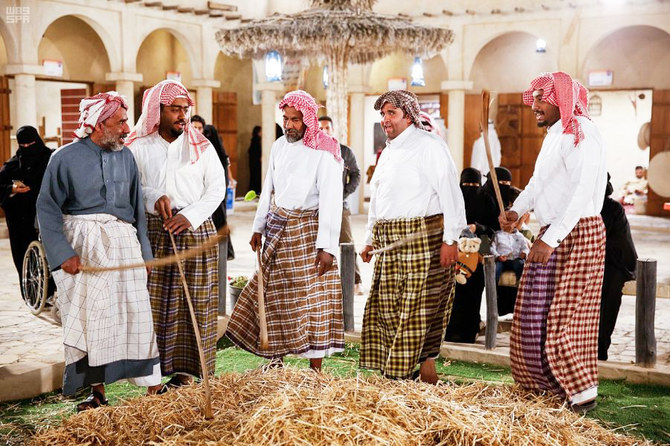


RIYADH: Residents of the Eastern Province are no strangers to foreign visitors — the nation’s oil heartland has been welcoming them for years. But more have been arriving with the opening of Sharqiah Season, featuring over 80 events across the region’s cities.
Organized as a collaborative effort by the Saudi Commission for Tourism and National Heritage alongside the General Entertainment Authority, the General Culture Authority and the General Sports Authority, it is the first of 11 scheduled festivals planned across the country in 2019.
Faisal Al-Rayisi, an employee at King Fahd International Airport in Dammam, told Arab News he was surprised by the number of people arriving for the festival.
“People are not only coming from Saudi Arabia, but from all over the Gulf as well — Kuwait and the UAE in particular,” he said. “I’ve even seen foreigners from Europe and Asia coming through. Time was, we used to go to Dubai for our entertainment, but now people from Dubai are coming to us.”
He also mentioned how happy he was to see the festivities coming to the Eastern Province. “Jeddah has this slogan, ‘Jeddah is different,’ but now that we’re seeing the first Sharqiah Season in our region, and all of these amazing activities and concerts are happening here, I think we can safely say ‘Sharqiah is different’ now.”
The Sharqiah festival aims to deliver an extensive entertainment experience for both Saudis and visitors to the Kingdom.
The festival features events in Eastern Province cities, including Dammam, Dhahran, Alkhobar, Al-Ahsa and Jubail. Future seasons will focus on different areas of Saudi Arabia, with different entertainment options for each city. Upcoming seasons will focus on different areas, and also different parts of the year, such as Ramadan, Eid Al-Fitr and Eid Al-Adha.
Turki Al-Sheikh, chairman of the General Entertainment Authority, said in a statement that the organization’s participation in the festival aligns with its goal of improving the quality of life in the Kingdom, and discovering local talent in various entertainment industries.
He also highlighted the importance of the entertainment sector and its contribution to the economy and the creation of jobs for locals, all important aspects of Vision 2030.
The opening night of Sharqiah Season on Thursday drew crowds of Saudis to the Alkhobar Corniche, despite strong winds and sprinklings of rain earlier in the day. Groups of friends stopping to take selfies and families with young children in tow wandered through the Entertainment Boulevard, lined with food stalls selling karak and koshari.
Earlier in the day, the mega event began with the opening of an exhibit featuring the work of Leonardo da Vinci at the King Abdul Aziz Center for World Culture (Ithra).
The exhibit showcased some of Da Vinci’s original sketches, with several screens showing videos detailing how his designs have continued to inspire scientists and inventors in the modern era.
Sharqiah Season continues until March 30, with upcoming weekends featuring sports events such as the Red Bull Air Race and the Formula 1 H20 boat race, as well as concerts in Dammam featuring Akon, Deadmau5, Pitbull and French Montana.