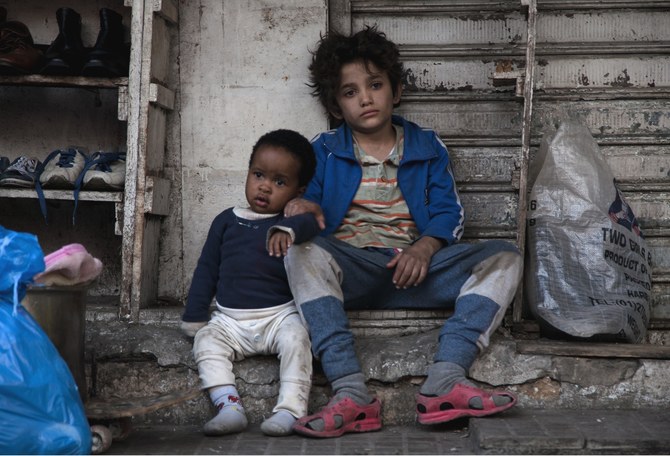

DUBAI: Nadine Labaki’s “Capernaum” landed the acclaimed Lebanese filmmaker an Oscar nomination and the Jury Prize at Cannes. It has now arrived on screens in the GCC. “Capernaum” centers on Zain, a 12-year-old Lebanese boy serving a five-year sentence for “stabbing a son of a bitch” (as Zain explains it in court).
As the film opens, Zain is appearing before a judge for a different reason — to sue his parents for bringing him into the world.
This is not just an act of teenage spite; Zain believes the case will enable him to gain a passport, health insurance and entry to school (his parents never registered his birth, so he has no national ID card).
We then step back in time to discover how Zain came to this point. He and his siblings live in abject poverty and their parents willingly exploit them for small material gains, even marrying off their 11-year-old daughter — and Zain’s best friend — Sahar, in return for a few chickens.
Desperate to escape the squalor of what can barely be called home, Zain takes to the streets.
Labaki cleverly shoots these scenes from a child’s perspective, revealing the disorienting nature of the city’s chaos from waist height.
Zain befriends Ethiopian cleaning lady Rahil, who shares her meager food and shelter with him.
Rahil, like Zain, lacks official documentation, and she has an illegitimate toddler son, Yonas, whom she fears will be taken away from her if he is discovered.
When Rahil is picked up in a police raid and jailed, Zain is literally left holding the baby, without knowing when Rahil might return or what has happened to her.
Seeing Zain face the dilemma of what to do to care for Yonas is horrifying. As, indeed, is much of the film.
These are situations no child should have to deal with. But, of course, children do deal with them. And the majority of adults, as in the film, look away — and if they don’t, then the motives for their interest are often malicious.
The extent of the misery inherent in “Capernaum” would be almost unwatchable if it weren’t for Labaki’s empathy and energy as a director, and for the astonishing performances of her mostly amateur cast, in particular Zain Al-Rafeea as Zain and Yordanos Shiferaw as Rahil. (Boluwatife Treasure Bankole, as baby Yonas, also deserves a mention. Seriously.)
The ending seems a little rushed — strangely so for a two-and-a-half hour film — and is, arguably, too neat for a film so grounded in realism. But it’s hard to begrudge Zain (and Labaki) some fictional optimism after the grueling emotional ride to get there. “Capernaum” fully deserves its awards and attention.
NOW READ: Arab News' exclusive interview with the film's director, Nadine Labaki