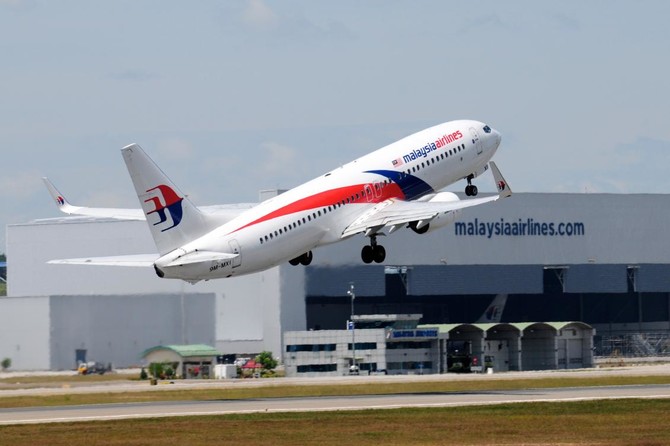
KUALA LUMPUR: Malaysia Airlines may be sold or shut down, Malaysia’s leader said Tuesday, the latest bad news for a carrier that has been in crisis since suffering the loss of two planes.
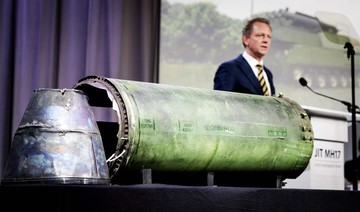
The 71-year-old airline has been on the ropes since 2014 when Flight MH370 disappeared and MH17 was shot down by a Russian-made missile over war-torn Ukraine.
With the carrier teetering on the brink of bankruptcy, sovereign wealth fund Khazanah stepped in to take it over several years ago and major reforms were instituted, including cutting thousands of staff.
But it has continued to fare poorly and its performance was blamed in large part for a set of poor financial results released by Khazanah last week.
Responding to questions about the airline’s future, Prime Minister Mahathir Mohamad told reporters in parliament: “I think it is a very serious matter, to shut down the national airline.
“We will nevertheless be studying and investigating as to whether we should shut it down or we should sell it off or we should refinance it.”
Official news agency Bernama reported that Khazanah last week posted a pre-tax loss of 6.3 billion ringgit ($1.54 billion) for 2018, compared with a pre-tax profit of 2.9 billion ringgit the year before.
Mahathir, 93 and in his second stint as premier, is seeking to reduce a mammoth national debt inherited from the previous, corruption-plagued regime.
Malaysia Airlines said in a statement it had been “working closely” with Khazanah on the next phase of its turnaround plan since September.
The disappearance of Flight MH370, which was carrying 239 people, remains one of the world’s greatest aviation mysteries, and successive searches have failed to find the plane.

Malaysia Airlines could be sold or shut down, says PM
- Mahathir Mohamad: We will be studying and investigating as to whether we should shut it down or we should sell it off or we should refinance it
- Mahathir, 93 and in his second stint as premier, is seeking to reduce a mammoth national debt inherited from the previous, corruption-plagued regime
Saudi investment hits 32% of GDP, non-oil fixed capital reaches 40%, minister says
RIYADH: Saudi Arabia’s investment now accounts for 32 percent of gross domestic product, with non-oil fixed capital at 40 percent, according to the minister responsible for portfolio.
Speaking during his visit to the Shoura Council, Khalid Al-Falih said that foreign direct investment is expected to grow fivefold, signaling strong Vision 2030 progress.
“Regarding cumulative performance, the Kingdom has exceeded all expectations, achieving high levels of investment,” Al-Falih said, according to a video posted on Al-Ekhbariya’s X account focused on economic matters.
The minister added: “Today, investment accounts for 32 percent of the total GDP. In terms of non-oil GDP, fixed capital represents 40 percent, compared with 41 percent in China, the highest globally.”
If we take the non-oil GDP, he said, fixed capital will make 40 percent. “China is the largest globally with 41 percent. So, we will rank second if we compare it to the non-oil economy and fourth when measured against total GDP,” Al-Falih said.
He emphasized that the Kingdom offers an investment-attractive environment, noting that when focusing on foreign direct investment rather than overall investment, Saudi Arabia ranks among the world’s highest.
The minister of investment added that FDI is expected to grow fivefold by the end of 2025, though these data require confirmation, stressing that this is “a big indicator for the success of Saudi Vision 2030.”
During his address to the session, Al-Falih emphasized that Saudi Vision 2030 prioritizes economic diversification and reducing dependence on oil, through boosting the private sector’s contribution to inclusive economic development, supporting national sectoral priorities, and driving growth in the Kingdom’s GDP.
He highlighted key initiatives enabling the private sector, including the establishment of the Ministry of Investment and the Saudi Investment Promotion Authority, the launch of the “Shareek” program, the development of the National Investment Strategy, and linking all stakeholders in the investment ecosystem.
“The Cabinet’s adoption of the National Investment Strategy, launched by Crown Prince in 2021 and implemented in 2022 as a comprehensive national framework, has played a major role in positioning investment as a driver of economic growth,” he said.
Al-Falih revealed that the ministry has identified more than 2,000 investment opportunities worth over SR1 trillion ($267 billion), noting that 346 of these opportunities have been converted into closed deals valued at over SR231 billion through the “Invest Saudi” platform.
He also highlighted the success of the regional headquarters attraction program, with licenses issued to more than 700 global companies by the end of 2025, surpassing the 2030 target of 500 companies, across diverse sectors that reinforce Saudi Arabia’s role as a regional business hub.
The minister revealed that active investment licenses have grown tenfold, rising from 6,000 in 2019 to 62,000 by the end of 2025, highlighting the role of companies in creating over one million jobs, including numerous positions for Saudi nationals.
Al-Falih noted the Kingdom’s success in attracting 20 of the world’s top 30 banks, as part of efforts to strengthen the presence of leading asset managers and international banks in support of the Saudi banking sector.
He also discussed reforms to enhance the business environment, such as the Civil Transactions Law, Companies Law, and the updated Investment Law issued in mid-2024, which contributed to Saudi Arabia moving up 15 places in the global competitiveness ranking.
The minister also announced the update of the National Investment Strategy in 2025, focusing on quality, productivity, and directing investments toward sectors with the highest economic impact, while developing financing solutions for SMEs.